
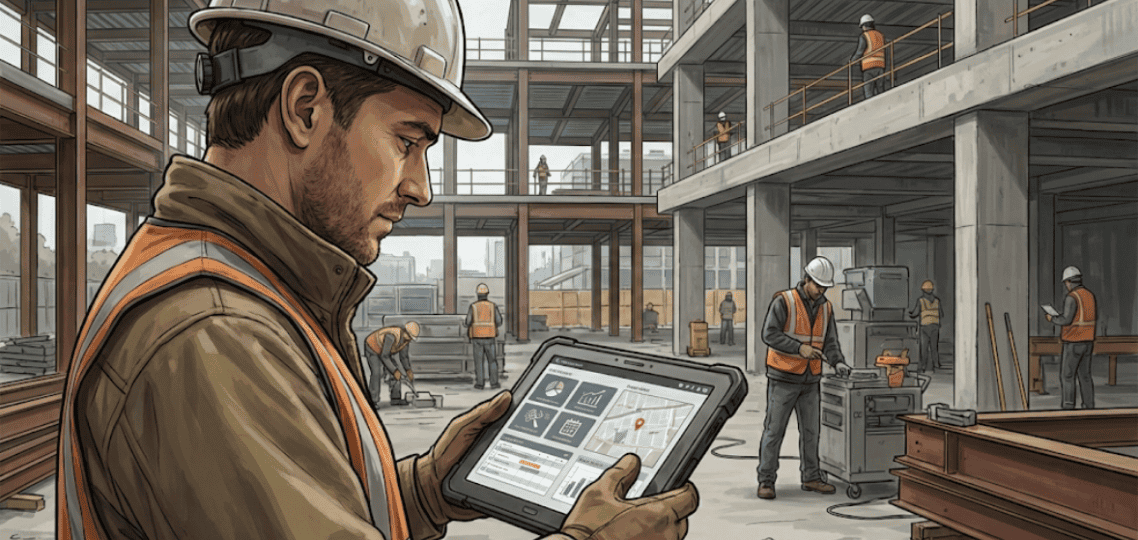
Must-Have Mobile Apps for Contractors and Field Teams in 2026
Mobile apps for contractors are no longer just for big companies. In 2026, they’re the backbone of getting real work done on job sites. Whether you run a small electrical crew, a plumbing business, or a full construction firm with dozens of teams, you know how messy things get without the right tools: missed messages, shifting schedules, late materials, or forgotten hours. Then the office is calling the site and vice versa; nobody really knows what is going on.
This is why mobile apps for contractors have become so important. These apps are not just about checking tasks on a phone. They connect field teams to the office in real time. They show who is working where, what needs to be done, what materials remain, and which jobs are falling behind. In a world where everything moves fast, waiting for someone to return to the office to update paperwork just doesn’t work anymore.
The truth is, contractors who do not use proper mobile apps are already behind. Clients in 2026 expect faster updates, clearer invoices, and better communication. They do not care if your crew is on a ladder or in a trench. They still want answers. Mobile apps for contractors make this possible by turning every phone or tablet into a mini office.
This article is not about fancy tech words. It is about how real people in the field actually use these apps. We are going to talk about scheduling, tracking jobs, handling work orders, and making sure your crew stays productive without feeling overwhelmed. If you are running a field team, this stuff is no longer optional.
Mobile Apps for Contractors Are Changing How Jobs Get Scheduled
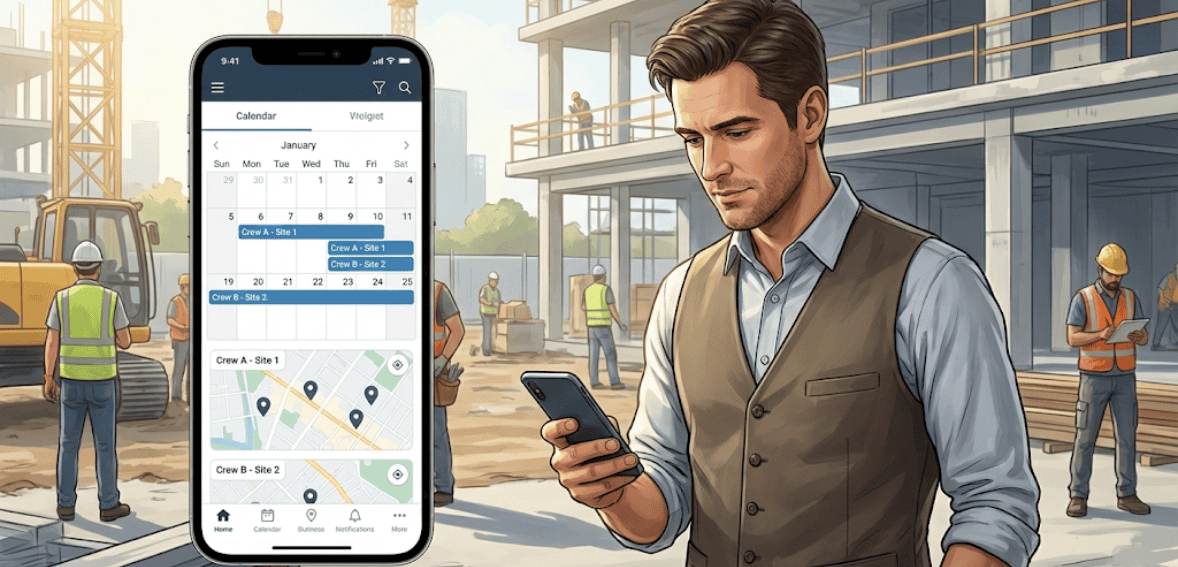
Mobile apps for contractors have completely changed how scheduling works. Back in the day, someone in the office would make a schedule, print it, and hand it out or email it. Then something would change, and half the crew wouldn’t receive the update. Now everything lives inside field service software that updates in real time.
When you use modern mobile apps for contractors, you can see all your jobs, all your crews, and all your time slots on one screen. If a job runs late, you can move to the next job with a few taps. The field team sees the change instantly. No calls, no confusion, no wasted time driving to the wrong place.
This is where jobsite management becomes way easier. Supervisors can assign work, change priorities, and even add new jobs while they are standing on a site. The crew does not have to guess what comes next. The app tells them. That alone saves hours every week.
Another big thing is travel time. Mobile apps for contractors can show where your teams are and where the next job is. You can avoid sending someone across town when a crew closer to you is available. That means less fuel, less stress, and more jobs completed in a day.
This kind of scheduling used to be something only huge companies could afford. In 2026, even small contractors will use it because it is built into most field service software platforms. And once you get used to it, you will never want to go back to paper schedules again.
How Mobile Apps for Contractors Keep Field Teams Connected
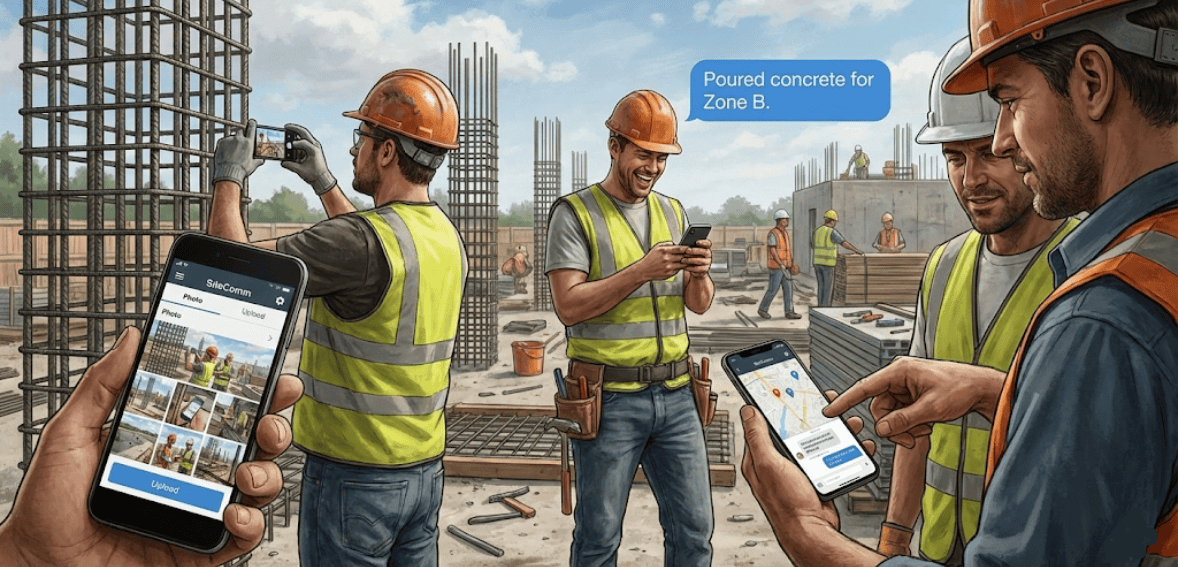
One of the biggest problems on any jobsite is communication. The office has one version of what is happening. The field team has another. Mobile apps for contractors fix that gap by putting everyone on the same system.
When a worker finishes a task, they update it in the app. The office sees it instantly. When a manager uploads new instructions or drawings, the field team sees them instantly. This keeps jobsite management clean and organized.
Instead of calling five people to check progress, you can just look at the app. You can see which jobs are done, in progress, and behind schedule. That kind of visibility is what drives construction productivity up because you stop wasting time guessing.
These apps also make it easier for field workers to ask questions. Instead of waiting until the end of the day, they can send a message or photo through the app. The office can respond right away. Problems get solved faster, and mistakes get caught before they become expensive.
Mobile apps for contractors also create a record of what happened. Messages, photos, and updates all stay in the system. That protects you if a client ever questions something later. You can show what was done and when.
Mobile Apps for Contractors Improve Work Orders and Task Tracking
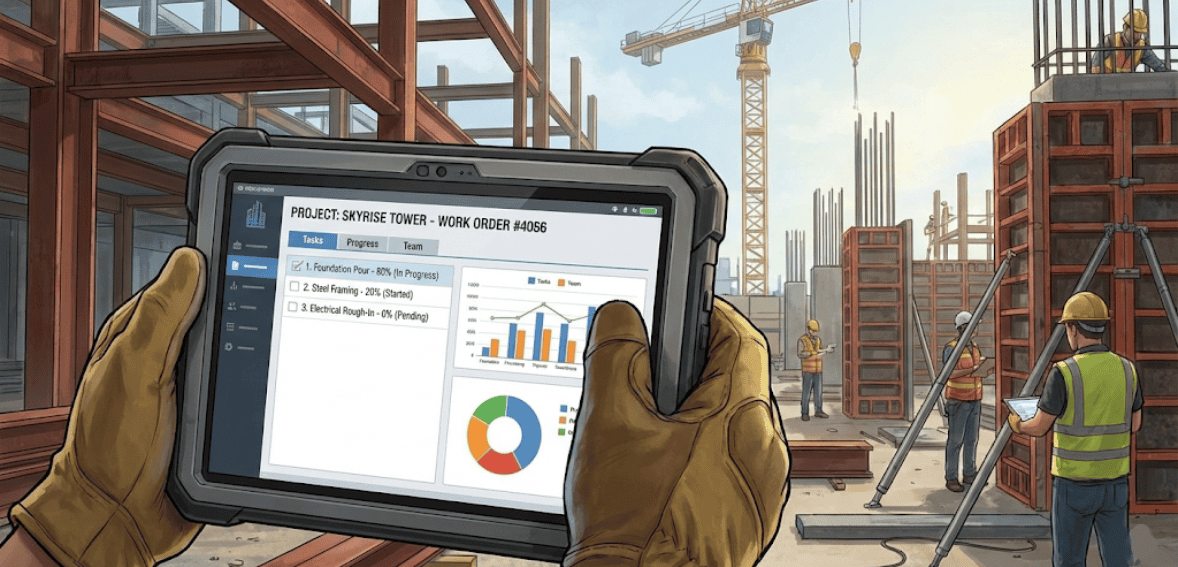
Work orders are the heart of most contracting businesses. If a work order is wrong or missing, everything falls apart. Mobile apps for contractors make work orders much easier to manage because everything is digital and always up to date.
When a new job comes in, the office creates a work order in the system. The field team gets it on their phone. It includes address, scope of work and any special notes. There is no guessing and no lost paperwork.
As work progresses, the crew updates the work order in the app. They can mark tasks complete, add notes, and attach photos. This keeps everyone informed on job status.
This also helps with construction productivity. Workers spend less time filling out forms and more time actually doing the job. The office spends less time chasing paperwork and more time managing the business.
Mobile apps for contractors also make it easier to handle changes. If a client adds something, the work order gets updated, and the crew sees it right away. There is no confusion about what was approved and what was not.
Why Mobile Apps for Contractors Matter for Time Tracking and Payroll
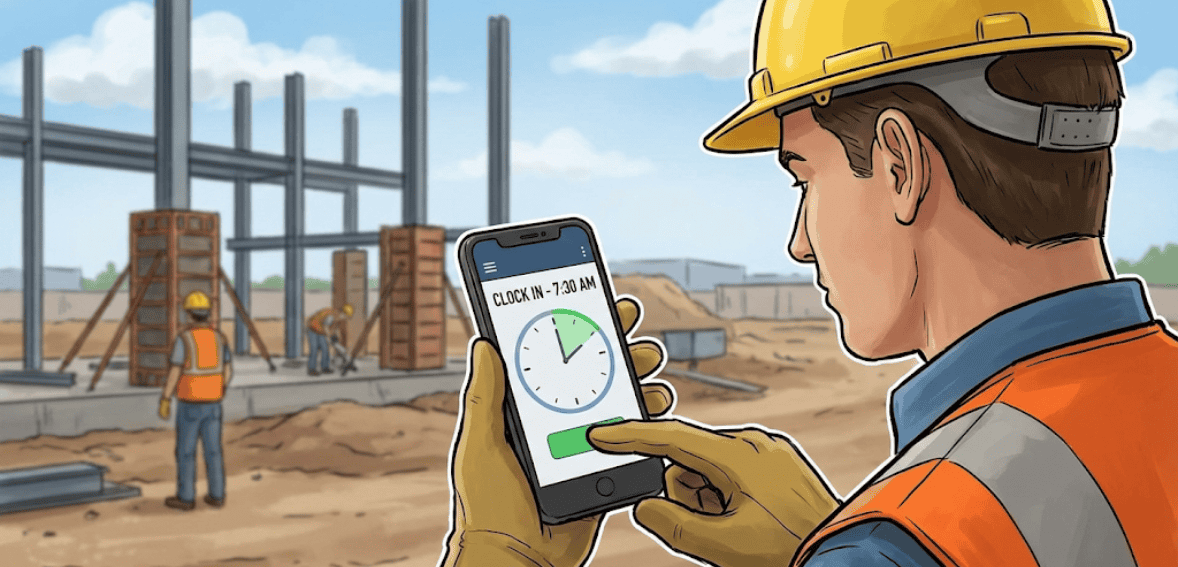
Time tracking was one of the most painful parts of running a field team. People forgot to clock in. They wrote the wrong hours. Someone had to enter everything manually. Mobile apps for contractors have completely changed that.
Now workers can clock in and out right from their phones. Some apps even track location, so you know they are actually on the jobsite. This makes field service software much more reliable because the data is real and accurate.
When time tracking is accurate, payroll becomes easier. You do not have to guess how many hours someone worked. The system already knows. That saves time and reduces arguments about pay.
Accurate time tracking improves payroll and reveals how long tasks take. This lets you better plan and use data to run your business more effectively.
Mobile Apps for Contractors Make Material and Inventory Tracking Easier
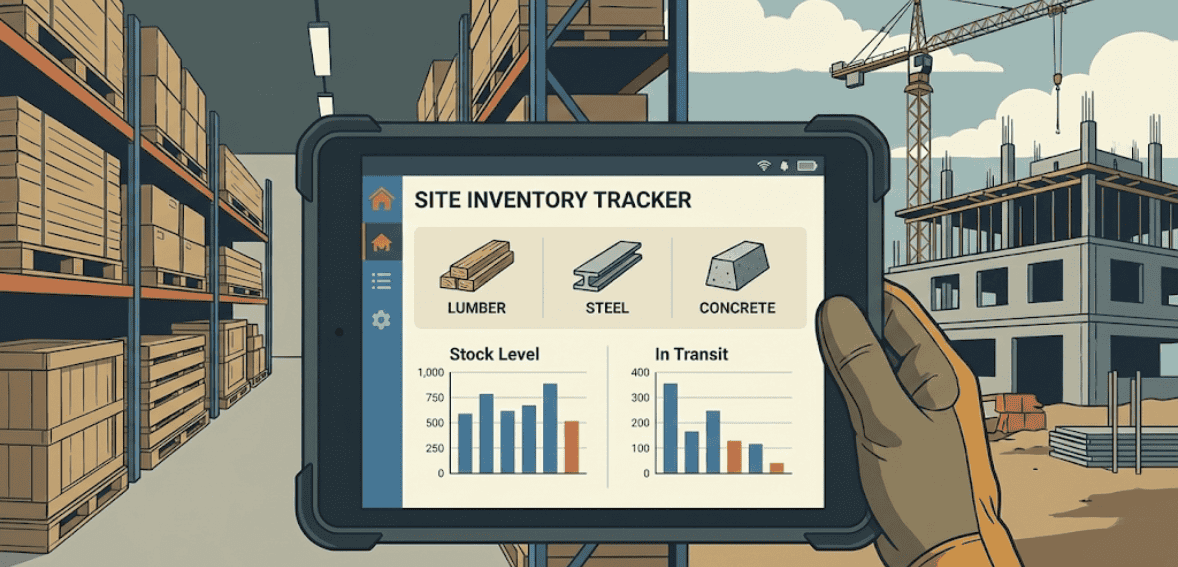
One of the biggest reasons jobs get delayed is not labor. It is materials. Someone forgets to order something, or it gets delivered to the wrong site, or the crew shows up and realizes half the stuff they need is missing. Mobile apps for contractors help solve this by bringing material tracking right into the same system that runs the jobs.
With good field service software, every job has a list of required materials. When something is used, the crew can mark it in the app. When something is running low, the system shows it. This makes job site management much smoother because nobody has to guess what is left in the truck or in the warehouse.
In 2026, many mobile apps for contractors will be connected directly to suppliers. That means when inventory drops, a reorder can be triggered automatically. You do not have to wait for someone to remember. That keeps jobs moving and improves construction productivity by preventing crews from standing around waiting for parts. Detailed material tracking helps control costs. Knowing what was used on each job shows which projects are profitable, insights that are now built into these apps.
Mobile Apps for Contractors Improve Inspections and Quality Control
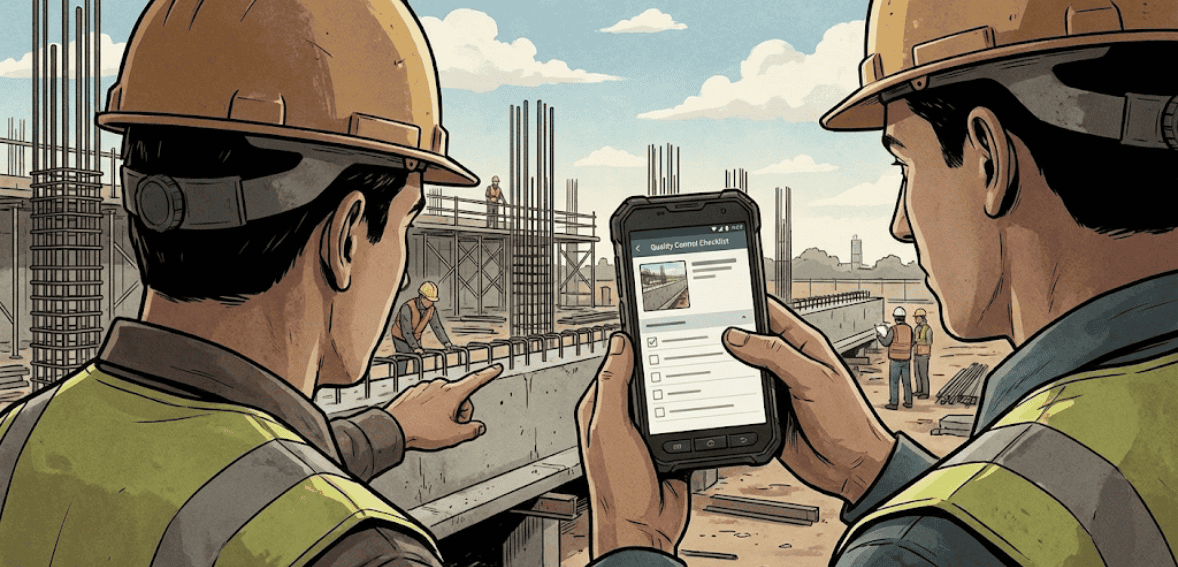
Quality problems cost a lot of money. If something is done wrong and you only notice it later, you have to redo the work, deal with unhappy clients, and maybe even face legal issues. Mobile apps for contractors help prevent that by integrating inspections into the daily workflow.
With modern jobsite management tools, supervisors can walk a site and record what they see in the app. They can take photos, add notes, and mark items that need fixing. The field team sees those issues right away and can correct them before the job moves forward.
This is a big deal for construction productivity because you are not wasting time fixing old mistakes. You are catching problems early. Mobile apps for contractors also keep records of inspections, which are useful if a client ever questions the quality of the work.
In 2026, many of these apps even use checklists and standards built into the field service software. That helps make sure every job is inspected the same way, no matter who is doing it.
Also read: Improving Project Coordination for Contractors with Cloud Technology
Mobile Apps for Contractors Support Better Client Communication
Clients want updates. They want to know when a job will start, when it will be finished, and what is happening in between. Mobile apps for contractors make it much easier because all the information is already in the system.
Instead of calling the office, clients can get updates through the app or through automatic messages. They can see when a crew is on the way. They can see when a task is completed. This improves job-site management by reducing interruptions to the field team.
Better communication also leads to better construction productivity. When clients know what is happening, they are less likely to complain or change things at the last minute. Mobile apps for contractors help keep everyone on the same page.
Why Mobile Apps for Contractors Are a Must in 2026
In 2026, running a contracting business without proper mobile apps is like trying to build a house without power tools. You can do it, but it is slow and painful. Mobile apps for contractors bring together scheduling, communication, time tracking, materials, and reporting in one place.
This is what makes modern field service software so powerful. It turns chaos into something organized. It helps job site management feel less stressful. And it boosts construction productivity because people spend less time fixing mistakes and more time doing real work.
The contractors using these tools are the ones growing. They finish jobs faster, keep clients happier, and make better decisions because they have real data instead of guesses.
Conclusion
Mobile apps for contractors are no longer just helpful tools; they are essential. They are the core of how field teams work in 2026. From scheduling and work orders to materials and inspections, everything runs through these apps. When you use the right field service software, jobsite management becomes clearer, and construction productivity goes up. That is what keeps your business strong in a competitive world.
FAQs
Why are mobile apps for contractors so important today?
They connect field teams and offices in real time, helping jobs run smoothly and reducing costly mistakes.
Can small contractors use these apps too?
Yes, most mobile apps for contractors are built for both small crews and large companies.
Do these apps really improve construction productivity?
Yes, because they reduce delays, improve communication, and keep everyone focused on the right tasks.
How do mobile apps for contractors help with jobsite management?
They provide real-time updates on jobs, workers, and materials so nothing falls through the cracks.
Are mobile apps for contractors difficult to use?
Most are designed for field workers, so they are simple, fast, and easy to learn.