

On-Time and Under Budget: Dispatch and Billing Tips for Plumbing Businesses
Plumbing companies don’t just fix leaks and unclog drains. They manage busy schedules, juggle emergency calls, send technicians all over town, and still need to collect payments without delay. The physical work is demanding, but the operational side is often the hardest part to keep under control.
When dispatching is slow or unclear, plumbers waste time driving in the wrong direction, customers wait longer than necessary, and jobs pile up. On the billing side, handwritten invoices and delayed processing can drag cash flow down, even when the team is working nonstop.
These are not just administrative challenges; they affect profitability, customer satisfaction, and how much work your team can realistically complete in a day.
Over the past few years, plumbing businesses have gradually been shifting away from whiteboards, paper tickets, and phone-tag scheduling. Instead, many have begun using plumbing dispatch software that brings scheduling, routing, field communication, and billing together in one place.
The goal is simple:
- Send the right plumber to the right job as quickly as possible
- Keep everyone updated throughout the day
- Bill accurately and get paid without delays
When these pieces start operating smoothly, a plumbing company becomes dramatically more efficient.
Below, we’ll break down some practical approaches with or without software to strengthen dispatching and billing so plumbing contractors can operate faster and more affordably.
Responding to Emergencies With Speed and Clarity

Burst pipes, failed water heaters, and sewer issues don’t allow for slow scheduling. When water is pouring onto a customer’s floor, they don’t care how busy you are, they want the first available plumber, and they want them immediately.
The problem for many businesses is that they simply don’t know who is closest or who is free at any given moment. Information is in notebooks, personal phones, or in someone’s head. One dispatcher might be excellent at organizing the day, but when they step away, the rest of the team is left guessing.
This is where having clear visibility into your field team becomes a major advantage. Companies that track where their plumbers are throughout the day even informally can respond to emergencies much faster.
A simple scenario illustrates the difference:
Two plumbers finish individual jobs on opposite sides of town. A new emergency call comes in. Without real-time visibility, the office might call the wrong plumber first or end up sending the technician who is 40 minutes away. By the time the dispatcher sorts it out, the customer has been waiting longer than necessary.
With better awareness of where each plumber is, the dispatcher can immediately assign the nearest available person. Technicians don’t need multiple calls. Directions and job notes go directly to their phone, and they head straight there.
A faster response means:
- Less water damage
- A calmer customer
- A better first impression
- Higher likelihood of repeat work
Even companies that don’t use software can benefit from simple, structured habits, such as technicians updating their status after every call. However, digital dispatching makes this process more reliable because the information is updated automatically.
The result is a cleaner workflow: the right person goes to the job at the right time, without a chain of calls or confusion in the office.
Reducing Idle Time and Scheduling Conflicts
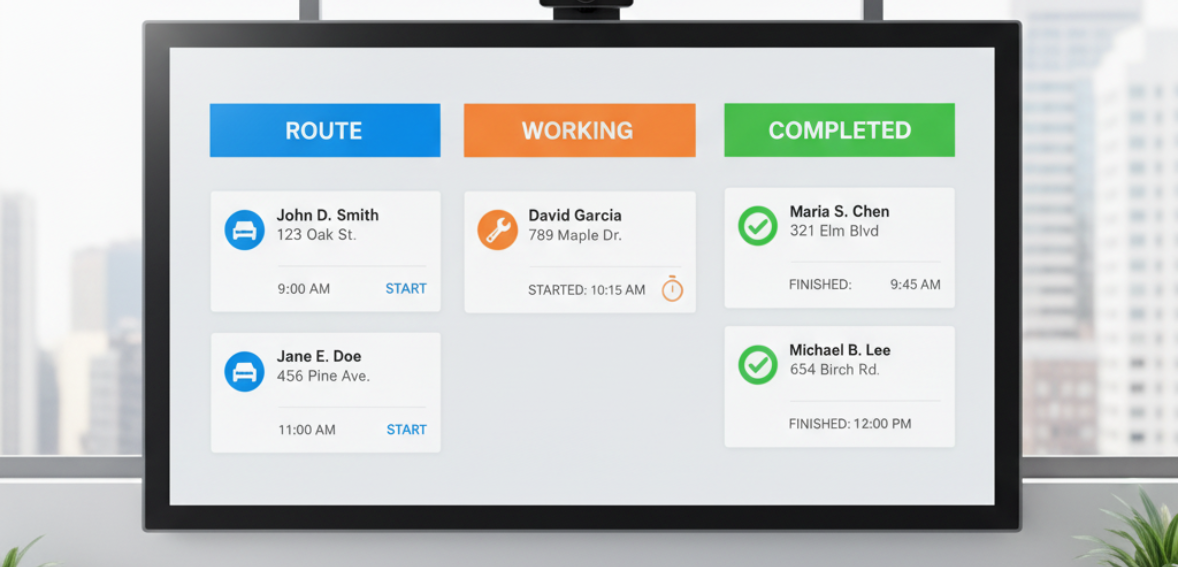
One of the quiet drains on a plumbing business is the time plumbers spend between jobs driving long distances, waiting on assignments, or stopping by the office when they don’t need to. Each of these small inefficiencies adds up over the week.
Idle time often happens for two reasons:
- No one has a clear picture of where every plumber is
- Assignments are made one call at a time, instead of strategically
A dispatch board digital or traditional solves this by letting everyone see who is currently working, who is wrapping up, and who is ready for the next call.
When a request comes in, the dispatcher doesn’t have to start dialing through a list of technicians. They can simply assign the nearest available plumber. If someone finishes earlier than expected, the office immediately sees it and can slot in another job.
This prevents hours from slipping through the cracks.
Imagine a technician finishes a job at 10:15 AM but doesn’t get another assignment until after lunch simply because no one realized he was free. That’s two hours of lost productivity multiplied across a full team, the impact is real.
With better scheduling awareness, technicians stay engaged throughout the day, and customers are served faster.
A clear dispatch board also prevents double-booking. When you’re fielding several calls at once, it’s very easy to assign overlapping jobs accidentally. When all assignments are visible in one place, this happens far less often.
Over time, a well-managed schedule means more completed jobs and smoother days for everyone both in the office and in the field.
Billing at the Jobsite and Getting Paid Sooner

A finished job only becomes revenue once it’s billed and ideally, paid. But many plumbing companies still rely on handwritten tickets that don’t reach the office until the end of the week. Then someone has to decipher notes, build an invoice, contact the customer, and hope nothing is missing.
A lot can go wrong in that window papers get misplaced, line items are forgotten, customers push off payment, or details are disputed.
Modern plumbing invoicing process, even simple mobile apps help solve this by allowing technicians to build and send invoices on-site. Because job details are captured digitally, the invoice is generated with accurate time, materials, and notes.
This means the customer sees the invoice immediately while the work is still fresh. Many companies also give homeowners the option to pay right away through a secure link or card reader. For the technician, it’s a straightforward workflow; for the business, it means far fewer unpaid balances.
On-site billing offers several practical benefits:
- No backlog of paperwork
- Fewer billing mistakes
- Faster turnaround
- Clearer communication with customers
It also protects the business when a customer questions a charge. Photos, notes, and material lists are saved with the invoice, so the company can show exactly what was done.
Whether a business adopts full plumbing invoicing software or simply uses structured mobile forms, the goal is the same: bill quickly, accurately, and confidently while the technician is still at the jobsite.
Bringing Order to Daily Scheduling
Plumbing work is unpredictable. Some days are heavy with emergencies; other days are filled with scheduled maintenance or installations. Balancing these jobs requires flexibility without losing control of the calendar.
Businesses that succeed here generally have one thing in common: they organize the day visually. Whether through a digital scheduling tool or a shared calendar, seeing every job laid out along with estimated times makes it easier to adjust when the unexpected happens.
Recurring appointments, such as annual water heater flushes or commercial maintenance, can be planned ahead so they don’t get squeezed out by emergencies. Likewise, notes from previous visits help plumbers show up prepared, which cuts time on site.
When schedules live in one place, dispatchers can rearrange jobs with far less stress. If a customer cancels or weather causes delays, the office can shift technicians or insert available jobs without losing track of commitments.
More importantly, plumbers don’t waste time waiting for their next assignment. Each knows where they’re headed before they finish the previous call and can move efficiently through the day.
A predictable, well-organized schedule doesn’t eliminate chaos entirely, but it makes it far easier to handle.
Eliminating Paperwork Without Losing Documentation
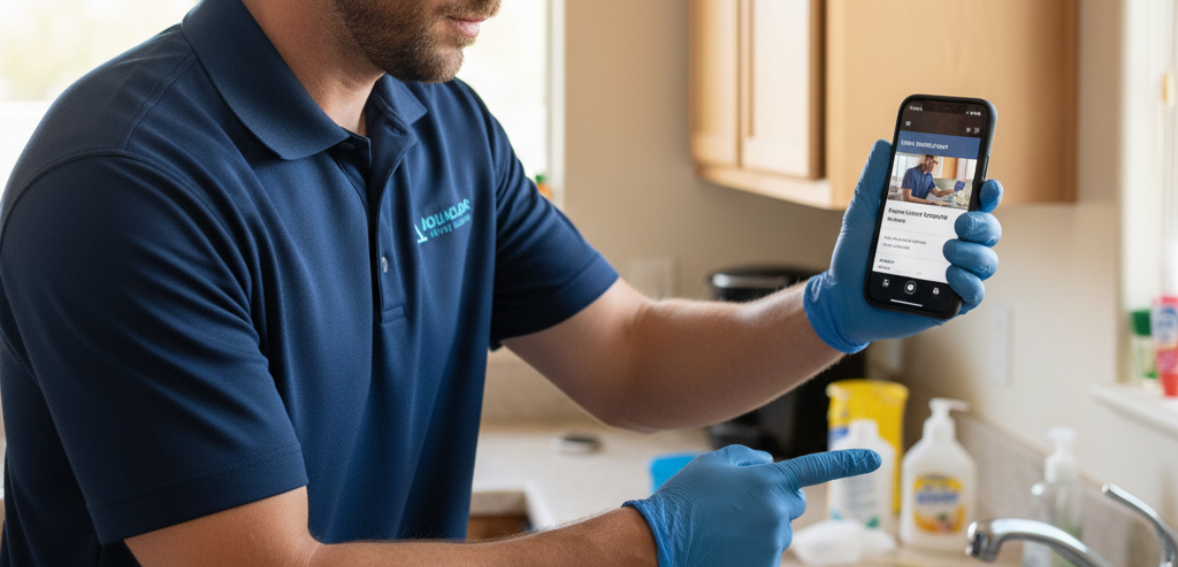
Plumbing generates a surprising amount of paperwork. Before a job is even scheduled, a dispatcher may record notes about the problem, warranty status, or parts needed. Once work begins, technicians often add handwritten details of time on site, materials used, system condition, or follow-up recommendations. Then the office needs those details to create an invoice and update the customer record.
This is where things often fall apart. Notebooks get misplaced, notes are incomplete or unclear, and paperwork sits for days before anyone processes it. By then, details fade and materials used may be forgotten.
Even without high-tech software, the solution is to digitize information at the source. A very basic step is having plumbers fill job notes on their phones rather than paper. Many companies start with shared forms that prompt techs to enter consistent information every time:
- Issue description
- Work completed
- Parts replaced
- Time on site
- Recommendations
When information is collected in a structured format, there’s much less room for confusion later.
Managing plumbing through the cloud software, the process becomes seamless. Notes, photos, and work details attach to the job record automatically, creating a complete history that travels with the customer, no scanning, no data entry, and no chasing after paperwork.
This helps technicians in the field, too. When they return to a home several months later, they can pull up previous work instantly rather than guessing what was done last time.
Digitizing records doesn’t just save time, it protects revenue. The more complete your job history is, the easier it is to justify charges, recommend upgrades, and avoid billing mistakes.
Connecting Dispatch and Billing for Fewer Gaps
Most plumbing companies think of dispatching and billing as separate functions. One sends plumbers to jobs; the other creates invoices. But the more those two areas communicate, the less falls through the cracks.
If a technician resolves an issue but forgets to turn in paperwork, billing is delayed. If a dispatcher fails to document a follow-up, it may never get scheduled. These gaps are costly.
When dispatch and billing run on the same system or at least follow a tightly connected workflow the transition from job completion to invoice becomes automatic.
It gives businesses three major advantages:
1. Nothing gets missed
If a job exists in the scheduling system, there’s a record for billing. There is no chance the office forgets to create an invoice because the job never “appeared” on paper.
2. Invoices are more accurate
Work notes, photos, and materials used are tied to the job from the beginning. That gives billing staff everything they need to finalize charges without relying on memory or incomplete notes.
3. Payment happens sooner
The gap between a finished job and an invoice becomes hours not days. Customers can review charges quickly, ask questions while the job is fresh, and pay promptly.
Connecting dispatch and billing ensures that jobs translate into revenue without manual chasing.
Giving Customers More Visibility

Even when work is done well, customers sometimes feel disconnected from the process. Plumbing isn’t something homeowners can evaluate easily; they can’t see what’s happening inside their walls, and many have no idea whether the price they’re paying is fair.
Giving customers visibility helps eliminate those doubts.
A simple photo of the damaged pipe or a short description of the repair makes customers feel included. When they receive a digital summary showing what was done, how long it took, and which parts were replaced, they understand the value of the work and are more likely to approve future services.
Companies that communicate clearly tend to earn stronger customer loyalty. Clients appreciate transparency, especially during emergencies when they’re stressed and unsure what to expect.
Digital tools make this easier. Plumbers can send a brief summary at the end of the visit, including:
- Photos
- Notes on condition
- Recommendations
- Warranty details
These small touches build trust. Customers who trust you return and refer others.
Tracking Performance and Improving the Business Over Time
One of the biggest advantages of digital tools in plumbing operations is the ability to analyze performance. Without data, it’s difficult to understand where time and money are being lost.
Even basic metrics can reveal patterns:
- How long different job types typically take
- Which technicians complete the most jobs daily
- How often emergency calls disrupt the schedule
- How long billing takes from completion to payment
- Where most calls originate geographically
If a company notices that drain service consistently runs longer than similar competitors, it may indicate a training gap. If invoicing regularly takes more than a week, there’s probably a bottleneck in the billing process. If one technician is handling most water heater installs, it may be time to cross-train others.
Over time, these insights help owners refine staffing, pricing, training, and marketing decisions.
Even without specialized software, companies can track key numbers on a spreadsheet. The act of measuring performance alone helps highlight opportunities for improvement.
The Bottom Line: Clean Workflows Lead to Better Margins
Plumbing businesses depend on efficiency. The faster a job is scheduled, dispatched, completed, and billed, the stronger the financial health of the company.
A few core improvements go a long way:
- Know where your technicians are, so emergency calls reach the right person
- Keep schedules visible and easy to adjust
- Bill while the job is fresh to shorten payment cycles
- Record job details digitally to avoid lost information
- Keep dispatch and billing tightly connected
- Share clear updates with customers
Companies that do these things well consistently outperform those that rely on paper tickets and scattered communication. They complete more jobs each week, collect revenue sooner, and maintain happier customers.
Plumbing work may always be hectic, but operations don’t have to be. A well-organized system allows plumbers to focus on their actual craft rather than paperwork and coordination delays. The result is reliable service, predictable revenue, and a healthier business overall.
Conclusion
Plumbing is a business built on urgency and trust. When a pipe bursts or a sewer backs up, homeowners aren’t thinking about the tools in a truck or the logistics behind the scenes. They just want help, and they want it fast. What happens behind that first phone call, however, determines whether a company runs smoothly or constantly feels one step behind.
A well-run operation isn’t only about technical skill. It’s about having a system that lets plumbers move confidently through their day, knowing where to go next, what’s waiting for them, and how to close out each job without losing track of details. Companies that stay organized from dispatch to billing find that their days feel calmer, their techs stay more productive, and their customers are more at ease.
When invoices go out immediately and customers can see clear notes about what was done, the conversation shifts from “What am I paying for?” to “Thanks for taking care of this so quickly.” That small shift has a real impact: fewer disputes, faster payments, and stronger long-term relationships.
None of this requires reinventing the business. It starts with simple, intentional practices: making technician availability visible, keeping job notes digital, and billing before leaving the driveway. These steps remove friction from everyday work and keep small oversights from turning into bigger problems.
In the end, plumbing companies that invest in smoother workflows don’t just operate better, they communicate better, get paid sooner, and free themselves to take on more jobs without burning out the team. The work on-site may still be unpredictable, but the business around it doesn’t have to be. A thoughtful dispatch and billing process brings order to the chaos, helping companies deliver fast, reliable service while protecting their time and bottom line.
FAQs:
Why is fast dispatch critical for plumbers?
Plumbing issues (like leaks or burst pipes) can be emergencies. Being able to dispatch quickly – ideally sending the closest available plumber – can mean the difference between a minor repair and major water damage. A fast response not only saves the customer hassle but also reflects well on your business and can generate great word-of-mouth.
How can we keep track of multiple plumbers out on jobs?
A centralized dispatch dashboard is the key. With the right system, you can see in real time which plumber is free, which job each one is on, and their location. This visibility means you won’t accidentally double-book someone and you can allocate new jobs to the plumber who will finish soonest or is physically closest to the next customer.
What are the benefits of on-site invoicing?
On-site (or immediate) invoicing means the plumber uses a mobile app to generate an invoice as soon as the job is done – capturing all parts used and labor time accurately. They can then show it to the customer for approval and even take payment by card on the spot. This speeds up cash flow (no waiting for bills to be mailed and paid) and reduces paperwork back at the office. It also ensures nothing is forgotten on the invoice.
How can software help avoid missed appointments or delays?
Software can send automated appointment reminders to customers (reducing no-entry or no-show situations) and to plumbers (so they have the day’s schedule handy). If a job is taking longer, dispatch can see it and possibly reassign or delay the next appointment for that plumber or send a backup. Essentially, it brings agility – you can adjust the day’s plan in real time and communicate instantly, rather than the chaos of phone tag.
Why use CloudJobManager for a plumbing business?
CloudJobManager is an all-in-one solution that gives plumbing businesses a live dispatch board, mobile job management for techs, and integrated invoicing. For example, when a customer calls with an urgent clogged drain, the dispatcher can use CloudJobManager to see which plumber is nearest and free, then assign the job which pops up on that plumber’s mobile app. Once completed, the plumber can capture the customer’s signature and process the payment immediately through the app. This tight integration of dispatch and billing means your operations stay efficient, and your revenue cycle is much faster.