
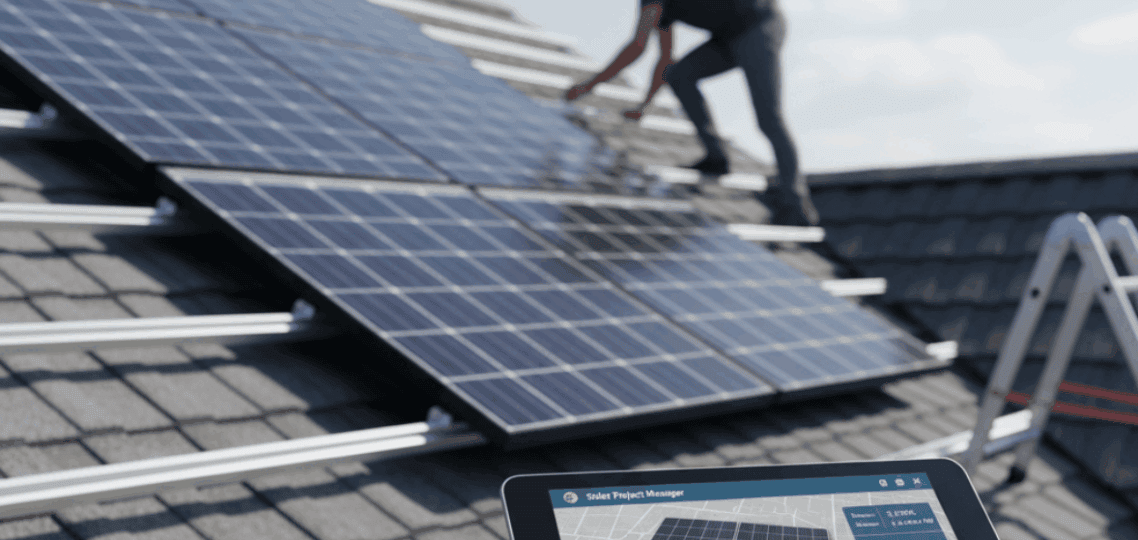
Shining a Light on Efficiency: Software for Solar Installation Project Management
The solar industry looks simple from the outside. A homeowner signs an agreement, a crew shows up, and soon the roof is producing clean energy. Anyone who has actually worked inside a solar business knows it’s never that straightforward.
Every system that goes up on a roof is the result of a long chain of moving parts, conversations with customers, site visits, design work, permits, product ordering, solar installation, inspections, and ongoing monitoring. One hold-up anywhere in that chain can push a project back day or even weeks.
When a company is only handling a few installs a month, this can be managed with phone calls and spreadsheets. But once the workload increases, that patchwork of tools starts to break down. Information gets spread across inboxes. Someone forgets to order inverters. The roof team arrives before approval is granted. An inspection needs rescheduling and no one knows.
Most solar companies don’t struggle because they do bad work, they struggle because the work has so many steps that it’s easy to lose track. That’s where solar installation management software becomes valuable.
Instead of treating each stage separately, software ties everything together: sales information, photos from the survey, design drafts, permitting updates, scheduling, inventory, and post-solar installation monitoring. Having all of this in one place doesn’t just help organize projects, it keeps them moving. And movement is everything in solar. If jobs sit still, revenue stops.
The companies that grow consistently are often not the ones installing the most advanced hardware. They’re the ones that keep projects flowing smoothly, communicate well, and avoid costly delays. The right system helps make that possible.
Below, we’ll look at how software helps manage multi-stage solar workflows, coordinate crews and equipment, and stay ahead of system maintenance using performance data all with the same goal: smoother projects, happier customers, and better margins.
Making Multi-Stage Solar Work Feel Less Like Juggling

A typical solar project isn’t a one-and-done appointment. It unfolds in phases:
- Someone visits the property to measure shade, slope, and usable roof space
- Engineers draw up plans
- Permits get filed
- Materials are ordered and delivered
- Mounting and panel installation happens
- The system is inspected and finally turned on
In practice, each one of those bullet points contains a dozen small tasks of its own: getting the correct photos, uploading notes, collecting measurements, calling the utility, making sure the right paperwork is signed, and so on.
When these steps are scattered across texts, emails, and sticky notes, it’s only a matter of time before something slips. One missing electrical photo can hold a permit. A forgotten status update leaves a project idle for days while everyone thinks someone else is dealing with it.
Good project management software doesn’t make the work disappear, but it gives every project a single “home” where tasks and deadlines are visible. The surveyor uploads measurements directly into the job record. The permitting team sees it immediately and starts their part. Once permitting is approved, the solar installation team is automatically queued.
Everyone knows where the project stands without asking “Hey, did you send that yet?” And when something does fall behind, it’s easy to see why and fix it.
One of the most helpful features is checklists. They don’t sound exciting, but they prevent the sort of small mistakes that cause big slowdowns. If the city requires a specific electrical panel photo, the system won’t move forward until it’s attached. That eliminates back-and-forth, re-visits, and late approvals.
At a human level, this is what software really does: It frees people from tracking dozens of scattered details and lets them focus on the work only they can do.
Keeping Teams and Equipment in the Right Place at the Right Time
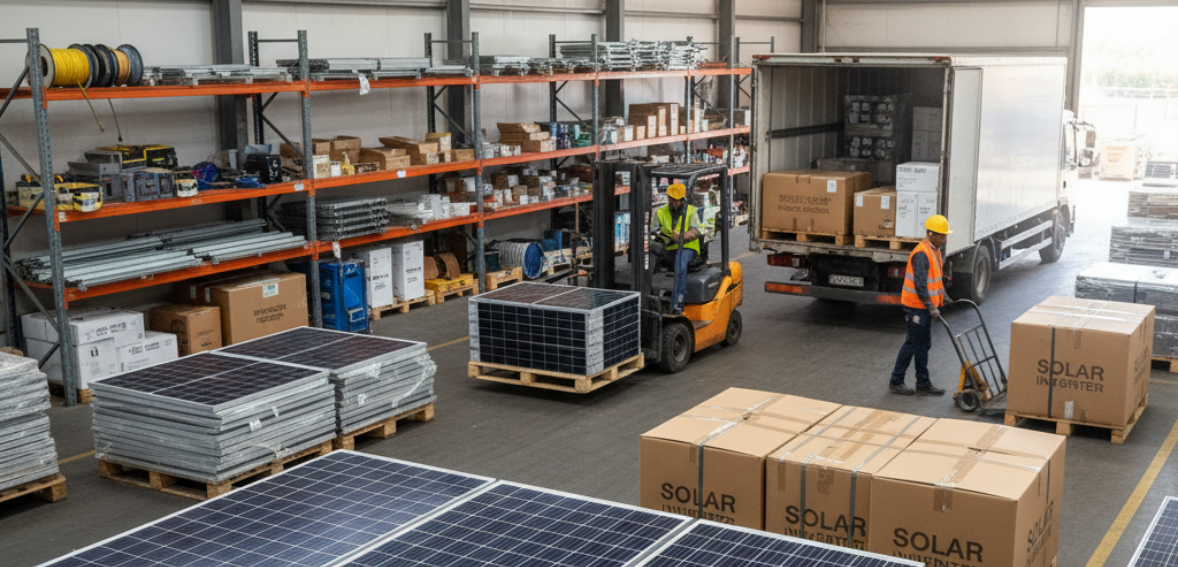
You can’t install a solar system without the right people or the right gear.Panels, inverters, racking hardware, optimizers, wiring, roof attachments. If one piece is missing, the job doesn’t happen. And if the right crew isn’t scheduled when the equipment arrives, it still doesn’t happen.
That’s why scheduling and inventory are two sides of the same coin.
A typical residential install usually involves at least two trade groups: the mounting crew first, then electricians. If their schedules aren’t aligned, one finishes and the other doesn’t show up until next week. Suddenly, that “two-day install” becomes a ten-day project, and the customer is calling for updates.
Solar installation management platforms help avoid that by linking task order with crew scheduling. Once a previous step is marked completed, the next team can be notified or automatically booked. If the roof team finishes early, the electrician can slide in sooner and the whole project wraps faster.
On the equipment side, many companies only realize they’re missing hardware when the crew shows up to start. That’s a guaranteed delay. A better system keeps track of what’s needed for every job and where it’s located.
For example:
Job A requires 12 panels and one inverter.
Job B requires 20 panels and microinverters.
If stock for Job B is running low, the system alerts the purchasing manager before it becomes a problem. This is especially important when running several solar installations at once . Missing a single inverter shouldn’t stall two crews.
Better scheduling and inventory control don’t just keep projects running they make better use of every workday. Crews spend more time installing and less time waiting.
Staying Ahead of Performance Issues With System Monitoring

One unique advantage of solar is that you can “see” how well a system is performing from anywhere. Modern inverters and monitoring devices report real-time production data. Homeowners can check output from their phones. Installers can track hundreds of systems from a dashboard.
The value of this data goes beyond curiosity. If a system suddenly drops in output, it’s usually a sign something isn’t right shade from a new tree, a failed inverter, a disconnected cable, or a damaged panel.
When monitoring integrates with project management, it becomes more than information it becomes action. A drop in performance can automatically create a service task. The technician can see the system’s history before leaving. Customers are notified and reassured something is happening.
This prevents the most frustrating scenario in the industry: A homeowner doesn’t notice poor production until they get a bill months later. By then, they’re upset and the installer is on the defensive.
Proactive maintenance not only protects customer trust, it also becomes a revenue stream. Many companies sell annual checkups, cleanings, or service plans that include monitoring. With IoT data guiding the schedule, maintenance happens because it’s needed, not because it’s written on a calendar.
Good solar installers don’t just put panels on roofs; they take care of the system afterward. Software makes that long-term relationship easier.
Why Better Communication Keeps Projects Moving

Ask anyone who’s worked on more than a handful of solar projects what slows things down the most, and you’ll hear the same answer every time: “Waiting on someone, the utility, the inspector, the homeowner, or another crew.”
Good communication doesn’t eliminate those waiting periods, but it shortens them. Most delays happen not because a task is difficult, but because nobody is sure what’s supposed to happen next.
When a team has to chase down updates “Did the permit get approved?” “Has the inverter arrived?,” “Did the homeowner sign the interconnection form?” time gets wasted in tiny pieces that add up to whole days.
Software helps because it pulls all those conversations into a single timeline. Everyone involved can check the job record to see notes, updated dates, and who handled the last step. If the utility says they’ll review the application in five business days, that deadline is entered and visible. If someone needs a reminder, it’s automated, not accidental.
Customers benefit, too. Solar installation is a big investment, often thousands of dollars and weeks of process. When customers aren’t kept in the loop, they worry. A simple update like: “We submitted your permit the city typically takes three to five days to approve” goes a long way. Later, when solar installation is scheduled, another message “Roofing team is set for Friday; electrical crew will arrive Saturday” sets expectations and prevents surprise.
None of this takes long. The difference is consistency. When communication becomes part of the workflow rather than an afterthought, the whole project feels smoother and less stressful for both sides.
Learning From Each Job Instead of Repeating Mistakes
A healthy solar business treats every project like a lesson. Not every job runs perfectly; anyone with experience knows that. Panels arrive damaged. Cities change permitting rules overnight. A homeowner forgets to clear yard access. A gust of wind forces crews off a roof.
Problems aren’t avoidable. Repeating them is.
That’s where documentation and post-project reflection become valuable. When all project details, photos, measurements, warnings, and special instructions are stored in one place, the next team can prepare better. If the last technician noticed brittle shingles or a cramped electrical panel, the company can assign installers who know how to handle those complications.
Patterns become visible. Maybe a certain racking supplier is consistently late delivering parts. Maybe one utility is slower at interconnection than others. Maybe a specific neighborhood requires extra roof access preparation.
Once a company sees these patterns, it can adapt:
- Order equipment earlier
- Start utility paperwork sooner
- Build in buffer days where needed
Even small insights make a difference. If a city tends to kick back plans missing a certain type of photo, adding that photo to a required checklist solves the problem permanently.
The goal is simple: Every project should make the next one easier.
And when knowledge is stored in a shared system not in one installer’s memory the entire company becomes stronger.
Why Monitoring Doesn’t End at PTO

For many homeowners, the “finish line” of a solar project is PTO permission to operate. The switch flips, the inverter hums, and power begins to flow.
But for installers, PTO isn’t the end of the story. Solar is a long-term commitment, and the years that follow solar installation matter.
Panels degrade slowly. Inverters sometimes fail. A neighbor’s new second-story can suddenly shade half the array. Monitoring data gives installers a window into how systems perform over time. It’s a subtle but powerful advantage.
Imagine two companies:
- Company A installs a system, hands over paperwork, and disappears unless the customer calls.
- Company B installs a system and keeps an eye on it, sending a note if output drops unexpectedly.
Which one earns repeat business and referrals? The second one, every time.
Customers rarely understand system behavior well enough to catch issues early. A monthly bill that looks higher might be ignored or blamed on weather.
When installers use monitoring software to monitor system health, they stay ahead of problems. They can schedule cleaning, replace components under warranty, and keep performance strong.
It becomes a relationship not just a one-time job. That kind of relationship is where long-term value lives.
Conclusion
Running a solar business is a balancing act. There’s the technical side designing and installing reliable systems and there’s the operational side, which is about keeping dozens of details aligned so jobs finish on time.
The companies that thrive aren’t always the ones with the flashiest panels or the fastest crews. They’re the ones that stay organized, communicate clearly, and keep projects moving.
Solar installation management software isn’t about replacing people, it’s about giving them tools to work more confidently. When survey notes flow naturally into design, when permit timelines are visible, when materials are ready before crews arrive, and when customers are kept informed, projects feel lighter and more manageable.
In an industry where delays can stretch into weeks, even small improvements matter. A clearer checklist here. A shared calendar there. A little more visibility into who needs to do what.
Over time, those small improvements add up to something big:
- Faster installs
- Less wasted labor
- Fewer frustrated customers
- More referrals
- More stable growth
And once systems are up and producing, monitoring keeps installers connected to the work they’ve done, turning one-time sales into lasting partnerships.
Solar is about generating clean power but it’s also about building trust. Efficient project management is what makes that possible.
FAQs:
What makes solar installation projects tricky to manage?
Solar projects typically have multiple steps: an initial site assessment, design/permit phase, installation, then inspections and possibly a customer orientation. They often involve different specialists (surveyors, installers, electricians, inspectors) and parts (panels, racking, inverters) that must come together. Timing is critical – e.g., you can’t schedule the final electrical hook-up before the panels are mounted. Managing all these dependencies without a clear system can be chaotic.
How can software help with scheduling in solar projects?
A good solar project management tool lets you create a template workflow for projects. For instance, once a sale is confirmed, the software can schedule a site survey, then block out time for design/permitting (and send the design team the task), then schedule the install crew a few weeks out (contingent on permit approval). It keeps everyone in the loop with status updates. If permits delay, you can shift the install date and the system will notify the crew and customer of the new timeline. Basically, it keeps the project timeline transparent and adjustable.
How is inventory tracking important here?
Solar jobs require specific equipment – panels, inverters, mounting kits – often ordered per job. Software can track what inventory is needed for each project and flag if anything is back-ordered. For example, if you schedule an install but the required microinverters aren’t in stock yet, the system should alert you to avoid scheduling a crew without materials on-site. Some software will auto-deduct parts from inventory when a job is scheduled and even suggest reorder when stock is low, preventing delays due to missing equipment.
Can such software improve customer communication? Definitely. Solar installations are big investments, and customers appreciate being kept in the loop. A cloud platform can offer a customer portal where clients see their project status (e.g., “permit submitted”, “installation scheduled for June 10”). It can also automate emails, like “We’ve scheduled your installation crew, here’s what to expect on install day…” Good communication reduces customer anxiety and calls asking for updates
What benefits does CloudJobManager offer to solar installers?
CloudJobManager helps solar companies by organizing all project stages in one place. You can assign tasks to team members (design, permitting, install) with deadlines and track them to completion. Its scheduling tool factors in task dependencies – you won’t accidentally schedule the final inspection before the install is done. It also integrates with calendars and can send reminders to customers (e.g., confirming their installation date). For maintenance, if you have ongoing service contracts for installed systems, CloudJobManager can manage those recurring inspections or cleanings too. Overall, it reduces the administrative load and keeps your solar projects on time and on budget.