
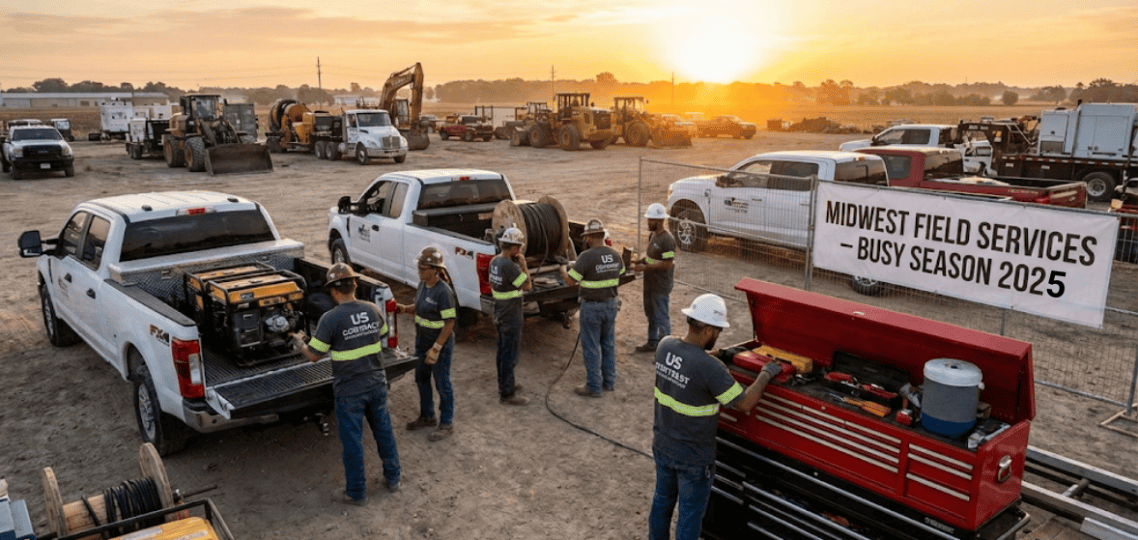
Seasonal Staffing 101: Scaling Your Field Workforce During Peak Periods
Seasonal demand is a reality for many field service businesses. Whether you run HVAC, landscaping, plumbing, pest control, electrical services, or any contractor-based operation, there are periods when work surges dramatically and others when it slows just as fast. Managing this cycle effectively is one of the biggest operational challenges contractors face. Seasonal hiring is not just about bringing extra hands. It is about maintaining service quality, controlling costs, protecting your core team, and positioning your business for long-term growth.
Peak season staffing requires a different mindset than year-round workforce planning. Decisions made under pressure, hiring too quickly, onboarding poorly, or overcommitting labor can create problems that linger well beyond the busy season. On the other hand, a thoughtful seasonal labor strategy can help your business capture more revenue during high-demand periods while staying lean and resilient during slower months.
This article explores how contractors can approach seasonal hiring strategically, scale their field workforce responsibly, and balance peak season staffing with off-season management.
Understanding Seasonal Hiring and Why It Matters for Contractors

Seasonal hiring is the practice of expanding your workforce temporarily to meet predictable spikes in demand. For contractors, peak season staffing is often tied to weather, regulatory deadlines, consumer behavior, or budget cycles. Summer heatwaves drive HVAC calls. Spring and summer fuel landscaping workloads. End-of-year deadlines increase commercial maintenance and compliance work.
What makes seasonal hiring especially challenging in field service businesses is that labor quality directly affects customer satisfaction. Unlike retail or warehousing, field work often requires technical skill, safety awareness, and customer-facing professionalism. A poorly prepared seasonal hire can damage your reputation as quickly as an understaffed schedule.
Peak season staffing matters because missed jobs, long wait times, and burned-out technicians all carry real costs. When demand exceeds capacity, businesses often lose revenue not because there isn’t enough work, but because there aren’t enough trained people to deliver it. Seasonal hiring done right allows you to capture that demand without overextending your permanent workforce.
Why Peak Season Staffing Fails for Many Field Service Businesses
Many contractors struggle with seasonal hiring because they approach it reactively instead of strategically. When phones start ringing nonstop, hiring becomes rushed. Job descriptions are vague. Screening is minimal. Onboarding is compressed or skipped entirely. The result is a temporary workforce that struggles to meet expectations.
Another common failure point in peak season staffing is underestimating the hidden costs. Temporary workers may have lower hourly wages, but inefficiencies, mistakes, rework, and supervision time can erode those savings quickly. Without proper planning, contractors may find themselves spending more to manage seasonal labor than they gain from increased volume.
There is also the issue of morale. Permanent technicians who are already stretched thin during busy periods can feel frustrated if seasonal hires slow them down or create more work. When seasonal labor is poorly integrated, it can hurt retention among your most valuable long-term employees.
Finally, many businesses fail to think beyond the busy season. Hiring without an off-season management plan often leads to layoffs, lost talent, and operational instability once demand drops. Seasonal hiring should support long-term workforce planning, not disrupt it.
Forecasting Demand to Plan Peak Season Staffing Early

Successful seasonal hiring starts months before the busy season begins. Forecasting demand allows you to estimate how many additional workers you will need, what skills they must have, and how long you will require them. This planning phase is critical for avoiding panic hiring.
Historical data is one of the most reliable tools for forecasting peak season staffing needs. Reviewing job volume, overtime hours, response times, and customer wait periods from previous years can reveal patterns that repeat annually. Even small businesses can identify trends by tracking call volume, job completion rates, and technician utilization over time.
External factors should also be considered in workforce planning during busy season periods. Weather forecasts, new regulations, market expansion, and changes in customer behavior can all influence demand. A proactive approach allows contractors to align seasonal labor strategy with expected workload rather than reacting to it after problems arise.
Building a Flexible Workforce Model That Supports Seasonal Hiring
Rather than treating seasonal hiring as an isolated event, successful contractors build a flexible workforce model that supports scaling up and down smoothly. This model typically combines a strong core team with temporary labor options that can be activated during peak periods.
A flexible workforce allows you to respond to demand without sacrificing service quality. It also reduces pressure on permanent employees, helping prevent burnout during intense seasons. Flexibility does not mean instability, it means having clear roles, expectations, and systems that allow temporary staff to integrate quickly.
Temporary workforce planning should include defined job scopes. Not every seasonal hire needs to perform the same tasks as a senior technician. Many businesses find success by assigning seasonal workers to support roles, routine services, inspections, or assistant positions that free skilled technicians to focus on complex jobs.
Choosing the Right Seasonal Labor Strategy for Your Business

There is no single approach to seasonal hiring that works for every contractor. The right seasonal labor strategy depends on your trade, job complexity, customer expectations, and internal capacity. Some businesses rely on short-term direct hires. Others work with temp agencies for contractors. Some cross-train existing staff to handle peak season tasks more efficiently.
Direct seasonal hiring offers more control over training and culture fit, but it requires more effort upfront. Working with temp agencies can speed up staffing, but may limit customization and long-term retention. A hybrid approach combining direct hires with agency support can offer balance during extreme demand spikes.
Regardless of the approach, clarity is essential. Seasonal workers should understand the length of employment, performance expectations, and potential opportunities beyond the busy season. Transparency helps build trust and improve engagement, even for short-term roles.
Also read: Winning the Talent War: Hiring Skilled Trades in a Competitive Market
Onboarding Seasonal Workers Without Slowing Down Operations
One of the biggest fears contractors have about seasonal hiring is the time required to onboard new workers during already-busy periods. However, effective onboarding does not have to be time-consuming if it is structured correctly.
Seasonal onboarding should focus on essentials: safety procedures, customer interaction standards, job workflows, and communication expectations. The goal is not to make seasonal workers experts, but to make them productive quickly without creating risk.
Using standardized processes, checklists, and digital tools can dramatically reduce onboarding time. When seasonal hires know exactly what is expected and where to find information, they become assets rather than liabilities during peak season staffing periods.
Protecting Quality and Safety During Contractors’ Busy Season
As workload increases, quality and safety risks increase as well. Seasonal hiring should never compromise safety standards or workmanship. In fact, busy season periods require even greater discipline.
Clear supervision, defined escalation paths, and regular check-ins help ensure seasonal workers operate within their capabilities. Assigning experienced team members as mentors or leads can provide guidance without overwhelming management.
Quality control during peak season staffing is not about micromanagement. It is about creating systems that catch issues early, reinforce best practices, and maintain customer trust even when schedules are full.
Scaling Field Crews Without Overhiring or Burning Cash

One of the most delicate parts of peak season staffing is knowing when to stop hiring. Many contractors make the mistake of staffing for “maximum possible demand” instead of “sustainable peak demand.” Overhiring may feel safer in the moment, but it quickly leads to idle labor, cash flow strain, and difficult off-season decisions.
Smart workforce planning during busy seasons focuses on utilization, not headcount. The goal is to keep crews productive without creating excess capacity that becomes a burden later. This requires close monitoring of job duration, technician availability, and backlog trends throughout the season. Hiring should be incremental, not all at once.
Another effective approach is staggered hiring. Instead of onboarding all seasonal staff at the start of the peak period, contractors can bring workers in phases as demand rises. This reduces risk and allows managers to adjust staffing levels based on real-time performance and workload data.
Using Technology to Manage Seasonal Staffing at Scale

Technology plays a critical role in making seasonal hiring manageable. Without proper systems, coordinating temporary workers, schedules, routes, and payroll becomes chaotic very quickly. Digital tools enable businesses to scale their workforce without losing control.
Scheduling and dispatch systems help balance workloads across permanent and seasonal staff. When everyone works from the same platform, managers gain visibility into availability, job progress, and performance. This transparency prevents double-booking, missed appointments, and inefficient routing, common problems during contractors’ busy seasons.
Workforce management tools also support accountability. Seasonal workers can clock in, receive assignments, update job statuses, and submit documentation in real time. This reduces the need for constant supervision and allows office teams to manage larger crews without expanding administrative staff.
Keeping Service Quality High During Peak Season Staffing

Customer expectations do not drop just because demand is high. In fact, customers are often less forgiving during peak periods when delays are already common. Maintaining service quality during seasonal hiring is essential for protecting brand reputation.
Clear standards help seasonal workers understand what “good work” looks like. This includes how technicians communicate with customers, how they present themselves on-site, and how they document completed work. Consistency is key, especially when customers interact with multiple team members over a short period.
Feedback loops are also important. Managers should regularly review job outcomes, customer feedback, and internal reports during peak season staffing. Small issues addressed early prevent larger problems later and help seasonal teams improve quickly.
Retaining Top Seasonal Talent Beyond the Busy Season

Not all seasonal hires should be temporary. Many contractors overlook the opportunity to identify high performers during peak periods and convert them into long-term assets. Seasonal hiring can serve as an extended evaluation period for future full-time roles.
Offering clear pathways to continued employment encourages seasonal workers to stay engaged and perform at a higher level. Even if full-time roles are not immediately available, maintaining relationships with strong seasonal workers creates a reliable talent pool for future busy seasons.
Retention does not always mean year-round employment. Some contractors successfully rehire the same seasonal workers year after year, reducing onboarding time and training costs. This continuity strengthens workforce planning and reduces uncertainty during peak season staffing cycles.
Managing the Transition From Peak Season to Off-Season
The end of a busy season is as important as the beginning. Poor off-season management can undo the benefits of successful seasonal hiring. Contractors should plan this transition deliberately rather than reacting once demand slows.
Clear communication is essential. Seasonal workers should know when their assignments are ending and what opportunities may exist in the future. Transparent conversations preserve goodwill and reduce frustration.
For permanent staff, the post-peak period is an opportunity to rebalance workloads, address deferred maintenance, and invest in training. Businesses that use the off-season strategically often enter the next peak period stronger and more prepared.
Balancing Cost Control With Workforce Stability
Seasonal hiring inevitably increases labor costs, but those costs must be weighed against lost revenue from understaffing. The goal is not to minimize spending at all costs, but to optimize it.
Temporary workforce planning should include budget scenarios for different demand levels. This allows contractors to make informed decisions if conditions change unexpectedly. Flexibility is a competitive advantage in unpredictable markets.
Businesses that align financial planning with workforce planning are better positioned to weather fluctuations without resorting to drastic measures like layoffs or service reductions.
Building a Long-Term Seasonal Labor Strategy
The most successful contractors treat seasonal hiring as a core business function, not a recurring crisis. They document what worked, what didn’t, and how staffing decisions affected performance each year.
Over time, this knowledge becomes a strategic asset. Businesses refine their seasonal labor strategy, improve onboarding efficiency, strengthen relationships with staffing partners, and build resilient teams capable of handling growth.
Peak season staffing is not just about surviving busy periods. It is about using those periods to strengthen operations, expand market presence, and set the stage for sustainable success.
Conclusion: Turning Seasonal Staffing Into a Competitive Advantage
Seasonal demand is unavoidable in many field service industries, but chaos is not. With thoughtful planning, flexible workforce models, and the right systems in place, seasonal hiring becomes a powerful growth tool rather than a recurring headache.
By forecasting demand, scaling field crews responsibly, supporting teams with technology, and managing off-season transitions carefully, contractors can protect both profitability and people. Peak season staffing, when done right, allows businesses to deliver excellent service during their busiest moments while building a stronger foundation for the future.
FAQs
How early should contractors start planning seasonal hiring?
Ideally, planning should begin months before peak season. Early forecasting allows time for recruiting, onboarding, and system preparation.
Is seasonal hiring only for large field service businesses?
No. Even small contractors benefit from temporary workforce planning to avoid burnout and missed revenue during busy periods.
Should seasonal workers handle the same jobs as permanent staff?
Not always. Many businesses assign seasonal hires to defined roles that support skilled technicians and improve overall efficiency.
Can seasonal workers be retained long-term?
Yes. High-performing seasonal workers often become excellent full-time employees or reliable returning hires.
How do contractors manage staffing when demand drops suddenly?
Clear off-season planning, flexible contracts, and strong communication help businesses scale down responsibly without damaging relationships.