
Bridging the Gap: Enhancing Communication Between Field and Office Teams
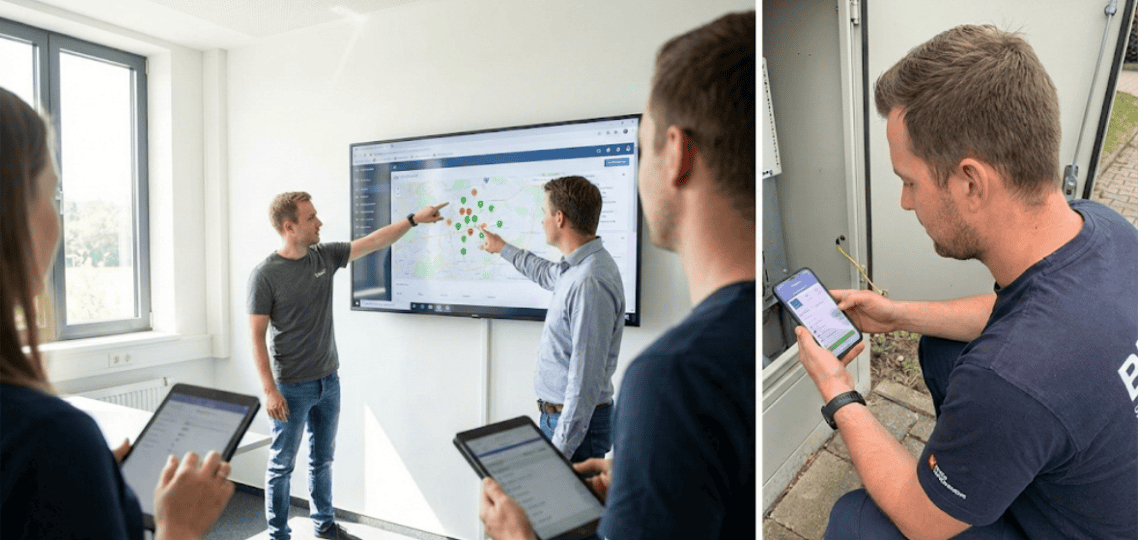
Strong communication between field and office teams is the backbone of any service-based business. Yet in many organizations, this is precisely where things begin to crack. The office often works with schedules, customer expectations, and planning tools, while field teams operate in fast-moving, unpredictable environments. When these two worlds are not aligned, small misunderstandings quickly turn into missed appointments, frustrated customers, and stressed employees.
One major reason communication breaks down is the reliance on fragmented channels. Office staff may send instructions via email, follow up with a call, and then drop additional notes in a spreadsheet or messaging app. Field technicians, meanwhile, are driving, working with tools, or moving between job sites. Important details get buried, messages are missed, and updates arrive too late to be useful. Over time, this creates frustration on both sides. The office feels ignored, while the field feels overwhelmed.
Another problem is lack of shared visibility. Office teams may not know when a technician is running late, stuck in traffic, or encountering unexpected on-site complications. Field staff, on the other hand, may not have access to the latest customer notes, schedule changes, or priority updates. Without a shared source of truth, both sides are forced to guess, leading to reactive decisions rather than proactive coordination.
Cultural differences also play a role. Office teams often work on structured timelines with meetings and reporting cycles, while field teams operate in real time. When expectations are not aligned, communication can feel one-sided or dismissive. Bridging this gap requires more than tools; it requires a mindset shift that recognizes both perspectives as equally critical to operational success.
The Cost of Poor Communication on Productivity and Customer Experience

Poor communication between field and office teams not only creates internal frustration but also directly impacts productivity and customer satisfaction. When messages are unclear or delayed, technicians may arrive at job sites without the right information, tools, or parts. This leads to repeat visits, wasted travel time, and unnecessary costs that quietly erode profitability.
From a customer’s perspective, communication failures are often interpreted as incompetence. If the office promises a specific arrival window but the technician shows up late or unprepared, trust is damaged. Customers rarely distinguish between “office error” and “field issue.” To them, it is one experience, and inconsistency within that experience reflects poorly on the entire business.
Internally, productivity suffers when field teams spend time calling the office for clarification or when office staff scramble to track down technicians for updates. These interruptions break focus and slow workflows on both ends. Over time, employees may begin to disengage, feeling that their efforts are constantly undermined by preventable miscommunication.
There is also a hidden cost in employee retention. Field technicians who feel unsupported or blamed for communication breakdowns are more likely to burn out. Office staff who constantly manage complaints and damage control experience similar fatigue. Improving communication is not just an operational upgrade; it is a strategic investment in workforce stability and morale.
Creating a Shared Communication Framework for Field and Office Teams
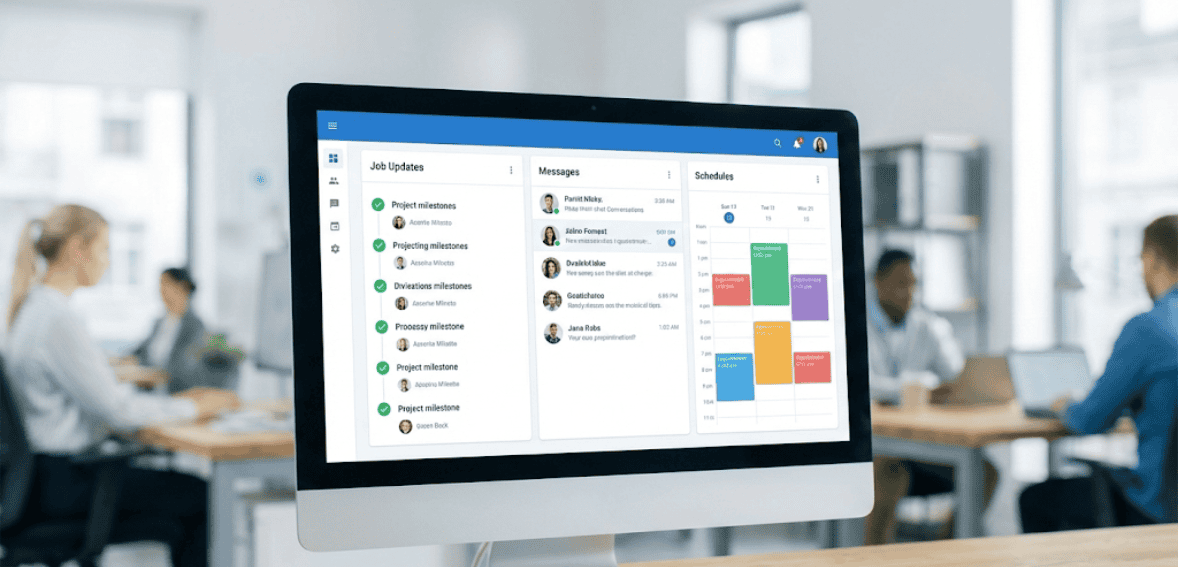
To truly enhance communication between field and office teams, businesses must move beyond ad-hoc messaging and create a structured, shared communication framework. Building this framework involves several steps: first, establish clear guidelines for how information is communicated; second, define who owns each type of update; third, decide which channels or systems will host specific conversations. This does not mean adding more rules or bureaucracy. Instead, it provides clarity for everyone involved in how information flows.
A shared framework begins with defining communication standards. Start by specifying that schedule changes, job notes, and customer updates should always be logged in a single system accessible to both teams. Next, clarify that verbal communication has value, especially for urgent matters, but must be supported by written records to prevent confusion. Finally, instruct all team members to use the agreed-upon system as the primary source for information. When these standards are followed, trust naturally increases.
Timing is another important element. Field teams need updates that are timely and relevant, not overwhelming. Office teams benefit from predictable check-in points rather than constant interruptions. Setting expectations around response times and update frequency helps both sides plan their work without feeling micromanaged or ignored.
Equally important is encouraging two-way communication. Field technicians should feel empowered to share insights from job sites, such as recurring customer issues or scheduling inefficiencies. Office teams can use this feedback to improve planning and customer communication. When information flows in both directions, collaboration replaces conflict.
Using Technology as a Bridge, Not a Barrier
Technology plays a central role in bridging the communication gap, but only when it is implemented thoughtfully. Too many businesses adopt tools without considering how they fit into daily workflows. The result is “tool overload,” in which important messages are scattered across platforms and go unnoticed due to fatigue.
The most effective communication systems act as bridges rather than barriers. They centralize conversations, provide real-time updates, and reduce the need for constant back-and-forth. For field teams, mobile-friendly interfaces are essential. Updates should be easy to read, quick to respond to, and accessible even in challenging environments.
For office teams, technology should offer visibility without micromanagement. Dashboards that display job status, technician availability, and progress updates enable planners to make informed decisions without interrupting fieldwork. Automated notifications can replace manual follow-ups, freeing staff to focus on higher-value tasks.
However, technology alone is not the solution. Training and adoption is as important as the software itself. Both field and office teams need to understand not only how to use the tools, but why they matter. When technology is positioned as a support system rather than a surveillance mechanism, adoption improves, and communication becomes more natural.
Strengthening Real-Time Collaboration Without Creating Disruption

Real-time collaboration between field and office teams is essential, but it must be handled carefully. Constant interruptions, excessive notifications, or unclear expectations can quickly become counterproductive. The goal is not nonstop communication; it is meaningful, timely coordination that supports work instead of slowing it down.
Effective real-time collaboration starts with understanding urgency. Not every update requires immediate attention. Office teams should differentiate between critical issues, such as emergency job changes or safety concerns, and informational updates that can wait. When field technicians know that real-time messages truly matter, they are more likely to respond promptly and engage fully.
Field teams also benefit from structured ways to send updates without stopping their workflow. Simple status updates, photos from job sites, or brief notes recorded between tasks help technicians communicate progress efficiently. This reduces the need for phone calls while keeping the office informed.
From the office perspective, real-time visibility enables smarter decision-making. Knowing which jobs are running late, which technicians are available, and where bottlenecks are forming enables planners to proactively adjust schedules. When collaboration becomes proactive rather than reactive, stress levels drop, and productivity rises across the organization.
Building Trust and Accountability Through Clear Communication

Trust is the foundation of strong communication between field and office teams. Without it, even the best tools and processes fail. Trust grows when communication is consistent, transparent, and fair.
One common source of tension is blame. When something goes wrong, field teams may feel blamed for delays they could not control, while office staff may feel accused of poor planning. Clear communication helps replace blame with accountability. When everyone has access to the same information, job notes, timelines, and customer updates, it becomes easier to understand what actually happened and why.
Accountability also improves when expectations are explicit. Field technicians should know what information they are responsible for sharing and when. Office teams should clearly communicate priorities, constraints, and changes. When roles are defined, communication feels supportive rather than confrontational.
Trust deepens when feedback is welcomed. Field teams often have valuable insights about recurring customer issues, unrealistic schedules, or process gaps. When office teams listen and act on this feedback, technicians feel respected and invested. Likewise, when office staff receive timely updates from the field, they gain confidence in their ability to support operations effectively.
Also read: Effective Team Communication in Field Service: Tools and Tips for the Office & Field
Leadership’s Role in Aligning Field and Office Communication

Leadership plays a critical role in bridging the communication gap. Culture is shaped from the top, and leaders set the tone for how field and office teams interact. When leaders treat communication as a shared responsibility rather than a technical problem, alignment becomes possible.
Strong leaders model good communication habits. They emphasize clarity, respect, and responsiveness in their own interactions. They discourage siloed thinking and reinforce the idea that field and office teams are partners working toward the same goals.
Leadership is also responsible for removing barriers. This includes investing in the right tools, providing training, and allocating time for teams to adapt to new processes. Too often, communication initiatives fail because teams are expected to change without adequate support.
Regular check-ins between field supervisors and office managers help maintain alignment. These conversations are not about micromanagement but about understanding challenges, sharing wins, and adjusting workflows as needed. When leaders actively listen to both sides, they create an environment where communication thrives naturally.
Conclusion: Creating a Sustainable Communication Strategy for Long-Term Growth
Enhancing communication between field and office teams is not a one-time project; it is an ongoing process that evolves with the business. As organizations grow, add new services, or expand geographically, communication needs become more complex.
Sustainability begins with simplicity. Processes should be easy to follow, tools should integrate smoothly into daily work, and communication standards should be flexible enough to adapt to changing conditions. Overly rigid systems often break under real-world pressure.
Continuous improvement is key. Businesses should regularly review how communication is working, identify friction points, and make adjustments. Feedback from both field and office teams should inform these improvements. When teams see their input driving real change, engagement increases.
Ultimately, strong communication becomes a competitive advantage. Businesses that align their field and office teams deliver more consistent service, respond faster to customer needs, and retain employees more effectively. Over time, this alignment supports scalability, resilience, and long-term success.
FAQs
Why is communication between field and office teams so challenging?
Because they operate in different environments with different pressures. Field teams work on-site in real time, while office teams plan and coordinate remotely, making alignment difficult without structured communication.
How can businesses improve communication without overwhelming teams?
By centralizing communication, prioritizing urgent messages, and setting clear expectations around updates and response times.
Does better communication really impact customer satisfaction?
Yes. Clear internal communication leads to accurate ETAs, prepared technicians, and fewer service issues, all of which directly affect the customer experience.
What role does leadership play in improving communication?
Leadership sets the culture, invests in tools and training, and ensures that communication is treated as a shared responsibility across the organization.
Can technology alone solve communication problems?
No. Technology supports communication, but success depends on adoption, training, and a culture that values clarity and collaboration.