
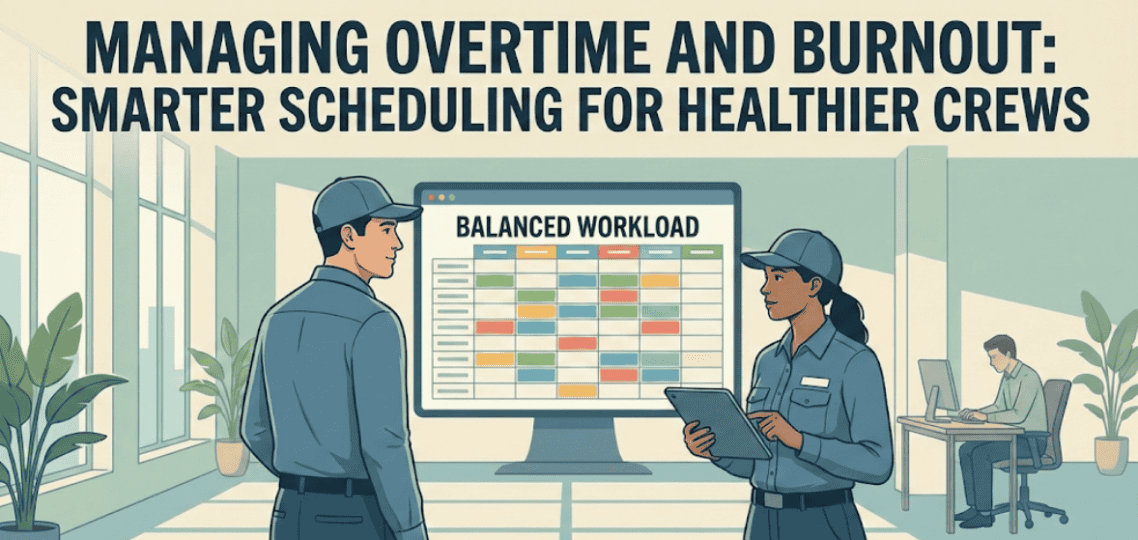
Managing Overtime and Burnout: Smarter Scheduling for Healthier Crews
Managing overtime and burnout has become one of the most pressing challenges for modern service businesses. Whether you operate in field service, construction, maintenance, or contracting, crews are under more pressure than ever. Customer expectations are rising, service windows are shrinking, and skilled labor is harder to replace. In the middle of all this, crews are working longer hours, covering last-minute jobs, and sacrificing recovery time just to keep operations running.
When overtime becomes routine rather than occasional, it stops being a productivity tool and becomes a liability. Crews begin to feel physically exhausted, mentally drained, and emotionally disconnected from their work. Burnout quietly creeps in, showing up as slower performance, rising mistakes, absenteeism, and eventually turnover. Many businesses don’t realize the cost until their best workers leave or service quality drops.
Smarter scheduling is not about working crews harder; it is about working them healthier. Thoughtful scheduling strategies help control overtime, balance workloads, and protect crew wellbeing without sacrificing service capacity. When schedules are designed with human limits in mind, productivity becomes sustainable rather than fragile.
This article explores how smarter scheduling directly addresses overtime and burnout, why traditional approaches fail crews, and how healthier scheduling creates stronger, more reliable teams.
Why Overtime Becomes a Hidden Threat to Crew Health
Overtime often starts with good intentions. A busy season hits, a technician calls in sick, or a critical job runs longer than expected. One extra hour turns into two. One long week becomes a habit. Over time, overtime becomes baked into schedules instead of reserved for true emergencies.
The problem is, overtime masquerades as productivity. On paper, it looks like more hours worked equals more output. In reality, extended hours lead to diminishing returns. Fatigue reduces focus, physical strain increases injury risk, and decision-making suffers. Crews working excessive overtime are more likely to make errors, overlook safety steps, and take longer to complete tasks they normally handle efficiently.
Burnout doesn’t announce itself loudly. It builds quietly through chronic stress and lack of recovery. Workers may still show up, but their engagement drops. They stop offering solutions, stop going the extra mile, and start counting hours instead of taking pride in outcomes. Once burnout sets in, no amount of incentives can fix it quickly.
Smarter scheduling recognizes that time is not infinite. Crews need predictable work patterns, reasonable daily limits, and adequate rest between shifts. When schedules respect these needs, overtime becomes the exception again, not the norm, and crews remain mentally and physically capable of delivering quality work.
How Poor Scheduling Practices Drive Burnout
Burnout is rarely caused solely by hard work. It is caused by unpredictable, unbalanced, and poorly communicated schedules. Many crews are willing to work hard when expectations are clear and workloads are fair. Problems arise when schedules constantly change, shifts run long without warning, or workloads are unevenly distributed.
One of the most common scheduling failures is reactive planning. Jobs are stacked back-to-back with no buffer time. Delays in the morning cascade into late evenings. Crews feel trapped, unable to recover lost time, and forced to push through exhaustion just to finish the day.
Another issue is uneven workload distribution. Some technicians consistently receive the heaviest schedules, while others have lighter days. Over time, high performers burn out faster because they are relied upon too often. This not only harms morale but also creates resentment within teams.
Lack of schedule visibility also contributes to burnout. When crews do not know their upcoming workload, they cannot plan rest, personal time, or family commitments. Constant uncertainty increases stress even before work begins.
Smarter scheduling addresses these issues by creating realistic job durations, evenly distributing work, and providing visibility into schedules in advance.Rews trust the schedule, stress levels drop, and performance stabilizes.
Smarter Scheduling as a Tool for Workforce Sustainability

Smarter scheduling is not just an operational improvement; it is a workforce sustainability strategy. Sustainable crews are those that can perform consistently over months and years without breaking down physically or mentally. This requires schedules that support recovery, fairness, and clarity.
A sustainable schedule explains human energy cycles. It avoids stacking physically demanding jobs back-to-back and limits consecutive long days. It also recognizes that mental fatigue matters as much as physical exhaustion. Complex jobs require focus, and tired minds make costly mistakes.
Balanced scheduling also helps retain skilled workers. Crews who feel protected from burnout are more loyal, more engaged, and more likely to grow with the company. Instead of constantly hiring and training replacements, businesses can invest in developing experienced teams.
Smarter scheduling also improves safety outcomes. Fatigued workers are more prone to accidents, especially in environments involving tools, machinery, or hazardous conditions. By controlling overtime and ensuring adequate rest, businesses reduce safety risks and liability.
In the long term, scheduling with crew health in mind creates a stable foundation for growth. Instead of expanding by stretching workers thinner, companies grow by operating smarter, planning better, and preserving the people who make the work possible.
Using Smarter Scheduling to Prevent Burnout Before It Starts
One of the biggest mistakes service businesses make is treating burnout as a problem to fix after it appears. By the time technicians are exhausted, disengaged, or calling in sick, the damage is already done. Smarter scheduling works best when it is preventive rather than reactive.
Preventing burnout starts with acknowledging that time, energy, and focus are finite resources. Schedules that look efficient on paper can be deeply inefficient in real life if they ignore how work actually impacts people. Long stretches without breaks, frequent late finishes, and unpredictable days slowly drain motivation even from the most dedicated workers.
Smarter scheduling builds in realistic pacing. This means planning workdays with natural limits rather than pushing crews to their limits every day. It also means respecting recovery time. A technician who finishes late should not be scheduled for an early start the next morning. When rest is built into the schedule, crews arrive focused instead of fatigued.
Another preventive strategy is avoiding “silent overtime.” This happens when jobs consistently run longer than scheduled, but schedules never adjust. Over time, crews come to accept unpaid or excessive overtime as part of the job. Smarter scheduling involves tracking actual job durations and updating future schedules based on reality, not assumptions.
When schedules reflect how work truly unfolds, burnout is reduced long before it becomes visible.
Balancing Productivity Goals With Human Limits
Productivity targets are necessary, but they become harmful when they ignore human limits. Smarter scheduling reframes productivity as output over time, not hours squeezed out of workers.
A tired technician may work longer hours, but their efficiency drops. Tasks take longer, mistakes increase, and customer satisfaction declines. In contrast, a rested crew working slightly fewer hours often completes more high-quality work in less time.
Healthy scheduling aligns productivity goals with sustainable effort. This means setting daily and weekly workload caps that prevent exhaustion. It also means recognizing that not every day should be maximized. Some days are naturally lighter, and that balance helps crews recover for heavier periods.
Smarter scheduling also distributes work fairly. High performers are often overloaded because they are reliable. While this may boost short-term results, it accelerates burnout and risks losing top talent. Balanced schedules ensure that workloads are shared equitably across the team, protecting both morale and retention.
By respecting human limits, productivity becomes consistent rather than volatile. Businesses that schedule for endurance instead of urgency build teams that last.
The Role of Predictability in Reducing Burnout
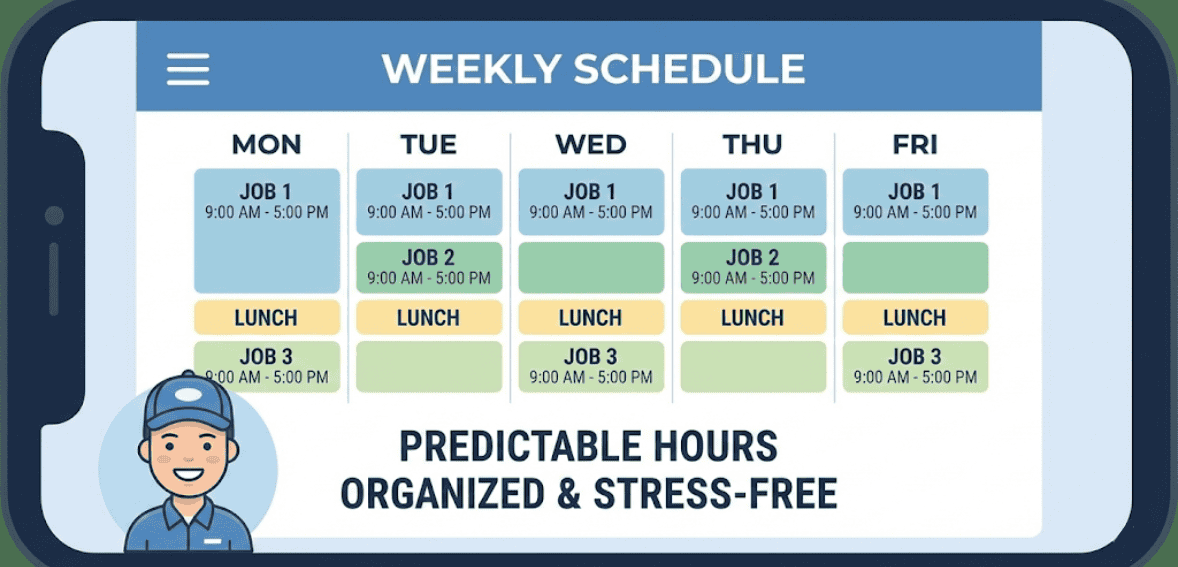
Uncertainty is one of the fastest paths to burnout. Crews can handle hard work, but they struggle when they don’t know what their day will look like. Smarter scheduling prioritizes predictability without sacrificing flexibility.
Predictable schedules allow technicians to plan their personal lives, rest properly, and mentally prepare for demanding days. When workers know their expected start and end times, stress levels drop significantly even before work begins.
This does not mean schedules must be rigid. It means changes are communicated clearly and early whenever possible. Last-minute changes should be the exception, not the rule. When emergencies arise, transparent communication helps crews understand why adjustments are necessary, reducing frustration.
Predictability also includes consistency in workload patterns. If certain days are always overloaded, smarter scheduling redistributes work across the week. Small adjustments, like shifting non-urgent tasks to quieter days, can dramatically reduce daily stress.
When schedules feel fair and foreseeable, crews trust leadership more and remain engaged longer.
Leadership Responsibility in Managing Overtime and Burnout

Smarter scheduling is not just a technical process; it is a leadership responsibility. Leaders set the tone for how overtime is viewed and how burnout is addressed.
When leadership consistently praises long hours and “pushing through,” burnout becomes a badge of honor instead of a warning sign. Crews feel pressured to overwork, even when exhausted. Smarter leadership recognizes effort without glorifying exhaustion.
Leaders play a key role in regularly reviewing schedules. This includes watching for patterns such as repeated late finishes, excessive weekend work, or the same technicians being overloaded. Addressing these patterns early prevents burnout from spreading.
Open communication also matters. When crews feel safe discussing workload concerns, leaders can make adjustments before problems escalate. Smarter scheduling thrives in environments where feedback is welcomed and acted upon.
Leadership must also model healthy behavior. When managers respect boundaries, take breaks, and prioritize balance, crews feel permission to do the same. Burnout prevention becomes part of the culture, not just a scheduling rule.
Also read: Embracing the Gig Economy: On-Demand Contractors in Field Service
Long-Term Benefits of Healthier Scheduling Practices

Smarter scheduling delivers benefits far beyond reduced burnout. Over time, healthier schedules lead to stronger teams, better service quality, and lower operational risk.
Retention improves because technicians feel valued and protected. Training costs drop because experienced workers stay longer. Customer satisfaction increases as rested crews perform consistently and professionally.
Safety outcomes improve as well. Fatigue-related accidents decline when crews are not pushed beyond reasonable limits. This protects workers and reduces the business’s liability.
Perhaps most importantly, smarter scheduling creates resilience. Businesses with healthy crews can adapt to demand spikes, emergencies, and growth without breaking down. Instead of constantly firefighting staffing issues, leaders can focus on strategic improvement.
Smarter scheduling transforms workforce management from a constant struggle into a stable system that supports long-term success.
Conclusion: Healthier Crews Are Built Through Smarter Scheduling
Managing overtime and burnout is not about reducing ambition; it’s about sustaining it. Smarter scheduling acknowledges that people are the most valuable asset in any service business. When schedules protect energy, fairness, and recovery, crews show up stronger, safer, and more committed.
Burnout is not inevitable. With thoughtful planning, realistic expectations, and leadership accountability, businesses can build schedules that support both productivity and well-being. The result is healthier crews, better service, and a company that can grow without burning out the people who make that growth possible.
FAQs
How does smarter scheduling reduce overtime without hurting revenue?
By improving efficiency and reducing fatigue, crews complete work faster and with fewer errors, allowing businesses to handle more jobs without extending hours.
Is some overtime unavoidable in field service businesses?
Yes, occasional overtime is normal, but it should be controlled, planned, and limited to avoid becoming a chronic burden on crews.
Can scheduling alone really prevent burnout?
Scheduling plays a major role, but it works best alongside supportive leadership, fair workloads, and open communication.
What’s the first step to improving scheduling for healthier crews?
Start by reviewing actual work hours versus scheduled hours. Adjust future schedules based on real data rather than assumptions.
How long does it take to see results from smarter scheduling?
Many businesses notice reduced stress and better morale within weeks, with long-term benefits growing over several months.