
Cash Discount vs Surcharge vs Convenience Fee: What Contractors Can Do in 2026
The decision between cash discount and surcharge is becoming a critical payment issue for contractors in 2026. Contractors who dedicate their efforts to winning jobs and completing projects on time while maintaining customer satisfaction will experience profit losses due to an expense they find difficult to detect. The hidden expense is due to credit card processing fees.
Contractors incur processing costs each time customers pay by credit card. Credit card fees start at only a few percentage points, yet they can lead to significant profit losses when applied across multiple jobs. Many contractors are seeking ways to reduce contractor payment processing costs while preserving their customer relationships.
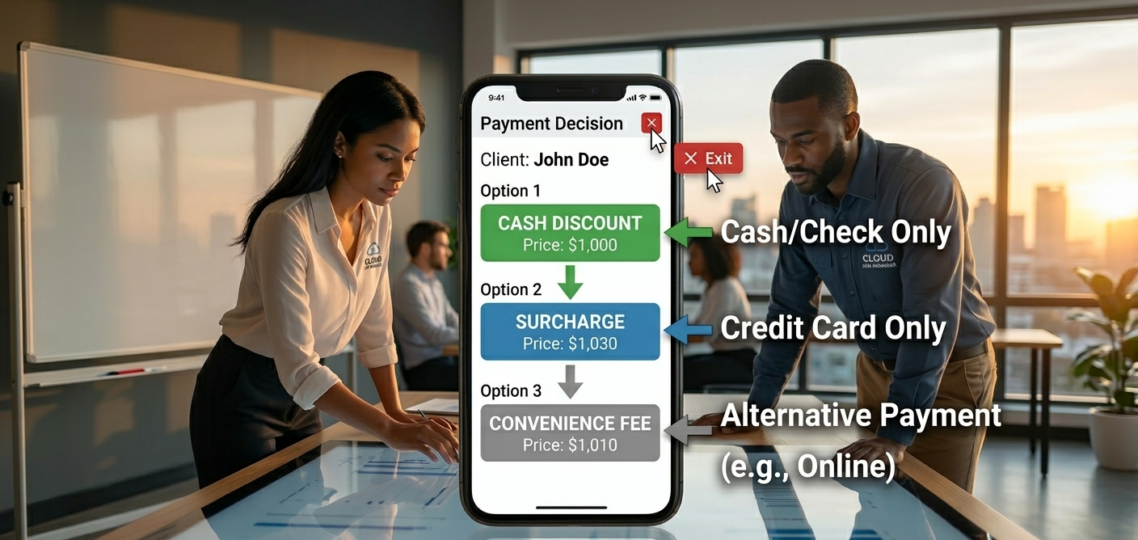
The distinction between a cash discount and a surcharge becomes essential in this situation. Some contractors offer cash discounts. Others add surcharges. Some businesses charge a convenience fee for specific payment methods. Each option has different rules, benefits, and risks.
The payment strategies that contractors understand allow them to maintain their profit margins while delivering information to customers and satisfying their needs.
Understanding Contractor Payment Processing Fees

Contractors need to understand payment processing costs, as these expenses determine whether to choose cash discounts or surcharges. The contractor does not receive immediate payment from the customer who uses a credit card. Multiple financial companies help move the money safely.
Why Contractors Pay Credit Card Fees
The customer’s bank, the card network, and the payment processor are all involved in safely moving the money, and each takes a small fee as a processing cost. All these charges together form what contractors call credit card fees.
How Payment Processing Fees Affect Contractor Profits
Contractors should understand that contractor payment fees typically range from 2% to 4% per transaction. A contractor faces a loss of between $100 and $200 because credit card payments are deducted from a $5,000 project.
Many contractors ignore this at first. These costs usually increase as the business grows. Businesses today use cash discounts and surcharge assessments to determine which payment method yields the best results.
Contractors need to understand these expenses because they enable better financial decisions rather than treating them as normal business expenses.
What Is Cash Discounting, and How Does It Compare to a Surcharge in Cash Discount vs Surcharge Decisions?
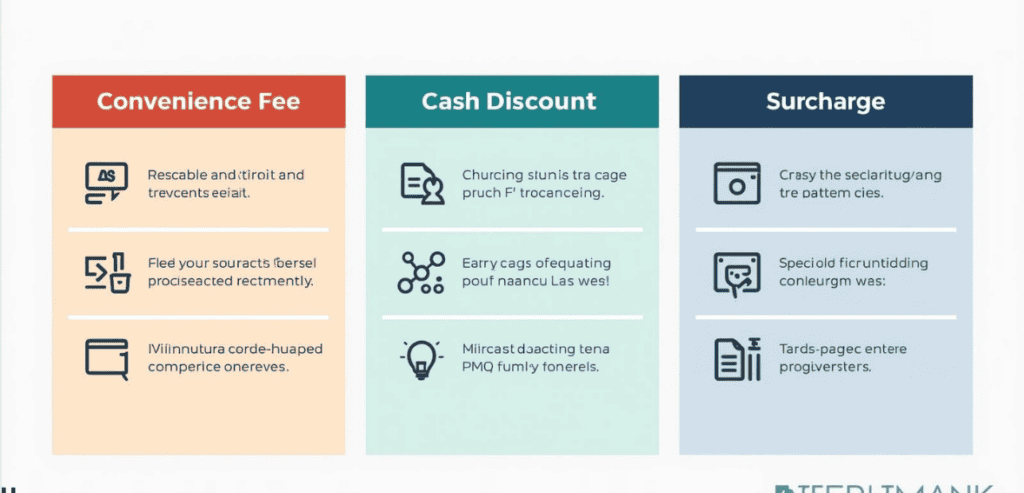
Cash discounting is the most straightforward payment option between a cash discount and a surcharge. The contractor must display the full cost of credit card transactions in its cash discount program, but it will offer a special discount to customers who pay by cash, check, or bank transfer.
A contractor can set their service price at $2,000, but they will offer customers a $60 discount when paid in cash. This payment-method promotion encourages customers to select options that avoid credit card processing fees.
Many contractors prefer this method because customers respond more favorably to discounts than to additional charges. Customers feel a sense of accomplishment rather than a sense of punishment.
Another reason contractors prefer this method over cash discounts is that cash discount programs involve fewer regulatory complications. The contractor can reduce payment processing costs by displaying clear pricing and ensuring customers understand available discounts.
Cash discounting also improves cash flow. The contractors receive their full payments and experience no delays due to their credit card processing. This process provides contractors with crucial financial assistance.
What Is Surcharging and How Does It Fit Into Cash Discount vs Surcharge Strategies?
Surcharging is an important alternative that businesses should consider when evaluating cash discounts versus surcharge options. Contractors set a fee for credit card payments, which customers must pay when they choose credit card rather than receive a discount.
A contractor may charge an additional 3 percent fee for card payments on a $3,000 project. The contractor uses this method to recover credit card charges associated with the specific transaction.
Surcharging requires more detailed regulations than cash discounting, although it appears straightforward. Contractors must provide customers with full information about the surcharge before payments are made. Businesses need to establish their processing charges, which they will assess to customers.
Contractors should note that they cannot apply surcharges to debit card transactions. Most credit card network regulations permit only credit card payments to receive processing charges. The business needs to understand these rules because they determine whether to choose cash discounting or surcharging.
Contractors exercise caution when applying surcharges, believing customers will respond unfavorably. Surcharges have become common across industries, making customers more accustomed to them.
When contractors clearly explain that these fees only cover payment costs, customers often understand. Effective communication helps minimize complaints and enables contractors to recover rising contractor payment fees.
What Is a Convenience Fee and How Does It Differ From Cash Discount vs Surcharge Models?
The convenience fee is a separate payment method from surcharging, creating two distinct payment systems. The convenience fee system operates independently from cash discount and surcharge systems.
A customer must pay a convenience fee when they select a payment method that differs from the contractor’s established payment method. The contractor sets their payment method to in-person payments but permits online payments, charging a convenience fee.
The fee remains fixed at a set amount rather than calculated as a percentage. The payment helps offset technology expenses rather than credit card transaction costs.
Contractors use convenience fees to provide customers with access to online portals, mobile payment links, and phone payment options. The systems enhance customer satisfaction but also incur costs that contractors must cover.
The method is not suitable for every contractor due to its limitations. The convenience fee system requires contractors to apply the payment system in accordance with specific rules governing its operations.
Contractors must provide complete information on available payment options and explain the purpose of the fee.
Advantages and Disadvantages of Cash Discounts and Surcharges
Advantages of Cash Discounts
Cash discount programs deliver direct customer benefits, as customers value the ability to save money. The system enables contractors to decrease payment processing expenses while keeping operational procedures simple. Some customers who use credit cards for their operational advantages will limit their participation in the program.
Advantages of Surcharging
Surcharging allows contractors to recover credit card processing costs, helping them maintain their profit margins. Contractors must meet disclosure requirements and use appropriate methods to perform their tasks. Customers will become confused about fees when poor communication leads them to believe they should not be charged.
When Convenience Fees Make Sense
The convenience fee helps cover technology expenses that enable customers to make payments via multiple methods. The method only works in limited situations, making it an inadequate replacement for cash discounts and surcharges.
Contractors need to analyze their market situation because it influences their business operations. Competitors who choose to pay for credit card processing fees will make customers believe the company charges more when it implements surcharges. Customers already anticipate this practice because their competitors pass on fees to customers.
The optimal solution creates a balance between financial returns, legal requirements, and customer satisfaction.
How Contractors Choose Between Cash Discounts and Surcharge Options
Contractors should begin their selection process for cash-discount and surcharge methods by analyzing the data. Contractors need to examine their customers’ payment methods and their annual credit card processing expenses.
Surcharging is a valid option when most customers pay by credit card. Contractors can achieve greater fee reductions through cash discounts when customers demonstrate payment flexibility.
Success depends on effective customer communication. Contractors need to evaluate how different communication methods will affect customer reactions. Long-term clients will accept a surcharge when contractors provide a detailed explanation. Research shows that discounts create stronger reactions from first-time customers.
Contractors must also review their payment provider compliance requirements before implementing either a cash discount or surcharge program. Payment processors provide instructions for implementing their services correctly.
The testing process provides multiple benefits. Contractors can test one payment method while monitoring customer payment patterns to make necessary corrections. Smart contractors treat this as an ongoing business improvement process rather than a one-time decision.
Best Practices for Communicating Fees to Customers
Contractors must establish cash discount and surcharge programs through their clear communication procedures. Customers are more likely to accept payment fees when they understand the reasons behind them. Problems usually arise when fees appear unexpectedly during payment. Contractors should explain payment terms at the beginning of their estimates, contracts, and invoices so customers know what to expect.
Transparency Builds Customer Trust
Transparency helps build trust. Contractors should display credit card fees, convenience fees, and cash discounts to customers before they make payment choices. Clear pricing breakdowns show that these fees are standard payment processing costs, not random or hidden charges.
Use Simple Language When Explaining Fees
Using simple, everyday language makes a big impact. Contractors should explain fees without technical jargon. For example, it is better to say: “A small card fee applies because banks charge processing costs.” Customers who receive honest and clear communication from contractors are more likely to trust the business.
Conclusion
Contractors now need to understand cash discounts and surcharge options, as this knowledge is essential to their work. Rising payment costs pose significant challenges for businesses that ignore them, as this decision reduces profit margins.
Contractors who study their payment data, understand customer expectations, and choose the right strategy can reduce credit card fees while maintaining strong relationships. The organization should establish transparent financial management practices that use cash discounts, surcharges, and convenience fees as its payment methods.
Contractors who establish control over their payment methods today will achieve better business outcomes by protecting their profit margins and improving operational efficiency in the coming years. Enhancements to the current payment strategy will improve the organization’s financial stability.
FAQs
What is the main difference between a cash discount and a surcharge?
A cash discount rewards customers for paying without cards, while a surcharge adds a fee for credit card payments to recover processing costs.
Are contractors allowed to pass credit card fees to customers?
Yes, contractors can recover credit card fees through compliant programs if they follow card network rules and clearly disclose charges.
Is a convenience fee the same as a surcharge?
No. A convenience fee applies to alternative payment channels, while surcharges apply specifically to credit card payments.
Which option reduces contractor payment fees the most?
This depends on customer payment habits. Cash discounts typically help contractors reduce payment costs, while surcharges help them recover processing expenses.
Do customers accept payment fees from contractors?
Most customers accept fees when contractors explain them clearly and provide payment choices without surprises.