

Progress Billing for Contractors Who Need Cash Flow Before the Job Is Finished
In construction, cash flow can determine a business’s success or failure. Even the best contractors find it difficult to make ends meet if they receive payments only after project completion. After the final invoice is issued, labor, materials, equipment rental, permits, subcontracting, and unforeseen costs are all paid in advance. This is what makes progress billing so essential in modern construction and contracting practices.
Contractors undertaking medium- and large-sized projects feel the pinch of financing projects that must wait several months to be fully paid. Progress billing is the answer. This billing method allows contractors to invoice their clients multiple times as the work progresses, rather than paying for the phases out of pocket. Progress billing alleviates the burden of financing the entire project by providing multiple payments for completed phases, with the final payment covering the remaining outstanding balance. This payment system helps improve the contractor’s working capital, stabilize the operations, and mitigate financial risk for the entire project.
Progress billing, whether you’re a residential builder, commercial contractor, remodeling specialist, or as a subcontractor, is the billing method that helps contractors improve their cash flow. Progress billing also helps contractors optimize their client relationships. In today’s construction markets, these contractors know that effective billing helps them stay ahead of the competition.
What Is Progress Billing?

Progress billing is a payment method used primarily in the construction and contracting industries, in which contractors invoice clients periodically based on the percentage of work completed. Instead of waiting until the entire project is finished, contractors submit invoices at predetermined stages throughout the project timeline.
Taking a commercial renovation project as an example, contractors may break it down into demolition, rough-in framing and electrical work, drywall, and finishes. The contractors submit progress invoices after completing each segment, allowing both sides to keep financial visibility and control risks associated with payment.
Progress billing is more advantageous to contractors on longer projects. Such projects usually require contractors to borrow or use credit lines to fund their work. Clients are also advantaged because payment is made only upon verified, satisfactory completion.
Most of the time, original construction contracts define the terms and conditions for progress billing.
Typically, contracts will determine milestone payment ratios, frequency of progress billing, milestone definitions, retention withholding, and approval process. Such clauses minimize disputes later on in the project.
Why Progress Billing Matters for Contractors
Construction projects require constant spending before revenue is fully collected. Contractors frequently pay suppliers, subcontractors, and employees weeks before clients release final payments. Without a steady billing structure, even profitable projects can create severe cash flow problems.
Contracting progress billing addresses this problem by establishing an ongoing revenue flow for the length of the project. Instead of fronting all operational costs, contractors are paid periodically, easing cash flow issues. This cash flow enables the timely purchase of materials and payments to the crew, and eliminates project interruptions caused by cash flow shortages.
The other benefit involves the progress billing system tightening project accountability. Because payments are made upon completion of a project milestone, customers are often less apprehensive about their payments. Invoices, along with documented project progress, reduce disputes and improve overall communication.
With progress billing, the need for costly financing diminishes. Because payments are made only when the project is completed, contractors are forced to apply for business loans or credit cards, or use personal funds to cover day-to-day operations. Over time, this system erodes profitability due to compounded financing costs. By designing a system that reliably incorporates progress billing, many companies diminish their reliance on third-party financing.
How Contractor Progress Billing Works
The contractor progress billing process typically begins before construction starts. During the contract negotiation stage, both parties agree on how payments will be structured throughout the project. Some contracts use milestone billing, while others rely on percentage-of-completion calculations or monthly billing cycles.
When work is done, contractors will document what they’ve done and send out an invoice. This invoice will include information on labor, materials, subcontractor costs, and equipment charges. If anything changed, the contract should include an invoice for that as well. A contractor invoice can also include pictures, inspection reports, timesheets, receipts, and other documents to verify the work done.
Before paying the invoice, the client reviews the documentation. In large commercial projects, other stakeholders, such as the project architect or the project’s financial backer, may have to approve the documentation before the client pays the invoice. The contractor is paid for the work done after the documentation is approved.
Retainage is a common billing practice used by contractors and is present in progress billing. Retainage is a partial withholding of payment for work done and is essentially a guarantee to the client that the contractor will complete all work satisfactorily. Retainage is a temporary negative effect on cash flow and is a common practice in the construction industry.
Common Types of Progress Billing
Different projects require different billing structures depending on project size, complexity, and contract terms. Milestone-based billing is one of the most popular methods because it connects payments directly to major project phases. Contractors receive payments after completing clearly defined stages such as foundation work, roofing installation, or interior finishing.
Percentage-of-completion billing is another commonly used billing method for large commercial construction projects. In this structure, contractors determine how much of the total project has been completed and bill for that amount. For example, if the project is 40% completed, the contractor will bill for 40% of the total contract amount.
Another billing method is monthly progress billing. This type of billing is standard in long-term projects where the work extends for several months. During the billing period, contractors will bill for the work completed, the materials that were used, and the labor performed. Billing is completed at intervals defined in the contract.
Each billing method offers unique advantages, but the most effective approach depends on project scope, client expectations, and operational workflow.
Benefits of Contractor Progress Billing
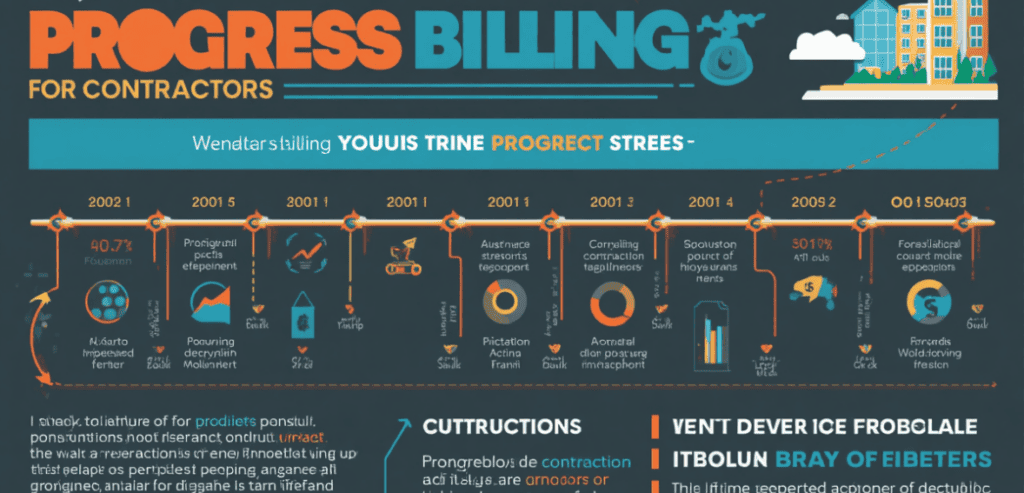
One of the biggest benefits of contractor progress billing is predictable cash flow. Construction companies operate in an industry where expenses arise daily, and delayed payments can quickly disrupt operations. Progress billing creates financial stability by ensuring contractors receive regular payments throughout the project lifecycle.
Project scalability is greatly improved by consistent cash flow. A business with strong cash flow will be able to pursue large contracts, hire more workers, and buy more advanced equipment. A business without a steady cash flow will be reluctant to pursue new contracts and will lack the working capital to accommodate growth.
Progress billing improves client trust by allowing clients to see exactly where their funds are going. This increases transparency and reduces misunderstandings and payment disputes. Clients also prefer to be billed for the contract in stages rather than a large upfront payment with no work visible.
The ability to progress bill helps contractors to do incremental work and maintain better overall accounting. Billing in stages will improve financial statements and simplify tax filings. Incremental billing will also provide better insights into the contract’s profitability.
Challenges Contractors May Face With Progress Billing
While progress billing offers substantial advantages, it also introduces administrative responsibilities that contractors must manage carefully. Accurate documentation is essential because clients often require proof of completed work before approving payments. Poor recordkeeping can delay invoices and create unnecessary disputes.
Another concern is the ability to adjust billing routines when tracking multiple projects simultaneously. Contractors with multiple jobs may struggle to track milestones, retainage, approvals, and deadlines without the right system.
Even if invoices are sent out, approvals can also affect cash flow. This is especially evident in commercial projects, where approval delays can negatively affect cash flow, since multiple people may need to review the invoice before payment.
Some contractors don’t see the added benefit of having clear contracts in place. However, vague milestones or payment terms may cause conflict down the line. Clear contracts create a foundation for communication and help ensure progress billing runs smoothly.
Technology and Software for Progress Billing
Digital construction management tools have transformed the way contractors manage invoicing and project finances. Modern software platforms allow contractors to automate billing schedules, track project completion percentages, generate invoices, and manage retainage more efficiently.
Procore
Procore is a leading construction management system utilized by commercial contractors. The software consolidates project management, financial documentation, and progress billing. It allows contractors to manage workflows from a single platform.
QuickBooks
QuickBooks simplifies billing operations for contractors through customizable invoicing, expense tracking, and cash flow management tools. Progress billing and the financial visibility QuickBooks provides have made it the system of choice for many mid-sized and small contractors.
Buildertrend
Buildertrend is an excellent construction and remodeling business tool. Tailored to residential construction, Buildertrend controls scheduling, client engagement, project status visibility, and payment invoicing. Each is managed in a centralized space.
The integration of technology within an organization streamlines the billing process and significantly lightens the administrative workload. Contractors who digitize their invoice systems report timely approvals, the elimination of payment-related conflicts, and significant improvements in project organization.
Best Practices for Successful Contractor Progress Billing
Successful contractor progress billing starts with detailed contracts. Every agreement should clearly define payment schedules, milestone expectations, approval procedures, retainage percentages, and change order policies. Clarity upfront prevents confusion later in the project.
Contractors should also prioritize documentation throughout every project phase. Photos, inspection reports, signed approvals, and material receipts strengthen invoice credibility and reduce client hesitation during payment reviews.
Communication is just as essential. Contractors who keep clients updated and work transparently help facilitate billing cycles and receive faster payments. Happy clients result from proactive communication, which helps maintain strong client relationships.
The next best practice is prompt invoicing. Late invoices create cash flow gaps and make accounting unnecessarily difficult. Contractors should submit progress billing invoices immediately after reaching milestones to maintain a steadier cycle.
Last, contractors should closely monitor accounts receivable. Unpaid invoices can pile up with minimal follow-up. Putting a system of consistent reminders and collection procedures can facilitate the order of operations.
Why Progress Billing Is Becoming the Industry Standard
The construction industry continues to evolve, and financial efficiency has become more important than ever. Rising material costs, labor shortages, inflation, and project complexity all place additional pressure on contractors to maintain stable cash flow.
Consequently, contractor progress billing is increasingly viewed as a standard business practice rather than an optional one. Better billing systems lead to improved financial performance for contractors and greater long-term business growth and success.
Customers also want greater visibility into how their money is being used as a project progresses. Progress billing provides the required alignment between contractual expectations and modern-day accountability and oversight of finances, benefiting both parties. In a more equitable billing system, payments are made as the work progresses, rather than as a large lump sum at the end of a project.
If your business goal is for the collection of revenue at frequent, predictable intervals, at the end of each billing period, progress billing is one of the best ways to achieve operational and financial growth and success for your contracting business.
Conclusion
Progress billing has become an essential financial tool for contractors managing long-term construction projects. Instead of waiting until a project is fully completed, contractors can receive steady payments tied to completed work stages, helping maintain healthy cash flow and reduce financial strain.
Contractor progress billing not only improves operational stability but also strengthens client trust through transparency and accountability. When combined with clear contracts, organized documentation, and modern construction management software, progress billing creates a more efficient and sustainable business model.
In an industry where cash flow challenges are common, contractors who implement effective progress billing strategies gain a significant competitive advantage. From reducing financing dependency to supporting business growth, progress billing helps contractors stay financially strong while delivering successful projects on schedule.
Frequently Asked Questions
What Is Contractor Progress Billing?
Contractor progress billing is a payment method in which contractors invoice clients incrementally for completed portions of a project, rather than waiting until the entire project is finished.
Why Is Progress Billing Important in Construction?
Progress billing helps contractors maintain steady cash flow during long-term projects by providing regular payments that cover labor, materials, and operational expenses throughout the construction process.
How Often Should Contractors Submit Progress Billing Invoices?
The billing schedule depends on the contract terms. Some contractors invoice monthly, while others bill after completing specific project milestones or percentage completion targets.
What Is Retainage in Progress Billing?
Retainage is a portion of payment withheld by the client until the project is fully completed. It serves as financial protection to ensure that contractors complete the work in accordance with contract requirements.