
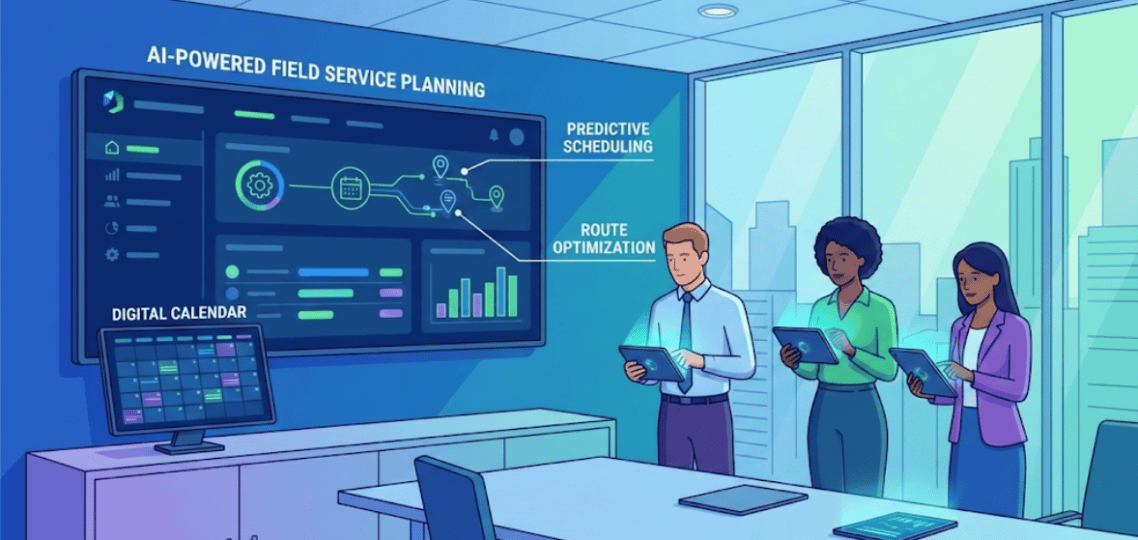
AI and Predictive Scheduling: The Future of Field Service Planning
Field service businesses have always lived and died by their schedules. The ability to place the right technician at the right job, at the right time, determines whether a company operates smoothly or constantly scrambles to recover from missed appointments, overtime costs, and unhappy customers. For decades, scheduling depended on experience, spreadsheets, whiteboards, and last-minute phone calls. While these methods worked at a small scale, they break down quickly as service operations grow, customer expectations rise, and labor shortages tighten.
Today, field service planning is entering a new phase. Artificial intelligence and predictive technologies are no longer experimental concepts reserved for enterprise giants. They are becoming practical tools that reshape how schedules are created, adjusted, and optimized in real time. Instead of reacting to problems after they occur, service businesses can now anticipate demand, reduce disruptions, and design schedules that balance productivity with technician wellbeing.
This article explores how AI-driven predictive scheduling is transforming field service planning. Rather than focusing on hype or abstract promises, the discussion centers on real operational shifts: how planning decisions are made, how risk is reduced, and how both customers and technicians benefit from smarter scheduling models.
AI and Predictive Scheduling in Modern Field Service Operations
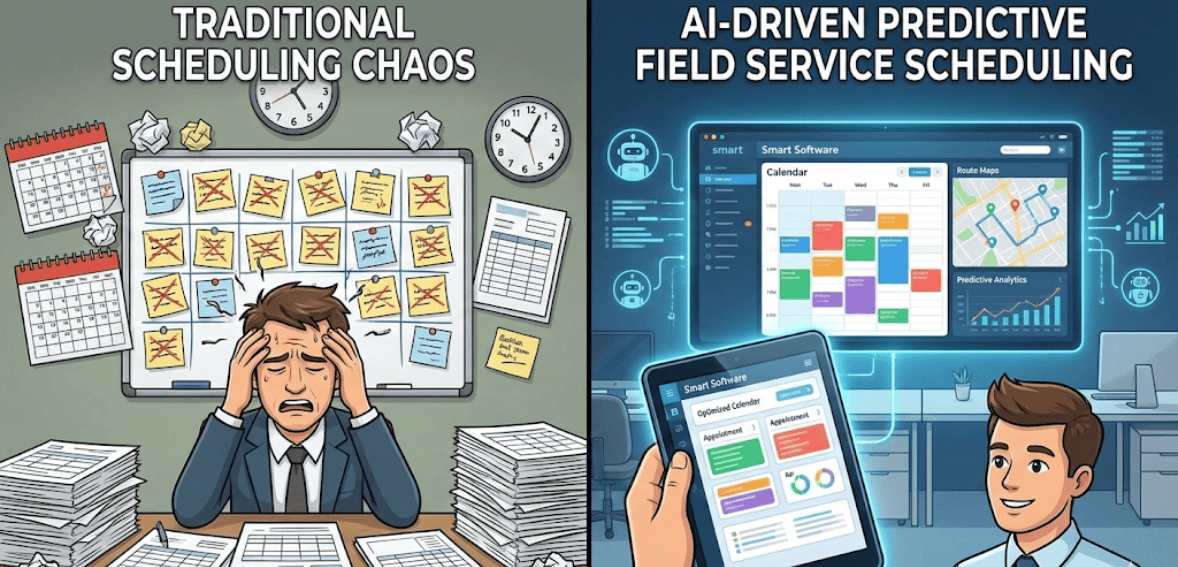
AI and predictive scheduling in field service represent a fundamental shift from manual decision-making to data-informed planning. Traditional scheduling relies heavily on historical habits and dispatcher intuition. While experience remains valuable, it has limits. Human planners can only process so many variables at once. Traffic conditions, technician skill sets, weather patterns, customer availability, job complexity, and seasonal demand all interact in ways that are difficult to evaluate manually, especially under time pressure.
Predictive scheduling systems use algorithms trained on historical and real-time data to model these interactions. Instead of treating scheduling as a static calendar exercise, AI systems treat it as a living process that continuously adapts. The schedule is no longer a fixed plan created at the start of the day. It becomes a dynamic framework that adjusts as conditions change.
In practical terms, this means scheduling decisions are guided by probability rather than guesswork. If data shows that certain job types consistently take longer in specific neighborhoods or weather conditions, predictive models factor that into time estimates. If a technician historically resolves a certain category of issue faster or with fewer follow-up visits, the system recognizes that pattern and assigns work accordingly. Over time, scheduling improves not because someone worked harder, but because the system learned from real outcomes.
This shift is especially important as field service operations scale. When managing a handful of technicians, informal planning might suffice. When managing dozens or hundreds across multiple service zones, small inefficiencies multiply into high operational costs. AI and predictive scheduling help organizations transition from reactive firefighting to proactive planning, reducing chaos while increasing consistency.
Why Traditional Scheduling Models Are Reaching Their Limits
Many field service businesses still rely on scheduling methods that were never designed for modern complexity. Manual calendars, static routing tools, and dispatcher-driven adjustments can work in predictable environments. However, today’s field service landscape is anything but predictable. Customer expectations for fast response, narrow appointment windows, and real-time updates have reshaped what “good scheduling” means.
One major limitation of traditional scheduling is its inability to adapt at scale. When a technician runs late, a vehicle breaks down, or a customer cancels at the last minute, the entire day can unravel. Dispatchers are forced to manually reschedule appointments, often without full visibility into downstream effects. A small delay in the morning may lead to overtime costs by evening, not because the work increased, but because the schedule lacked resilience.
Another issue is bias and inconsistency. Human schedulers may unintentionally favor certain technicians, routes, or customers based on familiarity rather than objective efficiency. Over time, this can lead to uneven workloads, technician burnout, and hidden performance gaps. Traditional systems also struggle to incorporate long-term trends. Seasonal demand, recurring maintenance cycles, and customer behavior patterns often live in separate reports rather than influencing daily scheduling decisions.
Predictive scheduling addresses these limitations by treating scheduling as a data-driven process. Instead of responding to problems after they occur, AI systems evaluate risk before it materializes. They identify fragile schedules, flag potential conflicts, and suggest adjustments early enough to prevent cascading disruptions. This does not eliminate human oversight, but it enhances it by providing decision support grounded in real operational data.
Also read: Cleaning Service Efficiency: Scheduling and Route Optimization Strategies
How Predictive Scheduling Anticipates Demand Instead of Reacting to It
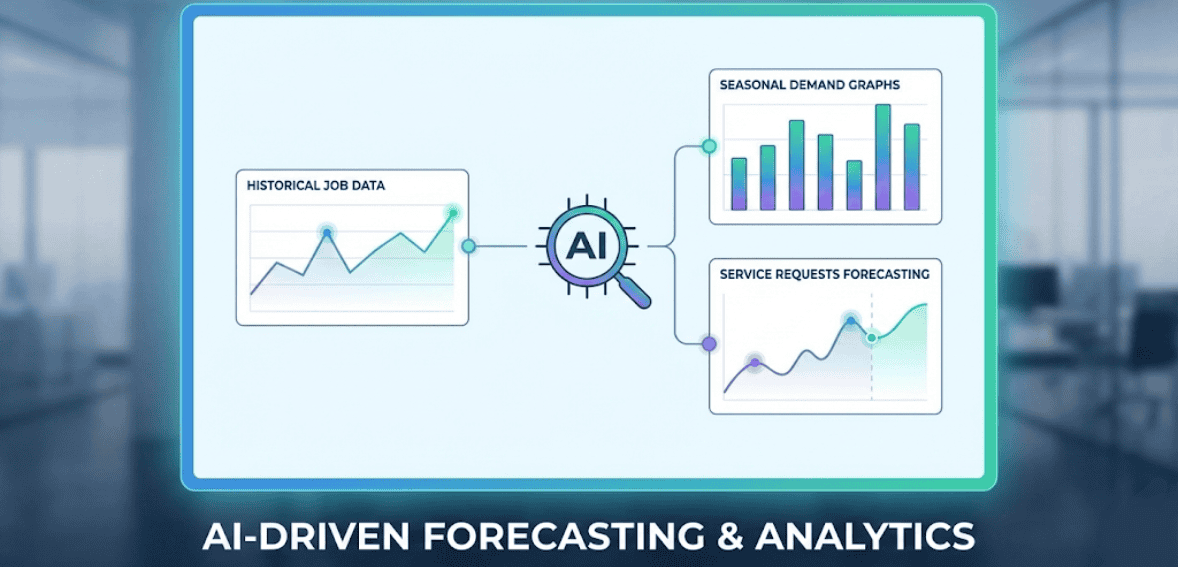
One of the strongest benefits of AI-driven scheduling is its ability to anticipate demand. Field service demand rarely arrives evenly. Certain days, seasons, or service categories generate predictable spikes, while others slow down. Traditional scheduling reacts to these changes only after the workload increases. Predictive systems, on the other hand, learn demand patterns over time and prepare for them in advance.
By analyzing historical job volume, service types, customer locations, and external factors such as weather or regional events, predictive scheduling systems forecast where demand is likely to increase. This allows planners to allocate technician capacity proactively. Instead of scrambling to cover emergency calls during peak periods, schedules are designed with built-in flexibility, reducing stress on both dispatchers and technicians.
Predictive scheduling also improves appointment reliability. When the system understands how long similar jobs actually take, rather than how long they were estimated to take, time windows become more realistic. Customers experience fewer delays and reschedules, while technicians avoid rushed jobs that increase error rates. Over time, this accuracy builds trust on both sides of the service relationship.
Importantly, anticipation does not mean rigidity. Predictive scheduling systems are designed to adapt continuously. As real-time data flows in, such as job completions, traffic changes, or cancellations, the system recalibrates forecasts and updates schedules accordingly. This balance between foresight and flexibility is what distinguishes predictive scheduling from static automation tools.
Balancing Efficiency and Technician Wellbeing Through AI Planning
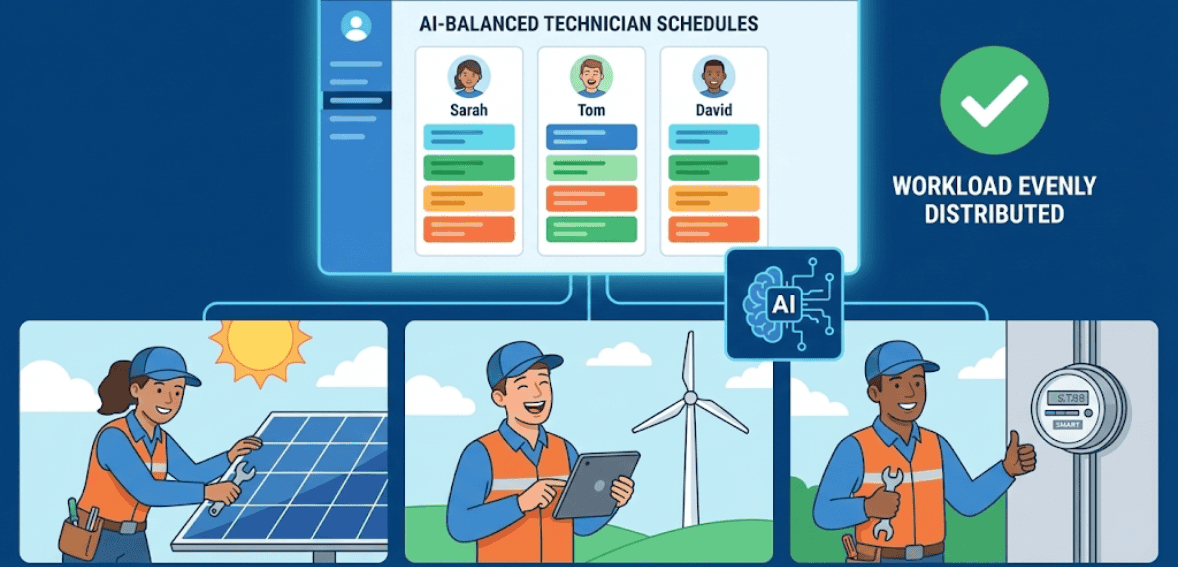
Efficiency has long been the primary goal of scheduling optimization. However, efficiency pursued without regard for human limits leads to burnout, turnover, and declining service quality. AI and predictive scheduling introduce a more balanced approach by recognizing that sustainable performance depends on technician well-being as much as operational speed.
Predictive systems can identify patterns that contribute to fatigue, such as excessive overtime, long travel distances, or repeated assignment of high-stress job types to the same individuals. By surfacing these patterns, planners gain visibility into workload imbalances that might otherwise go unnoticed. Scheduling decisions can then distribute work more evenly, protecting both productivity and morale.
This shift also changes how success is measured. Instead of focusing solely on jobs completed per day, predictive scheduling encourages metrics such as first-time fix rates, schedule adherence, and technician satisfaction. Over time, organizations discover that healthier schedules often lead to better outcomes across the board, including higher customer satisfaction and lower rework rates.
AI does not replace the human element of scheduling. Rather, it supports better judgment by revealing insights that humans alone cannot easily detect. When planners understand not just what happened but why, they can make informed decisions that align operational goals with workforce sustainability.
Real-Time Adjustments: How AI Keeps Schedules Stable When Things Go Wrong
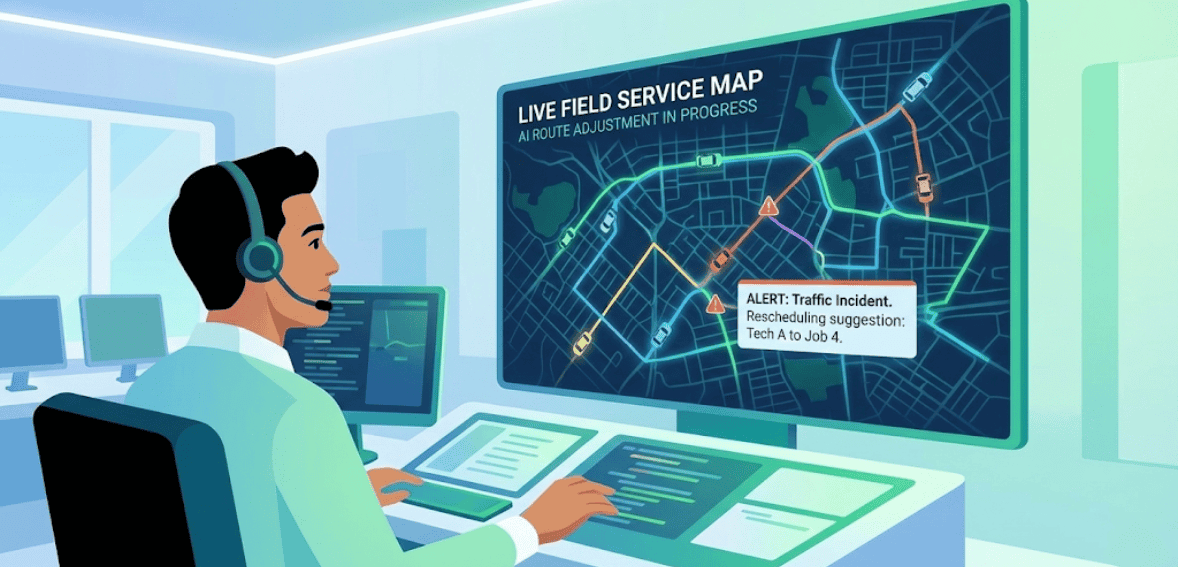
No matter how well a schedule is planned, field service operations will always face disruptions. Traffic jams, last-minute cancellations, unexpected equipment failures, weather issues, and urgent emergency calls are part of the daily reality. The real test of a scheduling system is not how it performs on a perfect day, but how well it absorbs disruption without collapsing.
Traditional scheduling struggles in these moments. Dispatchers are forced to make rapid, often incomplete, assumptions, often prioritizing speed over long-term consequences. A quick fix may solve the immediate problem, but create ripple effects that disrupt the rest of the day. This reactive cycle is exhausting for staff and damaging to customer trust.
AI-powered predictive scheduling changes this dynamic by continuously monitoring real-time signals. When a delay occurs, the system does not blindly shift appointments. Instead, it evaluates multiple options, simulates outcomes, and recommends adjustments that minimize downstream impact. It considers technician availability, proximity, skill compatibility, customer flexibility, and contractual priorities before proposing changes.
This capability turns scheduling into a stabilizing force rather than a stress point. Instead of cascading delays, the system absorbs shocks by intelligently redistributing work. Over time, businesses experience fewer end-of-day backlogs, reduced overtime, and a calmer operational rhythm. Dispatchers move from firefighting to supervision, focusing on exception management rather than constant manual rescheduling.
The Role of Data Quality in Predictive Scheduling Accuracy
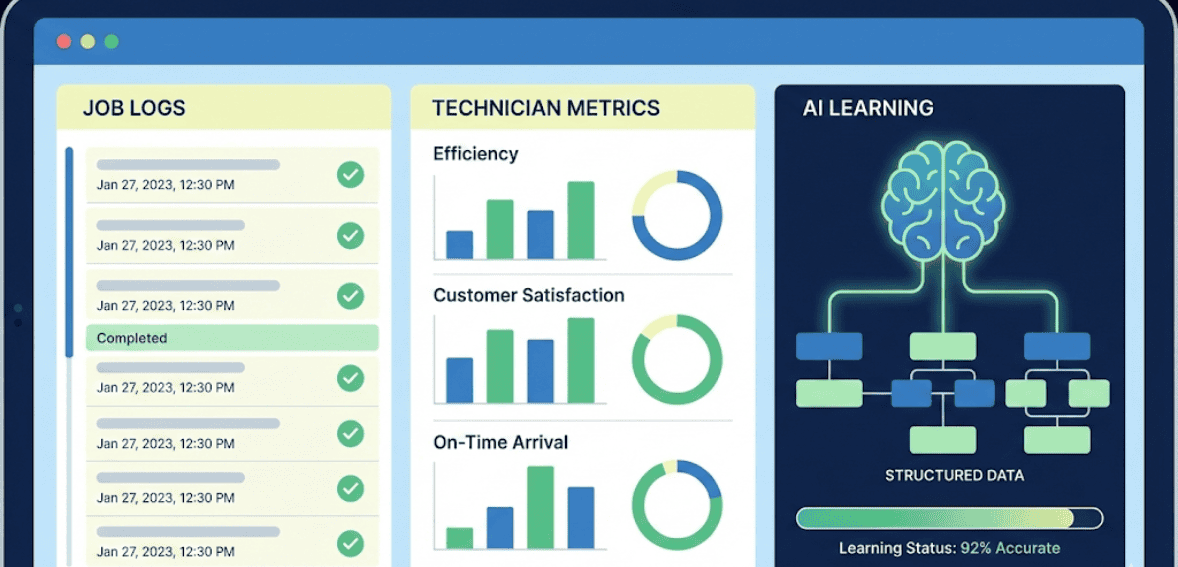
Predictive scheduling is only as strong as the data feeding it. Artificial intelligence does not magically create insight from chaos. It learns patterns, relationships, and probabilities based on historical and real-time inputs. When data is incomplete, inconsistent, or inaccurate, predictions become unreliable.
Many field service organizations underestimate the importance of clean operational data. Job durations are often estimated rather than recorded accurately. Technician notes may be vague or missing. Customer availability windows might not reflect real behavior. Over time, these gaps distort the system’s understanding of reality.
Successful predictive scheduling requires discipline. Job start and completion times must be logged consistently. Skill tags should reflect real competencies, not outdated assumptions. Customer interactions must be recorded clearly. When these fundamentals are in place, AI systems can identify meaningful trends, such as which job types tend to overrun, which locations cause delays, or which technicians excel under specific conditions.
The payoff is significant. As data quality improves, predictive accuracy increases. Schedules become more reliable, forecasts more precise, and planning decisions more confident. Organizations that invest in data hygiene often discover that scheduling improvements compound over time, delivering greater returns with each planning cycle.
Customer Experience Gains Through Predictive Field Service Planning
Customers judge field service businesses not only by technical competence, but by reliability, communication, and respect for their time. Predictive scheduling has a direct impact on all three.
When schedules are built on realistic expectations rather than optimistic guesses, appointment windows become more accurate. Customers experience fewer missed arrivals and shorter wait times. Predictive systems also enable businesses to confidently offer narrower time windows, reducing the inconvenience of all-day waits.
Real-time updates further enhance trust. When a delay is unavoidable, predictive scheduling systems can identify affected appointments early and trigger proactive communication. Customers are informed before frustration sets in, and alternative options can be offered. This transparency transforms potential dissatisfaction into appreciation for honesty and responsiveness.
Over time, consistent reliability becomes a competitive advantage. Customers begin to associate the business with professionalism and predictability, not excuses and apologies. This perception reinforces retention, referrals, and long-term brand value, all driven by smarter planning rather than increased effort.
Adoption Challenges and Realistic Paths to Implementation
Despite its benefits, adopting AI and predictive scheduling has challenges. Resistance often stems from fear of complexity, loss of control, or skepticism about algorithmic decision-making. Technicians may worry about increased surveillance, while dispatchers may fear replacement.
Successful adoption requires clear communication and gradual implementation. Predictive scheduling should be positioned as a support tool, not a replacement for human expertise. Dispatchers remain essential decision-makers, using AI recommendations as guidance rather than absolute commands. Technicians benefit from fairer workloads, clearer expectations, and reduced chaos.
A phased rollout is often the most effective approach. Organizations can begin by using predictive insights to forecast demand or identify scheduling risks, without automating decisions immediately. As confidence grows, real-time adjustments and automated recommendations can be introduced incrementally.
Training is equally important. Teams must understand not just how the system works, but why it improves outcomes. When users see fewer emergencies, smoother days, and better results, trust follows naturally. Over time, predictive scheduling becomes part of the operational culture, not external taxation.
The Future of Field Service Planning with AI at the Core
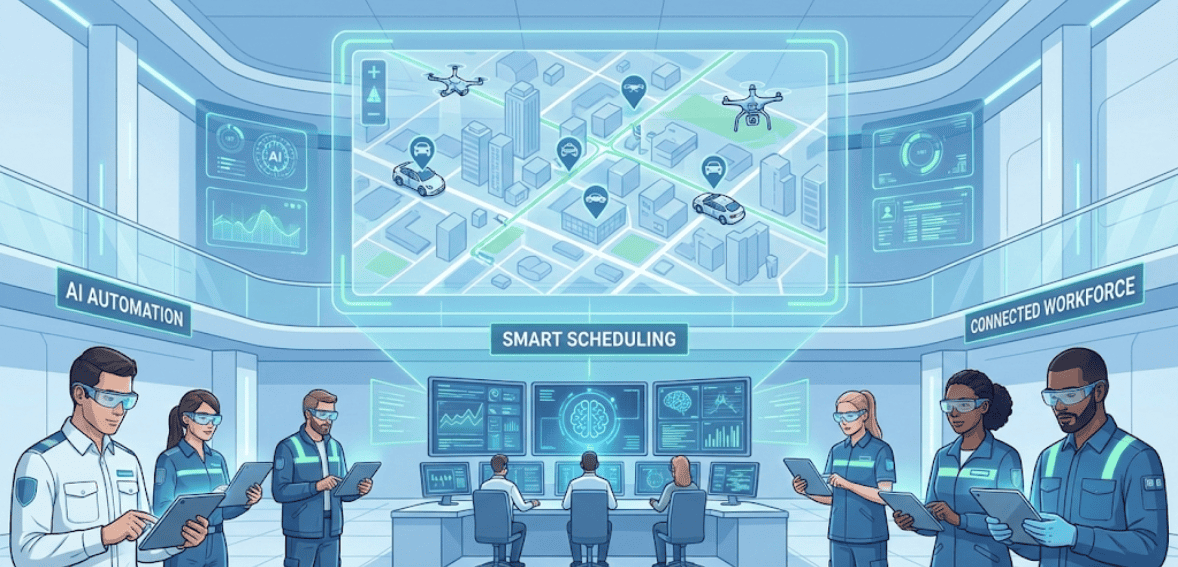
AI and predictive scheduling represent more than a technological upgrade. They signal a shift in how field service organizations think about planning, risk, and performance. Instead of relying on heroics and last-minute fixes, businesses can design operations that anticipate challenges and respond intelligently.
As predictive models mature, scheduling will increasingly integrate with broader decision-making systems. Workforce planning, inventory management, customer segmentation, and pricing strategies will align around shared insights. Field service planning will no longer exist in isolation, but will be part of a connected operational ecosystem.
Importantly, the future is not about removing humans from the process. It is about augmenting human judgment with deeper visibility and better foresight. Organizations that embrace this balance will be better equipped to navigate labor shortages, rising customer expectations, and growing operational complexity.
Conclusion
AI and predictive scheduling are reshaping field service planning from a reactive task into a strategic capability. By anticipating demand, adapting in real time, and balancing efficiency with human well-being, predictive systems help businesses operate with greater confidence and consistency. While adoption requires effort and discipline, the long-term benefits extend beyond smoother schedules to stronger customer relationships, healthier teams, and more resilient operations. Field service planning is no longer just about filling calendars; it is about designing sustainable performance for the future.
FAQs
What makes predictive scheduling different from traditional automation?
Predictive scheduling anticipates future outcomes using data patterns, rather than simply automating existing rules. It adjusts plans proactively rather than reactively after problems occur.
Does AI scheduling remove the need for dispatchers?
No. Dispatchers remain critical. AI provides decision support, while humans apply judgment, handle exceptions, and manage relationships.
How long does it take to see results from predictive scheduling?
Many organizations see early improvements within weeks, but the strongest gains appear over time as the system learns from consistent data.
Is predictive scheduling only for large field service companies?
No. Smaller businesses can benefit significantly, especially by reducing chaos, improving reliability, and scaling without added stress.