

Don’t Get Bugged by Scheduling: Tech Tips for Pest Control Route Management
Pest control companies often look busy from the outside trucks on the road, technicians in the field, homeowners waiting for relief from roaches, ants, mice, termites, or whatever happens to be invading their spaces. But behind the scenes, the biggest struggle usually isn’t performing the treatment itself. It’s organizing when and where services take place.
The reality is that a technician’s day is shaped far more by scheduling and routing than by the work they provide on-site. When appointments are spaced poorly or routes are inefficient, technicians spend their day crossing highways instead of solving pest problems. That doesn’t just waste fuel, it limits how many jobs they can complete, interrupts consistent service, and ultimately reduces revenue.
That’s why so many pest control teams are moving toward more structured planning tools, especially pest control scheduling software. Good scheduling practices help ensure technicians stay close to their next stop, recurring visits never get missed, and urgent calls can be handled without derailing the entire day.
Whether a business handles small quarterly residential treatments or large-scale commercial service contracts, improving time management and route planning is one of the fastest ways to increase productivity without adding more trucks or workers.
This article explores three operational pillars that help pest control companies make the most of each day:
- Proper management of recurring treatments
- Smarter route planning to minimize travel time
- Flexible workflows for last-minute or emergency jobs
The goal is simple: fewer surprises, less driving, more service delivered.
Treat Recurring Appointments Like the Core of the Business

Most pest control companies rely heavily on recurring service cycles, monthly mosquito treatments, quarterly ant and spider control, and annual termite inspections are the backbone of long-term business stability. These repeat visits are predictable, profitable, and essential to customer retention.
But they only work when they arrive on time. And managing them manually becomes difficult quickly.
Each customer is on their own schedule, some on 30-day cycles, some on quarterly rotation, others only for specialized seasonal problems. When this is tracked on paper, in different spreadsheets, or in piles of sticky notes, something inevitably falls through the cracks.
That’s where pest control scheduling software makes a significant difference. Rather than relying on memory, each customer’s visit cycle is stored digitally, with automated reminders and preset renewal dates. When a customer signs up, their future visits are generated immediately and there is no need to rebook every season.
A technician finishes a job → the next visit is already waiting on the calendar. It’s effortless.
The value here is consistency. No one wants their quarterly ant control to become a five-month gap because it got overlooked. And from a business standpoint, missed visits mean missed revenue.
Software also centralizes details gate codes, key boxes, preferred time of day, pet instructions, and past concerns. The more context a technician has, the better the service.
When recurring visits are handled automatically, pest control companies get three benefits:
- Fewer missed appointments
- More predictable revenue
- A smoother schedule for both customers and techs
It’s the kind of invisible efficiency that makes everything feel easier.
Route Planning Is About Time, Not Distance
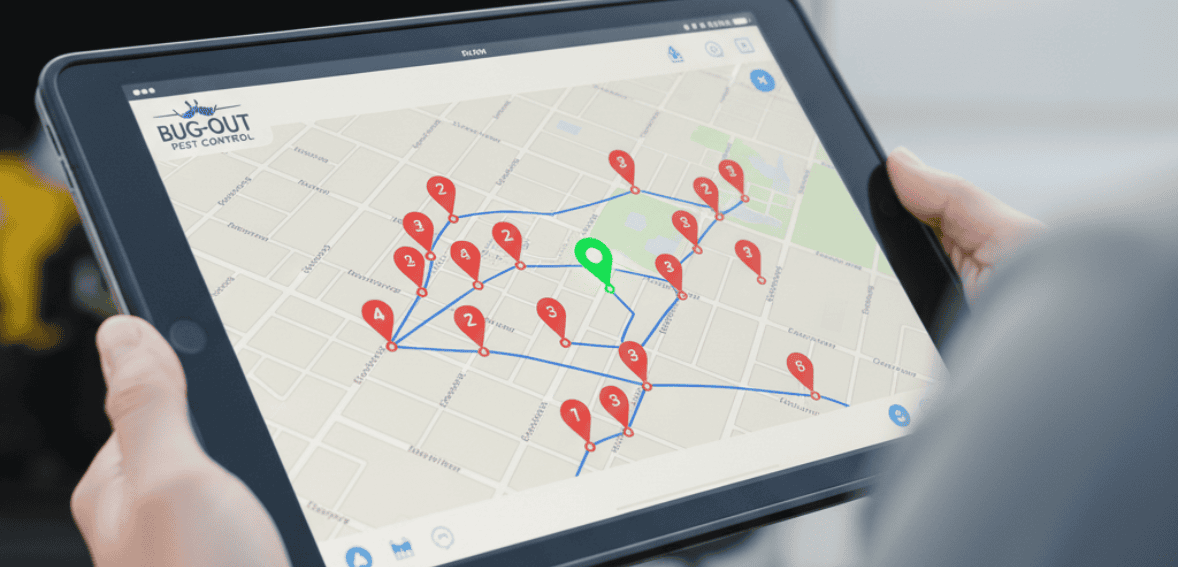
Most technicians know the experience: they start the morning with a neat list of jobs, only to spend more time in traffic than actually treating pest problems. Often the problem isn’t the number of appointments, it’s the order of them.
If a morning job is south of town, the second is north, the third goes back south, and the fourth is twenty minutes east, a seven-hour schedule quietly turns into ten. That wasted movement costs fuel, causes technicians to run late, and limits how many stops can realistically fit into the day.
This is why route planning should be treated as a business priority not an afterthought.
Well-designed pest control scheduling software helps map visits based not only on available time slots, but also on proximity. It keeps jobs geographically clustered, so a technician can complete multiple stops in the same neighborhood before moving on. That small adjustment alone saves hours each week.
Some companies choose to divide service areas into zones — north, south, east, west then assign specific days to each zone.
For instance:
- Monday – north properties
- Tuesday – east
- Wednesday – central
- Thursday – south
- Friday – overflow + specialty jobs
Customers are encouraged to schedule within their designated day. If they need something sooner, companies may provide an upgrade option for out-of-zone scheduling.
No matter how it’s structured, the effect is the same: Technicians drive less and accomplish more.
Optimized routing also smooths customer expectations. When a stop window is realistic, customers don’t sit waiting for a tech who’s stuck 40 minutes across the city.
Good routing isn’t only about saving money though it definitely helps. It reduces stress, minimizes rescheduling, and encourages a more consistent rhythm of work.
When scheduling tools manage location-based grouping automatically, even small teams can operate like larger ones.
Handling Emergencies Without Letting the Schedule Collapse

Not all pest control can wait. A termite swarm, a wasp nest in a doorway, a rodent trapped in a child’s bedroom these situations demand prompt response.
The challenge is making room for them without causing the rest of the day to fall apart.
With manual scheduling, an emergency call usually means stopping the day to shuffle appointments, call customers, and update technicians one by one. This often takes longer than the treatment itself.
With structured workflows in pest control scheduling software, emergency calls can be inserted into the day with far less disruption. The system can:
- Identify which technician is closest
- Evaluate who has time windows available
- Reorder the route automatically
This matters because urgent jobs don’t stop for administrative hurdles. The faster the response, the safer and happier the customer.
Good software in improving job scheduling and dispatchers work of drag-and-drop the new appointment directly into the route while automatically pushing flexible stops later. If a technician finishes early, they can respond to new requests immediately.
In some cases, a company keeps one technician “floating” daily, someone whose route is intentionally lighter to handle last-minute calls. Software helps track availability in real time so dispatchers know exactly who can assist without guessing.
Pest emergencies don’t run on a calendar, so the business has to respond with enough structure to remain calm when the day changes. Having tools that support flexible routing means technicians can pivot quickly, and customers get help when they need it most.
Communication That Keeps Customers Prepared

Most people don’t think about pests until they become a problem. That means many appointments depend on reminders, especially recurring services. Customers forget when their quarterly visit is due, or they assume the technician will “just show up.”
Strong communication changes that dynamic. A quick message the day before an appointment is often enough to ensure access to the property, unlock gates, contain pets, or alert family members that a technician will be on-site.
Using pest control scheduling software, many companies send reminders automatically. They don’t rely on someone in the office to call or text during a busy morning. Emails or SMS notifications go out the day before or on the morning of the appointment.
These reminders do more than prevent cancellations; they reduce wasted trips. A technician arriving at a locked property loses valuable time. Even if the job must be rescheduled, the wasted drive creates frustration on both sides and delays everything after it.
Good scheduling habits also set expectations. If a technician is late, a simple automated message lets the customer know. Rather than feeling left in the dark, the homeowner stays informed, and the appointment remains positive.
A surprising number of complaints in pest control aren’t about the work itself; they’re about communication late arrivals, unclear timelines, or absence of updates. Software smooths this out by giving companies a reliable way to keep homeowners in the loop without adding staff.
Keeping Consistent Records Makes Every Visit Better
Good pest control relies on context.
Where have issues been found before?
What treatments were used last time?
Does the customer have children, pets, or chemical sensitivities?
When companies rely on memory, small details disappear especially if a different technician takes over.
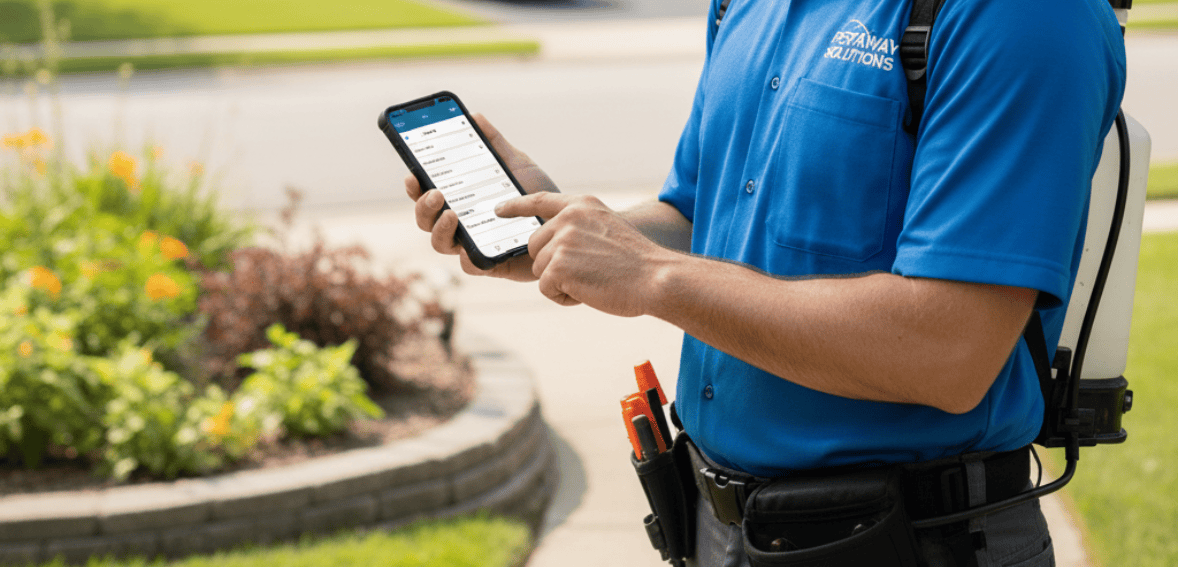
Storing details inside pest control scheduling software gives every technician a running history of the property before stepping inside. They can review previous treatments, see inspection notes, check which areas were most active, and learn what the customer’s preferences are.
This history prevents wasted time. A technician doesn’t have to re-ask basic questions on every visit. They can start working immediately, focusing on the problem rather than re-creating the past.
It also improves consistency. If one technician noticed rodent entry near the attic vent during the last service, the next technician can verify whether the entry point was sealed and if follow-up activity is present.
The more data the company accumulates, the more precise treatments become — and the easier it is to recommend preventative actions that keep pests away long-term.
Good records also support accountability. When a customer asks why a certain recommendation was made, the technician can reference prior notes. That level of clarity builds trust.
In industries where repeat service matters, knowledge is power and storing knowledge where everyone can access it puts the entire team on the same page.
Tracking Performance Without Micromanaging
The best pest control companies don’t just complete routes, they try to understand what makes certain routes more successful than others.
Tracking field performance and management is not about policing technicians. It’s about seeing where time gets lost and where improvements can be made.
Even basic metrics help:
- Average jobs completed per day
- Time spent on the road
- Repeat visits for the same problem
- Seasonal service peaks
- Most common request types
When these details are stored within pest control scheduling software, patterns begin to emerge. One technician may be consistently delayed, not because they work slowly but because their route is poorly organized. Another might complete more stops simply because their service area is compact.
With better visibility, dispatchers can redistribute zones, balance workload, and structure days so that more customers receive service without overburdening the team.
Performance tracking also helps identify training opportunities. If certain technicians struggle with specific treatments, say termites or wildlife, the company can provide targeted training.
Over time, this creates a more capable team. Strong technicians support struggling ones, and the whole organization gets better.
A Real-Life Look at Organized Routing
Imagine a three-truck pest control company serving a mid-sized city. Appointments are written on a shared calendar, and technicians check it each morning. It works until it doesn’t.
One day, truck #2 drives north for a morning visit, then south for the next job, then west. By 2 p.m., they’ve spent more time in traffic than applying treatments. Meanwhile, truck #3 is working efficiently, staying inside two neighborhoods all day.
The issue isn’t effort, it’s sequencing.
After switching to field management software, the company started grouping appointments geographically. North route Monday, east Tuesday, west Wednesday, etc.
The change was immediate:
- Technicians drove fewer miles
- They completed more stops per day
- Rush-hour traffic affected fewer appointments
- Fuel usage dropped
One technician said it best: “I finally feel like I spend my day helping customers instead of staring at the windshield.”
The office noticed fewer reschedules and fewer calls from customers wondering when someone would arrive. The organization was quiet and business grew.
Building Space for Unexpected Jobs

Every day brings a surprise: a nest, a swarm, activity in an attic, an urgent phone call from a worried homeowner.
One practical strategy is leaving a small opening in each technician’s schedule. This doesn’t mean reducing productivity; it means planning realistically. If there’s no room for surprises built into the day, even small emergencies disrupt everything.
With pest control scheduling software, the office can see availability at a glance. If the emergency is in a technician’s current service area, they’re reassigned quickly. If not, another route is rebalanced.
Customers appreciate fast turnaround. And fast response often leads to long-term business.
When emergency visits can be handled smoothly, the company becomes more reliable in the eyes of the community.
Conclusion
Pest control work depends on timing. Treatments follow cycles. Infestations spread if ignored. Customers want a fast response when pests appear.
The companies that do well are not always the ones with the strongest chemicals or the largest fleets but the ones who manage their time and information best.
Pest control scheduling software helps make that possible. It anchors recurring visits so they never slip, organizes routes so travel time stays low, and gives technicians the information they need before they arrive at a customer’s door.
It also keeps communication steady, whether it’s reminders before service or updates during busy days. When emergencies arise, tools that support flexible routing allow teams to respond without disrupting everyone else.
Good scheduling is not just calendar management. It’s about delivering steady service, reducing wasted motion, protecting revenue, and offering customers peace of mind.
When the day runs smoothly, technicians can focus on what they do best: addressing pest problems, educating homeowners, and building long-term trust. That trust becomes the foundation for steady business year-round.
In an industry where timing matters as much as skill, better route management isn’t just an upgrade it’s a competitive advantage.
FAQs:
Why are recurring services so common in pest control?
Preventative pest control usually works best on a regular schedule (monthly, bi-monthly, or quarterly treatments) to keep bugs at bay. For the business, this means recurring revenue and predictable schedules. For customers, it means peace of mind that their home or business is continuously protected. The challenge is keeping track of all those recurring appointments, which is where software really helps.
How does route optimization benefit pest control techs?
If a technician has 10 stops in a day, an optimized route ensures they drive the least distance and spend the least time in traffic. This could mean finishing all appointments on time (or even fitting an extra one) instead of running late because of inefficient routing. It also reduces fuel costs – which, with many trucks out daily, can significantly improve the bottom line over a year.
What if a customer needs an extra service outside their regular schedule?
Good scheduling systems let you add one-time jobs without messing up the recurring schedule. For instance, if a quarterly customer calls in with a sudden ant problem, you can slot an extra visit for them. The software might show you available gaps or allow overtime scheduling for urgent cases. It’ll keep this one-off separate from their normal schedule (so it doesn’t reset their quarterly cycle unless you want it to).
Can software help reduce errors like missed appointments or double bookings?
Yes, it virtually eliminates them. The software will not double-book a technician’s time if used properly it’ll flag conflicts. Missed appointments are often due to human error (losing track on a calendar or a miscommunication). With automated reminders to customers and a digital schedule that techs see on their phone, it’s very hard to “miss” an appointment. Also, if a tech calls out sick and you reassign their jobs in the system, all those changes are logged and updated for everyone instantly, preventing something from falling through the cracks.
How does CloudJobManager assist pest control businesses?
CloudJobManager helps pest control companies by handling recurring scheduling with ease. You can set up service agreements (e.g., a year-long contract for quarterly treatments), and it will auto-schedule those future appointments. It also supports route mapping – showing each tech’s route for the day on a map, which is great for planning. If an urgent bedbug job comes up, you can quickly see who is nearby or has a gap, insert the job, and the system updates that tech’s route and alerts them on their mobile app. Additionally, CloudJobManager can store service histories (like how severe an infestation was or notes on a property like “dog in yard – call ahead”), so technicians are well-prepared before they arrive.