

Embracing the Gig Economy: On-Demand Contractors in Field Service
The field service industry is undergoing a quiet but powerful shift. Traditional models built around full-time, fixed crews are giving way to more flexible workforce structures driven by the gig economy. On-demand contractors, independent technicians, specialists, and trade professionals are becoming a strategic asset rather than a stopgap solution. For service businesses facing labor shortages, fluctuating demand, and rising customer expectations, embracing this model is no longer optional; it is becoming essential.
On-demand contracting enables field service organizations to scale labor dynamically, match skills to jobs, and lessen operational rigidity. Successfully adopting this approach requires thoughtful planning and disciplined operations. This article discusses how field service businesses can integrate gig-based contractors while upholding service quality, compliance, and fostering growth.
Embracing the Gig Economy in Field Service Operations

Embracing the gig economy in field service begins with recognizing how work itself has changed. Customers now expect faster response times, broader service coverage, and specialized expertise, often all at once. Traditional staffing models struggle to meet these expectations, especially during peak demand periods or when specialized skills are required on short notice.
On-demand contractors provide a flexible solution. Rather than maintaining a large permanent workforce, service businesses can access qualified professionals as needed. This approach supports quick responses to demand spikes, expansion into new areas, and fulfillment of specialized jobs without long-term hiring.
The use of on-demand contractors is also driven by workforce preference. Many skilled technicians favor independent arrangements for autonomy and flexibility. Aligning with these preferences expands companies’ access to talent that would otherwise be unavailable.
However, embracing this model is not simply about hiring freelancers. It requires redefining how work is assigned, tracked, and evaluated. Clear expectations, standardized processes, and consistent performance benchmarks become even more important when working with a distributed, non-employee workforce. Businesses that succeed treat gig contractors as an extension of their operational ecosystem, not as temporary outsiders.
Why On-Demand Contractors Are Reshaping the Field Service Workforce

On-demand contractors are reshaping the field service workforce by addressing several structural challenges simultaneously. Labor shortages across skilled trades have made it increasingly difficult to hire and retain full-time technicians. At the same time, customer demand has become more unpredictable, with service requests fluctuating by season, location, and urgency.
Field service businesses using on-demand contractors gain workforce elasticity, adjusting labor needs without the financial or administrative challenges of permanent staff. This is especially valuable where demand varies by service category or region.
Another reason on-demand contractors are gaining traction is specialization. Many service jobs now require niche expertise, advanced HVAC diagnostics, smart home installations, and industrial equipment servicing that may not justify a full-time hire. On-demand contractors enable companies to access specialized skills only when needed, improving service quality without inflating payroll.
On-demand contracting also shifts labor costs from fixed to variable, improving cost predictability and margins during slow periods. When managed well, this model further reduces overtime, burnout, and scheduling inefficiencies.
The rise of on-demand contractors does not replace the need for full-time employees, but creates a hybrid workforce: core teams for consistent work and contractors for flexibility and specialized support.
Operational Benefits of On-Demand Contractors in Field Service
The operational benefits of using on-demand contractors in field service extend far beyond staffing flexibility. One of the most significant advantages is improved response time. When a service request comes in, dispatchers are no longer limited to the availability of in-house technicians. Instead, they can assign jobs to nearby qualified contractors, reducing travel time and accelerating service delivery.
This responsiveness directly impacts customer satisfaction. Faster arrival times, fewer rescheduled appointments, and access to specialized expertise all contribute to better service outcomes. In competitive markets, these factors can be decisive in winning and retaining customers.
On-demand contractors also improve workload distribution. Full-time technicians are less likely to be overwhelmed during busy periods, as excess demand can be routed to contractors. This helps prevent burnout, improves morale, and reduces turnover among core staff. Over time, a more balanced workload leads to higher productivity and better service consistency.
Another operational advantage is geographic expansion. Field service businesses can test new markets without committing to permanent infrastructure. By engaging local contractors, companies can expand into new areas, assess demand, and refine operations before making long-term investments.
Finally, on-demand contractors support operational resilience. When unexpected disruptions occur, such as employee absences, equipment failures, or sudden demand spikes, contractors provide a buffer that helps maintain service continuity. This resilience is increasingly important in an environment where customer expectations leave little room for delays or cancellations.
Maintaining Service Quality with a Gig-Based Field Workforce

One of the most common concerns about on-demand contractors in field service is service quality. Unlike full-time employees, contractors may not share the same level of familiarity with company standards, processes, or brand values. Without proper management, this can lead to inconsistent customer experiences.
Maintaining quality starts with clear qualification criteria. Field service businesses must define skill requirements, certifications, and experience levels for contractors before engagement. Vetting processes should be as rigorous as those used for full-time hires, even if the relationship is contractual rather than permanent.
Standardization is equally important. Clear job scopes, service protocols, and documentation requirements help ensure that contractors deliver work consistently. Providing structured onboarding materials such as service guidelines, safety procedures, and communication expectations reduces ambiguity and sets contractors up for success from the outset.
Performance monitoring also plays a key role. Job completion times, customer feedback, compliance with procedures, and rework rates should be tracked for contractors just as they are for employees. Transparent performance metrics create accountability and help identify high-performing contractors for future assignments.
Communication is another key factor. Contractors should have access to the same job information, updates, and support channels as internal teams. When contractors feel informed and supported, they are more likely to deliver high-quality work and represent the brand professionally.
Ultimately, service quality in a gig-based model depends on treating contractors as partners rather than interchangeable labor. Businesses that invest in clear expectations, fair compensation, and respectful collaboration tend to build reliable contractor networks that deliver consistent results.
Legal, Compliance, and Risk Considerations When Using On-Demand Contractors
While the gig economy opens new doors for field service businesses, it also introduces legal and compliance responsibilities that cannot be ignored. One of the most critical distinctions companies must understand is the difference between an employee and an independent contractor. Misclassification can lead to serious legal exposure, including penalties, back taxes, and regulatory scrutiny.
When working with on-demand contractors in field service, businesses must ensure that contractors maintain independence in how they perform work. This includes control over schedules, tools, and methods, rather than being managed like employees. Contracts should clearly define the relationship, scope of work, payment terms, and liability responsibilities. Written agreements are not just administrative formalities; they are essential risk-management tools.
Insurance is another vital consideration. On-demand contractors should carry their own liability coverage, workers’ compensation where applicable, and any trade-specific insurance required by local regulations. Field service companies must verify this coverage and maintain records, rather than assuming that internal coverage will be provided.
Compliance also extends to safety standards and local licensing requirements. Even when work is performed by contractors, customers often associate the service outcome with the company brand. That means failures in safety or compliance still reflect back on the business. Establishing minimum compliance standards and audit processes protects both operational integrity and reputation.
Ultimately, successful companies treat legal compliance as a foundation, not a hurdle, when embracing the gig economy. Clear policies and proactive oversight reduce risk while enabling flexibility.
Technology as the Backbone of Gig-Based Field Service Management
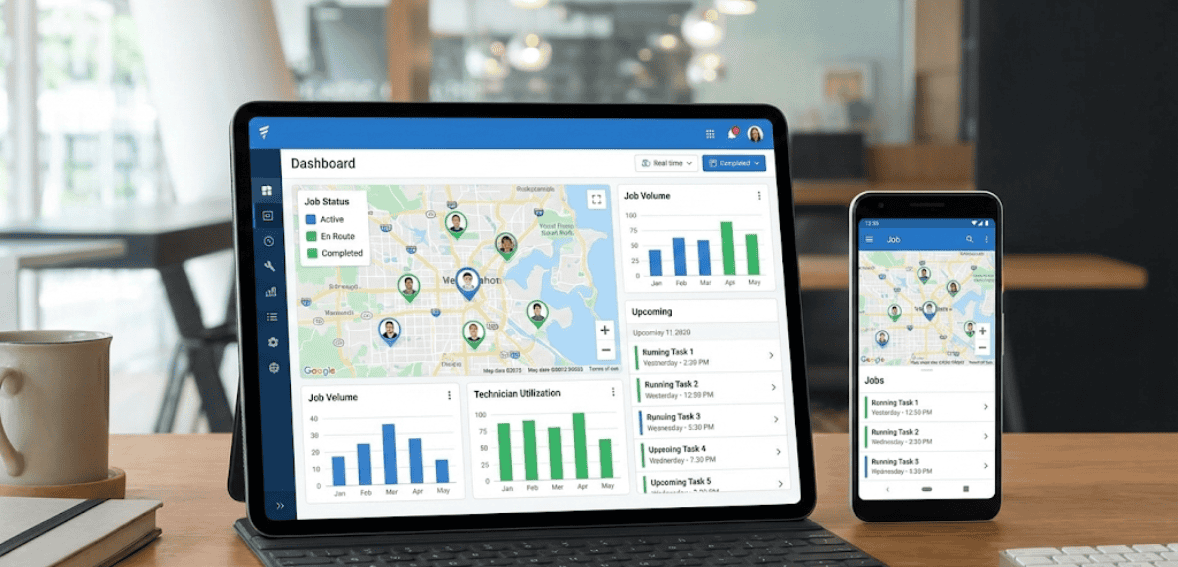
Technology plays a defining role in making on-demand contractor models viable at scale. Without centralized systems, managing a distributed, gig-based workforce quickly becomes chaotic. Scheduling conflicts, communication gaps, and inconsistent reporting can undermine the benefits of flexibility.
Modern field service platforms enable businesses to dynamically assign jobs, match skills to service requirements, and track job progress in real time. For on-demand contractors, this creates clarity and structure without micromanagement. Contractors know exactly where to go, what is required, and how to report completion.
Job tracking tools also support transparency. Time stamps, photos, checklists, and digital signatures provide verifiable records that protect both parties. This documentation becomes especially important when resolving disputes, managing quality control, or handling compliance audits.
Communication tools further strengthen collaboration. Messaging systems, automated notifications, and real-time updates ensure contractors remain aligned with dispatchers and customers. Instead of relying on fragmented phone calls or emails, all communication stays tied to the job record.
Perhaps most importantly, technology enables performance insights. By tracking completion rates, customer feedback, and response times across both employees and contractors, businesses can make data-driven decisions about workforce strategy. High-performing contractors can be prioritized, while process gaps are identified early.
In short, technology transforms on-demand contractors from a logistical challenge into a strategic advantage.
Cost Control and Financial Planning with Gig-Based Labor

Cost efficiency is one of the strongest arguments for adopting on-demand contractors in field service, but only when managed thoughtfully. Unlike salaried employees, contractors represent variable costs that rise and fall with demand. This flexibility improves cash flow stability, especially in seasonal or project-based service businesses.
However, cost control requires discipline. Rates must be negotiated carefully to ensure profitability without sacrificing quality. Businesses should factor in not only contractor fees but also administrative costs, insurance verification, onboarding time, and technology investments.
Comparing contractor costs to full-time labor should be done holistically. While contractors may appear more expensive per job, they eliminate costs associated with benefits, downtime, and idle labor during slow periods. For many businesses, this tradeoff results in healthier margins and more predictable financial planning.
Another financial benefit is revenue capture. With a flexible contractor pool, businesses can take on more jobs during peak periods without turning work away due to capacity constraints. This revenue uplift often outweighs the marginal increase in labor costs.
Over time, businesses that track profitability by job type, contractor, and region gain valuable insights. These insights inform smarter pricing strategies, workforce planning, and investment decisions.
Also read: Why Cloud Job Management Is Essential for Sustainability in Business
Building Long-Term Relationships with On-Demand Contractors

Although contractors are not employees, long-term relationships still matter. Field service businesses that treat on-demand workers as disposable resources often struggle with reliability and quality. In contrast, companies that cultivate trusted contractor networks enjoy consistency, loyalty, and operational stability.
Respectful communication is the foundation of these relationships. Clear expectations, timely payments, and transparent feedback build trust. Contractors who feel valued are more likely to accept future jobs, prioritize assignments, and represent the brand professionally.
Providing growth opportunities also strengthens engagement. Offering access to higher-value jobs, specialized training materials, or preferred scheduling signals that performance is recognized. This creates a merit-based ecosystem where contractors are motivated to deliver excellent work.
Feedback loops matter as well. Contractors often have frontline insights into customer needs, operational inefficiencies, or safety risks. Businesses that listen to this feedback improve continuously while reinforcing mutual respect.
Ultimately, strong contractor relationships reduce turnover, lower onboarding costs, and enhance service reliability benefits traditionally associated only with full-time staff.
Future Outlook: The Hybrid Workforce Model in Field Service

The future of field service lies in hybrid workforce models that blend full-time employees with on-demand contractors. This approach balances stability with flexibility, allowing businesses to adapt quickly without losing institutional knowledge or service consistency.
Core teams will continue to handle customer relationships, complex projects, and company-critical functions. On-demand contractors will supplement capacity, provide specialized expertise, and support geographic expansion. Together, these groups form a resilient workforce capable of meeting evolving market demands.
As workforce expectations continue to shift, businesses that embrace flexibility responsibly will attract both customers and talent. The gig economy is not a temporary trend; it is a structural evolution in how work is organized and delivered.
Field service companies that invest now in systems, policies, and relationships will be best positioned to thrive in this new landscape.
Conclusion
Embracing the gig economy through on-demand contractors in field service is not about replacing traditional teams. It is about enhancing capability, responsiveness, and resilience. When managed with clarity, supported by technology, and grounded in compliance, this model unlocks new growth opportunities without sacrificing quality.
The businesses that succeed are those that view on-demand contractors as strategic partners rather than short-term fixes. By building thoughtful frameworks around workforce flexibility, field service leaders can meet today’s challenges while preparing for tomorrow’s demands.
FAQs
Are on-demand contractors suitable for all field service businesses?
They are most effective for businesses with fluctuating demand, specialized service needs, or geographic expansion goals. A hybrid model often works best.
How do businesses maintain quality with independent contractors?
Clear standards, structured onboarding, performance tracking, and consistent communication are key to maintaining service quality.
Is managing contractors more complex than managing employees?
It requires different processes, but modern job management technology significantly simplifies coordination and oversight.
Do customers notice when contractors are used instead of employees?
Customers primarily care about service quality and responsiveness. When managed well, contractor involvement is seamless.
Will the gig economy replace full-time field service roles?
No. The future favors hybrid models that combine stable teams with flexible contractor support.