

From Paper to Cloud: Digital Transformation for Contractors Made Easy
For decades, contractors have relied on pen-and-paper systems, wall calendars, sticky notes, text messages, and stacks of printed work orders to keep their operations running. It worked more or less until the field service and construction landscape evolved beyond what manual systems could handle. Today’s projects move faster, customer expectations are higher than ever, and competition isn’t just about skill anymore; it’s about speed, coordination, transparency, and delivering consistently smooth service. That’s where digital transformation for contractors becomes a turning point rather than a luxury.
When every delay costs money, when paperwork goes missing just when it’s urgently needed, and when updates get lost between field techs and the office, traditional methods show their cracks. Teams struggle with duplicated work, outdated information, late invoices, and unnecessary phone calls just to clarify basic details. And in an environment where margins are tight, those inefficiencies quietly drain profitability.
That’s why so many service companies HVAC, plumbing, electrical, roofing, landscaping, construction, cleaning, appliance repair, and more are now shifting from paper to cloud-based field service software. It’s not about technology for technology’s sake; it’s about freeing people to do real work instead of drowning in admin. It’s about reducing costly errors. It’s about building a system that supports growth instead of slowing it.
The truth is simple: Manual workflows limit how far a business can scale.
Digital systems unlock the freedom to grow.
Nor is this transformation overwhelming. It doesn’t mean replacing everything overnight or forcing tech-shy employees to learn complicated tools. It means switching to smarter, simpler, real-time ways of working one step at a time.
And the payoff is enormous: faster scheduling and dispatch, real-time tracking, accurate job information shared instantly, digital invoices paid faster, central record-keeping, and fewer bottlenecks between the office and the field. Digital transformation for contractors turns chaos into clarity.
The Pitfalls of Paper: Why Traditional Systems Fail in a Modern Market

On the surface, paper seems straightforward, cheap, tangible, easy to use. But behind the scenes, it creates friction everywhere. Manual processes require constant rewriting, recopying, reentering, and resending information. And with every handoff comes an opportunity for mistakes.
Work orders get misplaced. Technicians write notes the office can barely read.
Updates travel slowly, causing misunderstandings and delays. Invoices sit in trucks or on desks for days before they ever reach customers. And when an urgent change comes in, everyone scrambles because no one knows the latest version of the plan.
These inefficiencies don’t usually collapse a business outright; they drain it quietly, day after day. Time lost hunting for paperwork or calling repeatedly to check job status feels small at the moment, but over months and years, it adds up to thousands of wasted hours and revenue lost without even realizing it.
There’s also the challenge of disconnected data. When information lives in separate notebooks, spreadsheets, photos, and email threads, no one has a complete picture. Getting answers requires chasing people instead of simply checking a dashboard. That lack of visibility often leads to slow decision-making, scheduling conflicts, and reactive management rather than strategic planning.
Worse, manual billing delays payment cycles. When invoices aren’t created until paperwork returns to the office, cash flow slows. Customers forget details, take longer to pay, or lose paperwork themselves problems that compound quickly for growing companies.
The paper also strives to support teamwork. When a crew needs updated instructions or part numbers but the foreman is unavailable, work stalls. When office staff wait for field notes to update customers or prepare quotes, the communication gap frustrates everyone involved.
In an industry defined by precision and timing, paper introduces uncertainty where accuracy is essential. And uncertainty costs money, reputation, and customer trust.
The Real Cost of Staying Manual
Many contractors stick with paper because “it’s the way we’ve always done it”—but clinging to old systems comes with real financial consequences.
When administrative time consumes 25–30% of working hours, that’s time not spent on billable work. When crews drive around collecting paperwork or clarifying missing details, productivity drops. When mistakes require rework, it isn’t just embarrassing it hits the bottom line.
A technician who spends an hour per day on paperwork loses 5 hours a week, 20 hours a month, and 240 hours a year not because of a lack of skill, but because the system forces inefficiency. Multiply that across a team, and the loss becomes staggering.
Then consider turnover and customer satisfaction. Missed communication or errors on essential documents don’t just cause delays, they damage trust. One confused customer can leave a negative review, costing dozens of potential clients.
Manual systems don’t scale. A business managing 50 jobs a week with paper struggles exponentially more at 150 jobs a week. Without streamlined processes, growth becomes unmanageable instead of exciting.
So the question shifts from “Can we afford digital tools?” to “Can we afford NOT to?”
The companies thriving today aren’t the ones working harder, they’re the ones working smarter. They automate admin tasks, shorten job cycles, eliminate duplicate effort, and improve visibility so problems are solved before they escalate.
Digital transformation for contractors is ultimately about reclaiming time, improving cash flow, and building a foundation for real expansion.
The Benefits of Cloud Job Management for Contractors
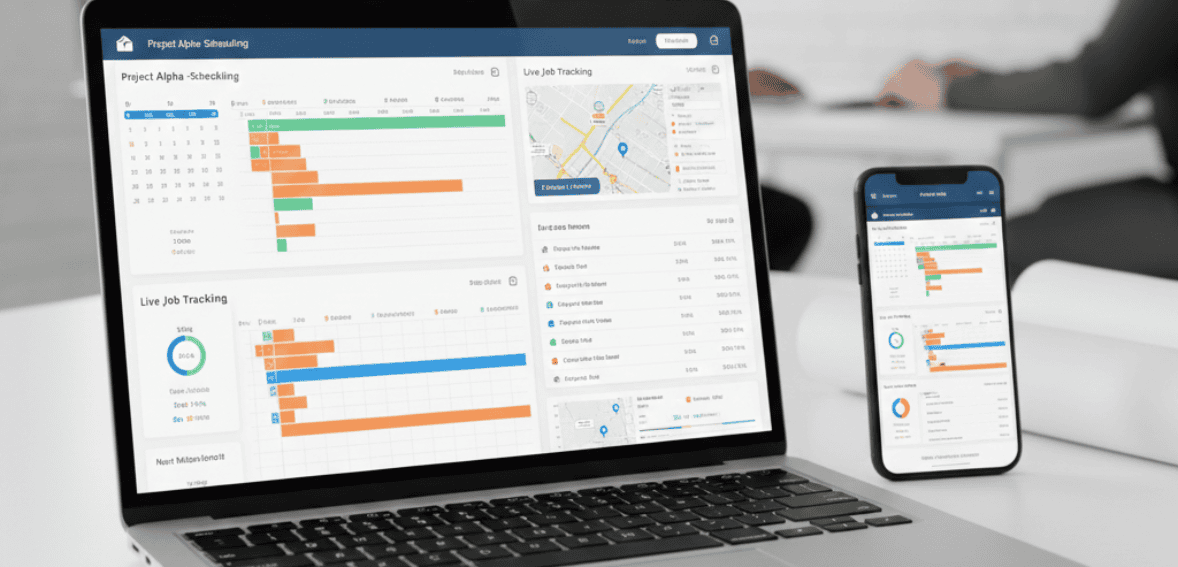
The most significant advantage of moving from paper to cloud-based field service management isn’t just convenience, it’s operational transformation. When schedules, job details, invoices, photos, signatures, and customer records all live in a single secure platform, everything becomes faster, more precise, and more dependable.
Suddenly, no one needs to dig for information that’s available instantly from a phone, tablet, or laptop. Everyone sees updates in real time, eliminating confusion and miscommunication. The office knows where every technician is. Jobs can be reassigned or updated with one click. And customers receive clearer, faster responses.
Cloud contract management also allow teams to track progress, location, parts needed, and job history. If a tech arrives at a location, they can view photos from previous visits, instructions, safety notes, and equipment models without calling the office. They finish the job more prepared and confident.
Then there’s the power of real-time collaboration; instead of waiting hours or days to share information, data syncs automatically. A completed digital work order generates an invoice instantly. Photos and notes are submitted before the tech even drives away. That level of seamless connection dramatically increases both productivity and accuracy.
And by replacing stacks of paper with organized digital records, companies eliminate storage issues, filing errors, and the risk of lost information. Everything is searchable, filterable, exportable, and accessible anytime, even years later.
Better decision-making. Faster billing. Greater accountability. Stronger customer relationships. This is what digital transformation contractors aim to achieve: operational clarity and controlled growth.
Smooth Transition Strategies: How Contractors Can Go Digital Without Overwhelm
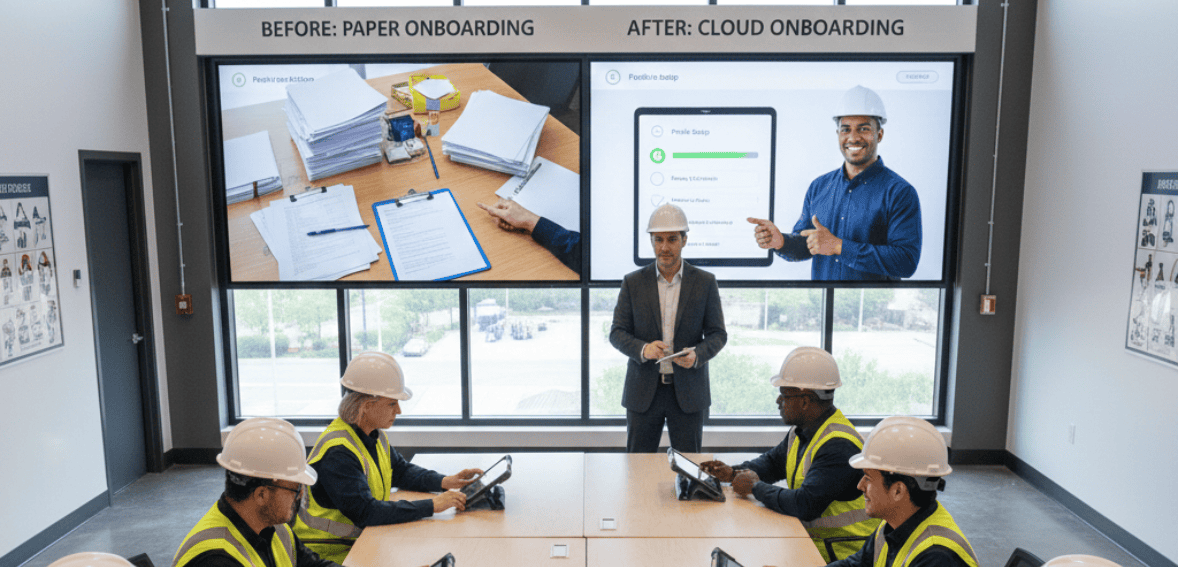
Switching from paper to digital tools can feel intimidating at first, especially for teams that aren’t naturally tech-focused. But transformation doesn’t need to be abrupt or complicated. In fact, the most successful transitions start small and scale slowly.
The key is to adopt digital tools one piece at a time rather than trying to change the entire workflow overnight. Many contractors begin with digital scheduling or electronic work orders. Once the team sees how much easier those are, adding digital invoicing, job notes, inventory management, or time tracking becomes natural.
Training doesn’t require complex manuals or weeks of learning. Most modern field service software is designed for simplicity, with clean layouts, big buttons, and step-by-step guidance. And because crews can access everything on smartphones or tablets, tools they already use, adoption becomes quick and intuitive.
Another concern many contractors have is data safety or working offline. Cloud systems provide encrypted, protected storage that is far safer than physical files or a single computer. And many platforms support offline mode, allowing techs to complete forms in rural or low-signal areas and sync later automatically.
The real secret to a smooth transition is focusing on benefits that matter most to the team: less paperwork, fewer mistakes, faster jobs, easier communication, and quicker pay. When employees understand that digital tools make their jobs easier, not harder, adoption becomes effortless.
And that step is the beginning of long-term transformation: moving from scattered information to a streamlined, professional operation ready for bigger growth.
Real-Time Visibility & Collaboration Between Office and Field

One of the most significant advantages of going digital is the ability to see what’s happening across the business in real time. When operations rely on paper, office staff and field technicians are constantly chasing updates. Calls get missed, messages get delayed, and job status becomes guesswork instead of real data. This slows decision-making and creates misunderstandings, affecting both productivity and customer satisfaction.
With cloud-based digital tools, collaboration becomes seamless. Office teams can assign or reschedule jobs instantly, and technicians receive updates through a mobile app the moment something changes. Job details, past service history, safety notes, parts required, and photos are available with a tap no more digging through folders or calling someone who might already be on the road.
Real-time visibility also helps businesses track job progress as it happens. Managers don’t have to wait until the end of the day to learn what was completed or which job is still pending. They can see technician locations, estimated arrival times, and job status “in progress,” “waiting on parts,” or “completed” all without interrupting workflow. This makes scheduling smarter and reduces downtime.
Collaboration doesn’t only mean speed; it also implies accuracy. A digital record reduces misunderstandings caused by unclear handwriting or missing information. Instead of interpreting scribbled notes, the office receives structured data that can be stored reliably and efficiently referenced later. And when customers call asking for updates, the team doesn’t scramble they already know.
Because real-time data is always available, decisions become proactive rather than reactive. Managers can identify bottlenecks before they become problems. A dispatcher can reassign jobs based on technician location, avoiding wasted travel. A salesperson can see which clients might need follow-up or maintenance. Everyone operates in sync rather than in silos.
Digital visibility transforms a business from a scramble of moving pieces into a coordinated, professional operation one that is easier to manage and far more equipped for growth.
Faster Billing and Improved Cash Flow Through Digital Invoicing

Cash flow is the heartbeat of any contracting or service business. The strongest teams can still struggle financially when payments are delayed, even when invoices sit unprocessed or paperwork is lost in transit. Traditional invoicing methods often mean waiting days or weeks before sending bills, giving customers more time to forget details or postpone payment.
Transitioning to digital invoicing changes everything. When work orders are completed electronically on site, an invoice can be generated immediately, without waiting for paperwork to return to the office. Technicians can collect signatures digitally, attach photos, and submit detailed job reports instantly. Customers receive invoices by email or text and can pay online within moments.
This shift dramatically accelerates payment cycles. Instead of chasing customers or sending repeated reminders, payments arrive faster because the process is convenient and immediate. It also reduces errors caused by manual calculations or lost documents.
Digital invoicing also improves oversight. Managers can check which invoices are paid, overdue, or pending in real time. Automated reminders help follow up without awkward phone calls. And because everything is logged, accountability is built into the system with no confusion over what was billed or why.
The financial impact is not subtle. When billing happens instantly, revenue becomes more predictable, and companies can invest more confidently in labor, tools, and expansion. Instead of operating month-to-month, anxiously waiting for payments to arrive, contractors gain stability and control.
And customers appreciate it too. They experience faster service, more precise documentation, and simpler payment options. A smooth billing experience reinforces a professional image and increases the likelihood of repeat business and positive reviews.
Empowering Technicians With the Tools They Need On-Site

Field technicians are the face of every service business. They are the ones who interact with customers daily, solve problems, and represent the company’s expertise. Yet when technicians rely on outdated systems, they are forced to work with incomplete or incorrect information, which affects both confidence and performance.
Digital transformation gives technicians the support they need to do their jobs well. Instead of arriving at a site unsure of the job history or required parts, they can access everything on a tablet or smartphone: previous service notes, equipment model numbers, inspection photos, and instructions. If they need guidance, they don’t have to call repeatedly; they can review data instantly or even communicate through chat or video.
Digital tools also help with accountability. Technicians can take before-and-after photos, capture digital signatures, and submit reports instantly so customers understand the work that was performed. This transparency enhances trust and reduces the risk of disputes.
With digital access to inventory tracking and scheduling tools, technicians can request parts, reschedule follow-up visits, or generate quotes without waiting for the office. They feel supported instead of constrained. And when technicians feel empowered, job satisfaction increases, turnover decreases, and customer service improves.
The result is a team that works smarter, faster, and with greater confidence one of the most valuable outcomes of digital transformation for contractors.
Digital Transformation as a Competitive Advantage
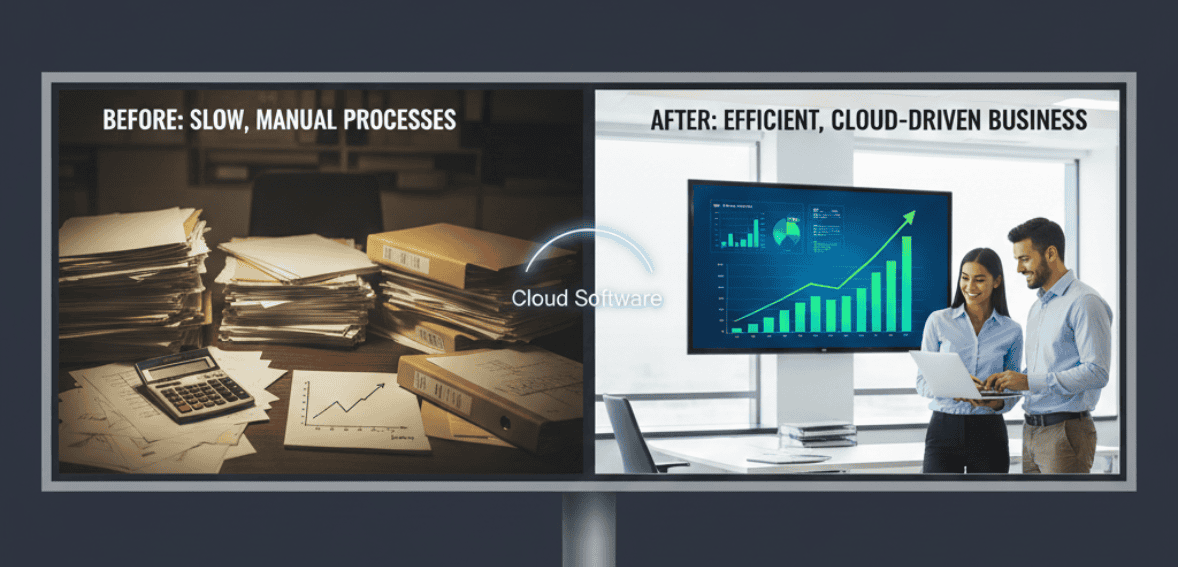
Modern customers expect convenience. They are used to real-time tracking for deliveries, online payments, digital receipts, and instant updates. When a contractor provides outdated processes or slow response times, it signals inefficiency and lowers trust, even before the work begins.
Businesses that embrace digital tools stand out immediately. From professional digital estimates to online booking, from automated notifications to live technician tracking, the customer experience becomes far more polished. People prefer working with companies that communicate clearly and efficiently and are willing to pay more for reliability.
Digital transformation also opens the door to new business opportunities. With better data, a company can analyze trends, improve service packages, offer maintenance plans, and make strategic growth decisions. It becomes easier to scale because operations don’t collapse under increased volume. The business becomes more agile and better equipped to compete in a crowded market.
The companies resisting digital change often believe paper is cheaper or simpler. But the reality is the opposite: inefficiency is far more expensive than technology. While others waste hours fixing outdated processes, digitally transformed contractors move faster, deliver superior service, and win more customers.
In competitive industries, the difference between thriving and struggling isn’t talent, it’s systems.
Conclusion
Digital transformation isn’t about equipment or complicated technology, it’s about freeing your team from repetitive tasks, reducing delays, increasing accuracy, getting paid faster, and delivering service that customers trust and recommend. Moving from paper to cloud is the natural next step for any contractor serious about growth and sustainability. It doesn’t replace people; it supports them so they can do more of the work that matters.
Whether a business has two technicians or two hundred, digital operations unlock opportunities that paper systems simply cannot. Real-time collaboration, faster turnaround, organized data, professional communication, and automated workflows build a foundation strong enough to scale.
Contractors who embrace digital tools gain the advantages of speed, transparency, and consistency qualities that today’s customers value most. Paper belongs to the past. Cloud-based field service management is the future, and the time to transition is now.
FAQs
What does digital actually look like for contractors?
It means replacing physical paperwork with mobile job forms, digital scheduling, automatic updates, cloud storage, and online invoicing. All job details are centralized, instantly accessible, and synced between the office and the field without extra steps or delays.
How does digital transformation improve customer satisfaction?
Customers receive real-time updates, more transparent communication, faster service, and convenient online payments. This professionalism strengthens trust, increases repeat business, and drives positive reviews.
Is cloud-based field service software secure?
Yes. Digital systems use encryption, secure backups, access controls, and compliance protections that make data far safer than paper. There’s no risk of lost files or damaged documents, and data can be recovered quickly at any time.
Will older or less tech-confident employees struggle with digital tools?
Most modern field service apps are built for simplicity, with clear layouts and offline modes. With basic onboarding and gradual adoption, even the least tech-savvy users adapt comfortably and often end up preferring digital tools to paper.
How does digital invoicing improve cash flow?
Invoices can be created instantly on site, shared with customers electronically, and paid online in minutes. Faster billing means faster payment, fewer overdue accounts, and more predictable revenue.