
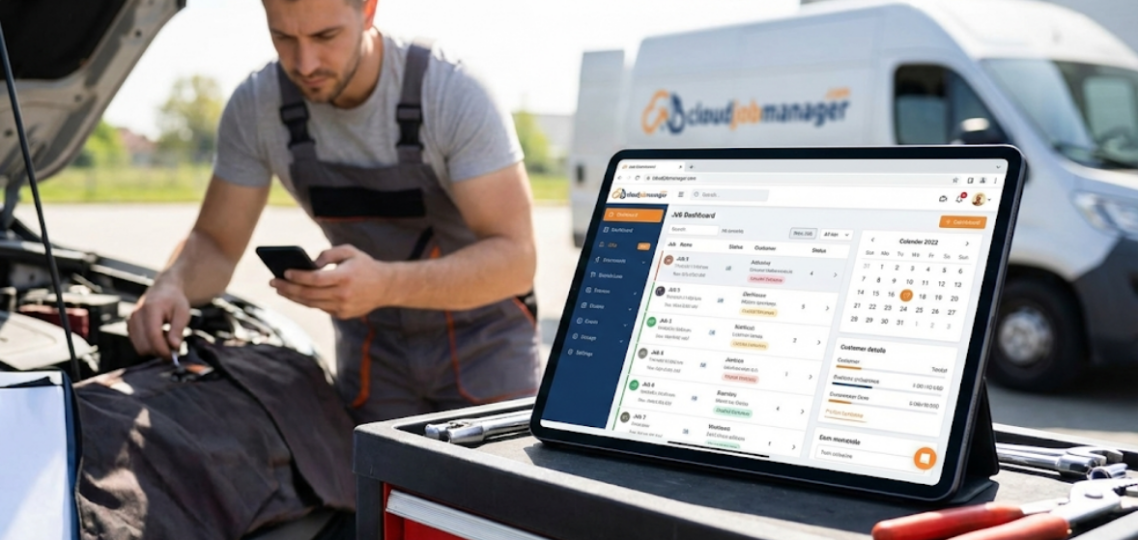
Mobile Mechanics in Motion: How Mobile Mechanic Software and Job Tracking Keep You on the Road
Running a mobile mechanic business is very different from a traditional shop. Your workplace and tools move with you. Your revenue relies on efficient travel, clear job tracking, and fast task completion. In this business, organization is essential for profit.
Mobile mechanic software with job tracking is a major advantage. Modern tools replace juggling calls and notes with needed structure. Mechanics see where to go, what to do, and what’s next without slowing down.
This article explores how mobile mechanic software and job-tracking systems support mechanics on the road by providing specific benefits. These include faster dispatching, real-time GPS visibility for optimal routing, on-site invoicing to accelerate payments, and instant updates for better coordination. We’ll see how each of these tools reduces friction, prevents missed revenue, and enables mobile mechanics to run efficient, professional businesses.
The Reality of Running a Mobile Mechanic Business
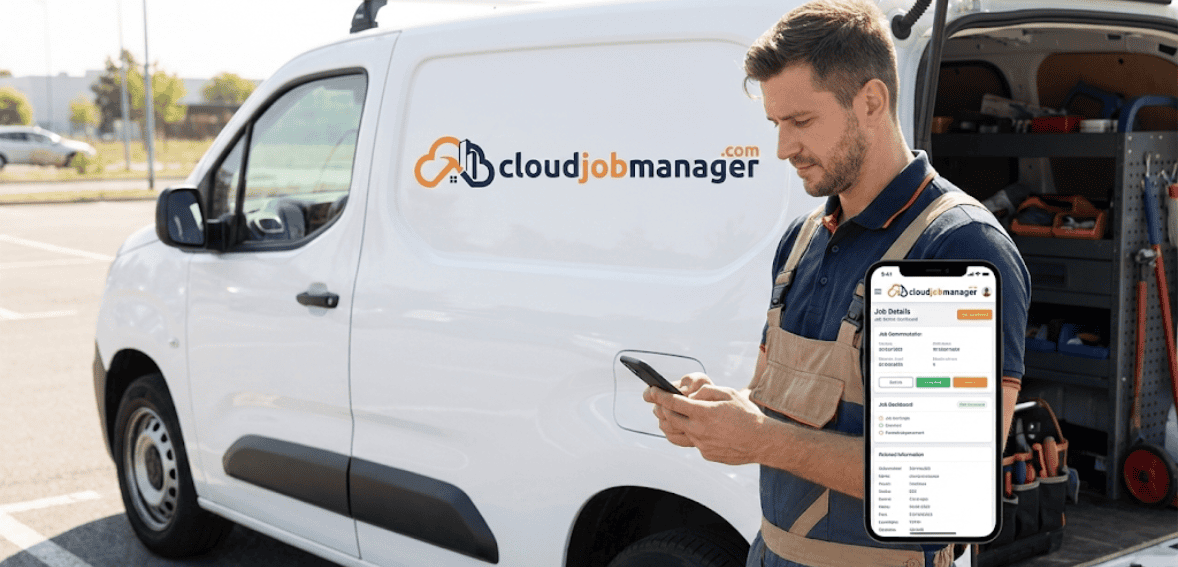
Mobile mechanics operate in one of the most demanding service environments. Every job involves travel, variable timelines, unpredictable conditions, and direct customer interaction. Unlike a fixed-location shop, there is little room for inefficiency. A single scheduling mistake or unclear job detail can ripple through the entire day.
Many mobile mechanics start small, relying on calls, texts, and basic notes to manage work. While this may work temporarily, growth quickly reveals weaknesses. Jobs overlap. Customer addresses are miswritten. Follow-ups get forgotten. Completed work goes unbilled. These issues aren’t caused by a lack of skill; they’re the result of operating without a centralized system.
Mobile mechanic software introduces consistency into this moving operation. Job tracking replaces memory with visibility. Instead of reacting to the day as it unfolds, mechanics gain control over their schedule, their workload, and their revenue pipeline. This shift allows mechanics to focus on the actual repair work while the system handles background coordination.
Mobile auto detailing is as much a logistics business as it is a service business. The time spent driving between appointments, not the time spent cleaning, often determines whether a day is profitable.
Why Job Tracking Is Critical for Mechanics on the Road
Job tracking means more than knowing the next job. For mobile mechanics, it connects scheduling, customer info, work status, and billing. Without job tracking, work is scattered across notes, messages, and memory.
With proper job tracking, every service call becomes a documented process. The job is created with details such as customer information, vehicle data, service description, location, and estimated time. As the mechanic moves through the job, its status updates in real time from scheduled to en route, then to in progress, and finally to completion.
This structure prevents common issues like double-booking, missed appointments, and forgotten invoices. It also creates accountability. Mechanics know exactly what needs to be done and when. Office staff or owners can see progress without interrupting the technician. Customers benefit too, receiving clearer communication and more predictable service windows.
In a mobile business, clarity equals speed. Job tracking ensures that speed does not come at the cost of accuracy.
Dispatch and Scheduling Without the Chaos
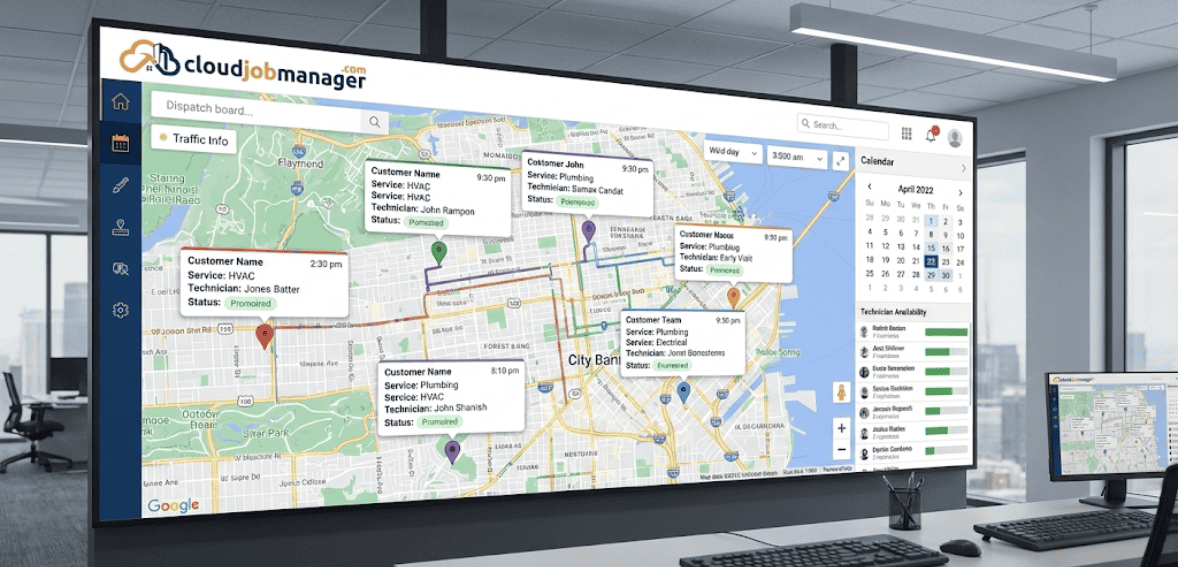
Dispatching mobile mechanics manually is one of the fastest ways to waste time and money. When jobs are assigned by phone calls or scattered messages, it becomes difficult to account for location, traffic, job duration, or technician availability. The result is inefficient routing and unnecessary downtime.
Mobile mechanic software ends guesswork in scheduling. Assign jobs by availability, location, or skill. Mechanics and dispatchers see all day and organize work efficiently.
If a job runs longer than expected or a cancellation occurs, schedules can be adjusted in real time. Instead of scrambling to reshuffle appointments, the system provides visibility into open time slots and nearby jobs. This flexibility allows mechanics to stay productive even when the day doesn’t go exactly as planned.
Over time, better scheduling reduces stress, improves on-time arrivals, and allows more jobs to be completed without extending work hours. For mobile mechanics, this balance is critical for profitability and sustainability.
GPS Technician Tracking and Smarter Route Planning

Travel is one of the highest hidden costs in a mobile mechanic business. Time spent driving is time not spent repairing vehicles. Without route visibility, mechanics often take inefficient paths, backtrack between jobs, or underestimate travel time between appointments.
GPS technician tracking transforms how routes are planned and managed. By showing real-time location data, mobile mechanic software helps optimize job sequences based on proximity rather than guesswork. This reduces fuel consumption, vehicle wear, and wasted hours behind the wheel.
GPS tracking improves communication. Supervisors always know where technicians are. Customers get accurate arrival windows, reducing missed appointments. Emergencies are easily routed to the nearest available technician.
Importantly, GPS tracking in professional systems is for operational efficiency, not surveillance. When implemented transparently, it supports mechanics rather than micromanaging them. The result is smoother operations and better service delivery.
Centralized Job Details in a Mobile Environment
One of the most overlooked benefits of mobile mechanic software is centralized access to job information. In a traditional setup, job details may be spread across emails, text messages, and handwritten notes. This fragmentation increases the risk of mistakes.
With job-tracking software, every job includes its full context. Vehicle history, previous repairs, photos, notes, parts used, and customer preferences are available from a single interface. Mechanics no longer need to rely on memory or search through messages to confirm details.
This centralized approach is especially valuable for repeat customers. When a mechanic arrives already informed about past issues or ongoing concerns, service feels more professional and efficient. It also reduces diagnostic time and improves first-time fix rates.
For growing mobile mechanic businesses, centralized job data creates continuity. Whether there is one technician or many, everyone works from the same source of truth.
On-Site Invoicing and Getting Paid Without Delays

One of the biggest pain points for mobile mechanics has always been payment timing. When invoices are written later, emailed days after the job, or handled manually back at home, cash flow slows down, and unpaid invoices pile up. Job tracking software changes this dynamic entirely by bringing invoicing directly into the field.
With mobile mechanic software, invoices are generated the moment a job is marked complete. Labour, parts, taxes, and notes are already attached to the job record, so nothing is forgotten or miscalculated. The mechanic can review the invoice with the customer on-site, answer questions immediately, and close the loop while trust is highest.
On-site invoicing eliminates awkward follow-ups, increases the likelihood of immediate payment, and ensures a predictable cash flow process. This consistency not only stabilizes income but also reduces stress on accounts receivable.
To save time and make day profitable, in today’s competitive automotive service industry, a modern payment system is no longer optional – it’s essential. An efficient payment solution keeps your cash flow healthy, speeds up customer checkout, and enhances trust in your shop. For shop owners, technicians, and managers, a well-chosen system can streamline operations from invoicing to final payment.
Job Tracking as the Foundation of Mobile Workforce Management
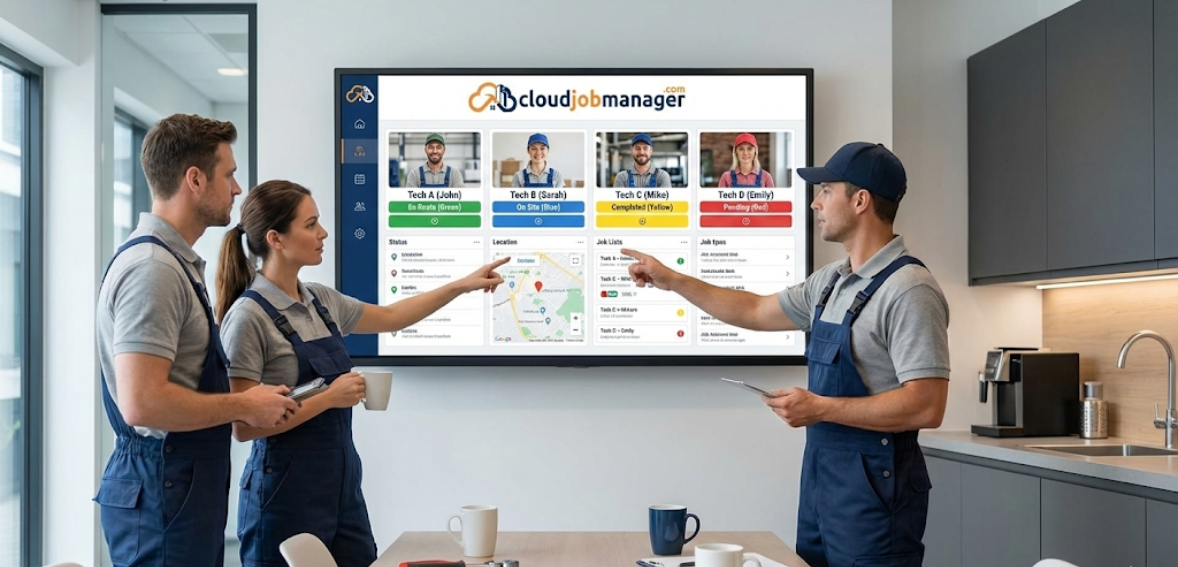
As a mobile mechanic business grows, coordination becomes harder. Without a shared system, gaps form: one technician waits, another is overloaded. Details and updates get confused.
Job-tracking software serves as the operational backbone for mobile workforce management. Every technician sees their assigned jobs, timelines, and updates in real time. Office staff or owners can monitor progress without interrupting technicians in the middle of a repair. Everyone operates from the same source of truth.
This visibility allows better decision-making throughout the day. If a technician runs behind, another nearby technician can step in. If a cancellation opens up time, the system makes it easy to fill the gap. Instead of responding to problems, the business adapts smoothly as conditions change.
Reducing Administrative Work Without Losing Control

Mobile mechanics spend more time on admin than they realize: logging jobs, payments, records, and schedules. Without automation, these tasks eat personal time.
Job tracking software reduces this burden by capturing information naturally as work happens. Job statuses update automatically. Notes and photos attach directly to the job record. Invoices are generated from completed work rather than being recreated later. This eliminates duplicate data entry and minimizes errors.
Importantly, reducing admin work does not mean losing oversight. In fact, automation improves control by creating consistent records. Owners gain better insight into performance, revenue, and workload without micromanaging. Mechanics gain more time to focus on repairs instead of paperwork.
Delivering a Professional Customer Experience on the Road

Customer expectations have changed. Even when service happens in a driveway or parking lot, customers expect professionalism, clarity, and communication. Job tracking software helps mobile mechanics deliver a polished experience without extra effort.
Customers receive confirmations, arrival updates, and completion notifications automatically. They know when the mechanic is on the way and what work was performed. Digital records replace handwritten notes, making the service feel organized and trustworthy.
This professionalism builds credibility. Customers are more likely to recommend a mobile mechanic who communicates clearly and operates smoothly. Over time, these small touches differentiate established businesses from informal competitors and support long-term growth.
Scaling a Mobile Mechanic Business Without Losing Flexibility

Growth is exciting, but it often introduces complexity. More jobs mean more coordination. More technicians mean more communication. Without structure, growth can lead to burnout and declining service quality.
Mobile mechanic software allows businesses to scale while preserving flexibility. Job tracking adapts to increased volume without requiring constant manual oversight. Schedules remain clear. Workloads stay balanced. Communication stays centralized.
This scalability is especially valuable for seasonal demand or emergency-heavy service models. Whether the business adds technicians temporarily or permanently, the system absorbs complexity so owners can focus on strategy rather than survival.
Why Job Tracking Software Is Becoming Non-Negotiable
What was once considered optional technology has become a competitive necessity. Mobile mechanics who rely solely on memory, messages, and paper are at a disadvantage, not because they lack skill, but because their systems cannot keep up.
Job tracking software aligns the planning, execution, and completion of work. It supports field technicians, improves customer communication, and protects revenue through accurate billing. Most importantly, it gives mobile mechanics control over their time.
In an industry defined by motion, structure is power.
Conclusion
Mobile mechanics thrive when movement is organized rather than chaotic. Job tracking software provides the framework that keeps mechanics focused, customers informed, and revenue flowing. By centralizing scheduling, tracking progress, enabling on-site invoicing, and supporting growth, these tools transform how mobile service businesses operate.
For mechanics who want to stay on the road without losing control, job tracking is no longer just helpful; it’s essential.
FAQs
How does job tracking improve efficiency for mobile mechanics?
It centralizes schedules, job details, and updates, reducing wasted time and preventing missed or duplicated work.
Can job tracking software help solo mobile mechanics, too?
Yes. Even one-person operations benefit from clearer scheduling, faster invoicing, and reduced admin workload.
Is GPS technician tracking intrusive?
When used professionally, it supports routing and communication rather than surveillance, improving efficiency for everyone.
Does on-site invoicing really improve cash flow?
Yes. Billing immediately after service increases payment speed and reduces the risk of forgotten or disputed invoices.
Can job tracking support business growth?
Absolutely. It provides the structure needed to add technicians, handle more jobs, and scale without chaos.