

Off-Season Productivity: Field Service Slow Season Strategies to Help Businesses Can Prepare and Prosper
Every service business has a rhythm. There are busy months when technicians can barely keep up and then there are quieter ones, when phones ring less and work slows down. For many companies in HVAC, lawn care, pest control, and pool maintenance, these slow periods can feel like a setback.
But they don’t have to be.
What separates resilient businesses from the rest isn’t just how they perform during the peak season, it’s how they use the off-season to prepare for it. The smartest teams treat downtime as a gift: a rare chance to train, refine, and plan ahead.
That’s what field service slow season strategies are all about turning quiet months into a foundation for long-term growth.
Rather than worrying about fewer appointments, forward-thinking companies use this time to:
- Train their workforce on new tools or certifications
- Service and organize their equipment
- Strengthen customer relationships through proactive outreach
- Build recurring revenue streams that keep income steady year-round
The off-season doesn’t have to be downtime. With the right mindset and plan, it can become the most productive part of your business year.
Training and Upskilling During the Slow Season

When business is slow, time becomes your most valuable resource. Instead of letting technicians sit idle, the off-season can be used as a structured opportunity to invest in learning and growth.
The best field service slow season strategies always leveraging data and analytics for better business decisions, but as a core business practice.
Technical Skill Refreshers
Technicians who spend the winter improving their craft are the ones who perform better and faster when work returns. This could mean certification courses, manufacturer-specific training, or safety refreshers.
For HVAC teams, winter may be the time to learn about new refrigerant regulations or smart thermostat integration. For lawn care services, it could be updates on sustainable fertilizers or equipment care. For electricians and plumbers, it’s a good time to master new compliance standards.
Software and Digital Training
Off-season periods are also ideal for introducing new digital systems like CRM platforms, scheduling software, or route optimization apps. During peak season, no one has time to test new tools or adjust workflows.
When business slows, technicians can learn at their own pace. They can practice using tablets or mobile apps for invoicing, dispatch updates, and job tracking without the pressure of real-time work.
Training everyone on the same system before the busy season ensures a smoother, more coordinated operation later.
Cross-Training and Team Development
Cross-training technicians across services for example, teaching HVAC techs minor electrical diagnostics, or lawn care specialists basic irrigation troubleshooting creates flexibility. When the busy season hits, this versatility becomes a major advantage.
A company with multi-skilled technicians can handle a wider range of service requests without overstaffing or turning away jobs.
In short, training isn’t a cost; it’s an investment. The more a business improves its people during the slow months, the faster it grows when the rush begins.
Preventative Maintenance and Internal Organization

When fieldwork slows, so do internal operations. A productive off-season is the perfect moment to strengthen the systems that support your team year-round.
Vehicle and Equipment Maintenance
Company vehicles, tools, and heavy machinery work hard during peak months often with little downtime for proper care. When the schedule lightens, it’s time to:
- Inspect and service fleet vehicles (oil, tires, brakes)
- Clean and recalibrate tools
- Replace worn parts
- Test safety gear and backup equipment
These small efforts reduce costly breakdowns when business picks up again.
In field service, lost time from a broken truck or failed equipment doesn’t just delay one job it cascades across multiple appointments, frustrating customers and hurting your reputation.
Routine upkeep is one of the simplest field service slow season strategies that pays off exponentially later.
Inventory Management
Another overlooked off-season task is restocking and organizing inventory. During busy times, technicians grab what they need and move on often without precise tracking. This can lead to missing parts, duplicate orders, or emergency supply runs.
The off-season is a chance to:
- Audit what’s in stock
- Identify slow-moving or obsolete parts
- Restock high-use items
- Organize warehouse layouts for faster access
By preparing inventory now, the business enters the next season fully stocked and ready to serve customers immediately.
Office Process Improvements
Off-season months also allow admin and management teams to refine internal systems:
- Updating pricing sheets or service packages
- Reviewing customer satisfaction surveys
- Rebuilding templates for invoices or estimates
- Auditing expense reports or vendor agreements
These quiet weeks are the best time to simplify your workflow, improve documentation, and test automation tools that free your team’s time later.
When done well, this behind-the-scenes preparation makes the next busy season not just manageable but efficient.
Building Recurring Revenue During Slow Times
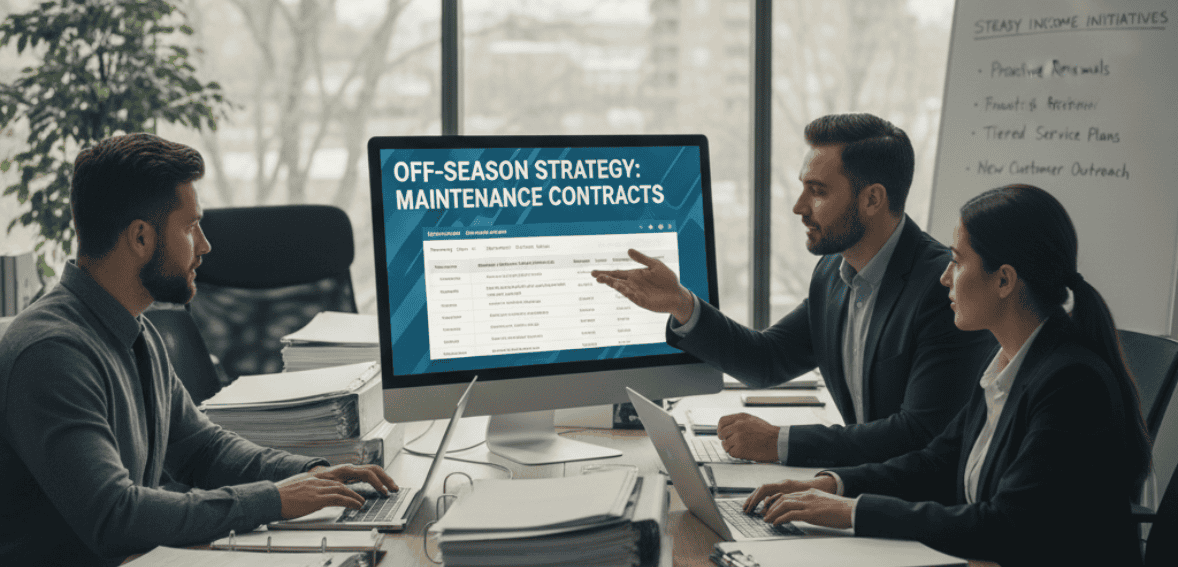
A seasonal business will always have some degree of fluctuation but cash flow doesn’t have to dry up completely when demand slows.
One of the most powerful field service slow season strategies is developing recurring income sources. This ensures your team stays busy and your finances stay predictable, even when new service calls decrease.
Maintenance Contracts and Service Agreements
Offering maintenance contracts off-season is one of the best ways to stabilize revenue. Customers appreciate predictable service and priority scheduling, while your company benefits from consistent income.
These contracts can cover routine checks, system tune-ups, or preventive treatments depending on the industry:
- HVAC: bi-annual inspections and filter replacements
- Pool services: winter cleaning and cover maintenance
- Pest control: quarterly visits and property monitoring
- Landscaping: irrigation system checks and pre-season prep
For customers, the value is peace of mind. For your business, it means revenue without constant re-marketing.
Upselling and Add-On Services
Slow months are also perfect for reaching out to existing clients with targeted offers:
- Indoor upgrades or winter prep services
- Extended warranties or seasonal packages
- Equipment upgrades (like smart thermostats or LED conversions)
Because your technicians already have established relationships, these offers feel personalized, not pushy.
Partnering With Complementary Businesses
Collaborating with nearby companies can also generate new off-season opportunities. For example, an HVAC contractor could partner with an insulation company or energy auditor for cross-referrals. A landscaping business might team up with snow removal or holiday lighting services.
This kind of seasonal business planning builds local connections and fills your schedule with mutually beneficial work.
Using Data and Feedback to Plan the Next Busy Season

The off-season isn’t just for catching up on maintenance, it’s also for reflection. When the rush ends, you finally have the space to step back and analyze what went right, what went wrong, and how to make the next season smoother.
Businesses that consistently grow treat this as a yearly ritual.
Review Performance Metrics
Data tells a story if you take time to read it.
Look at metrics like:
- Average job completion time
- Most requested services
- Seasonal demand patterns
- Repeat customers vs. new ones
- Most profitable service types
These insights show where your team performs strongest and where you might be losing efficiency. For instance, maybe you notice spring appointments book out faster than fall, or that one technician consistently completes jobs 20% faster.
By using this data, you can adjust staffing, route planning, and marketing focus before the next season begins.
Learn From Customer Feedback
Another essential part of field service slow season strategies is reviewing what customers actually said. Go through post-service surveys, online reviews, or social media comments. Identify recurring themes both positive and negative.
If customers loved your punctuality but mentioned unclear invoices, that’s a cue to update templates. If they praised your technicians but wanted faster communication, that’s a signal to adopt better mobile tools or automated reminders.
Customer feedback is free business consulting; you just have to listen.
Update Marketing Strategy
The off-season also gives you time to rethink how you attract and retain customers. You can:
- Refresh your website or service descriptions
- Create blog posts or guides about seasonal maintenance
- Set up targeted email campaigns for returning clients
- Test social media ads focused on pre-booking spring or summer services
Marketing shouldn’t stop when business slows down; it just shifts its goal. During off-season months, your marketing focus isn’t quick sales; it’s relationship building.
When your audience starts thinking about the next season’s needs, your business will already be at the top of their mind.
Internal Improvements and Team Morale
The off-season also provides something most field service companies rarely get time to breathe. It’s the best time to look inward, strengthen company culture, and prepare your team mentally and technically for what’s ahead.
Review Company Goals
Start with a simple but powerful question: Did we achieve what we planned this year? Maybe your company wanted to expand service areas, increase customer retention, or introduce new digital tools. Assess progress and set realistic goals for next year.
Bringing the entire team into this conversation builds ownership. When technicians understand the “why” behind company goals, they’re more motivated to help achieve them.
Reward and Recognize Effort
Slow months are ideal for acknowledging your team’s hard work. A simple appreciation lunch, performance award, or bonus program goes a long way toward boosting morale.
Many businesses underestimate how much technician satisfaction impacts customer satisfaction. A happy, supported technician delivers better service and that reflects directly on the brand.
Refine Scheduling and Workflows
Before the next busy period begins, take time to review how your team schedules jobs, communicates updates, and manages unexpected delays.
If overlapping appointments or missed messages were common last season, this is the time to fix them. Testing new scheduling software, dispatch tools, or mobile apps now ensures everyone’s comfortable using them later when pressure rises.
A short training workshop or demo session can prepare your entire field workforce in just a few hours.
Off-season planning isn’t just about fixing equipment, it’s about fine-tuning your entire system.
The Power of Maintenance Contracts

One of the strongest pillars of field service slow season strategies is building reliable revenue streams through maintenance contracts off-season.
Instead of treating slow months as downtime, businesses can create continuity by offering contracts that keep technicians active year-round.
These agreements ensure recurring visits monthly, quarterly, or bi-annual which helps balance the workload between high and low seasons.
For example:
- HVAC companies can schedule winter system checks or duct cleaning.
- Pest control services can conduct quarterly prevention treatments.
- Landscapers can do equipment winterization or spring preparation.
- Pool technicians can handle off-season cover maintenance.
Maintenance contracts don’t just stabilize cash flow, they deepen customer relationships. Each visit builds familiarity and trust, turning one-time clients into loyal, recurring customers.
And from a business perspective, recurring revenue means predictable income and easier budgeting. That stability is priceless when the phones get quiet.
Innovation During Downtime

Innovation rarely happens when you’re rushing from job to job. The off-season is when creativity thrives when there’s space to ask, “What could we do differently next year?” Maybe it’s adopting new route optimization tools. Maybe it’s redesigning uniforms for better comfort. Or maybe it’s experimenting with a new service line altogether.
Seasonal business planning should always include a creative review not just fixing problems but exploring improvements.
Companies that innovate when others pause are the ones customers remember when demand returns.
Think of it as spring cleaning your business model. Every small improvement made now pays dividends when the next season’s chaos begins.
Conclusion
Every field service company faces the same reality: the slow season will come. But whether that period becomes a setback or a stepping stone depends entirely on how you use it.
Smart business owners treat the off-season not as an interruption, but as an opportunity.
By focusing on field service slow season strategies like training, preventative maintenance, marketing improvements, and recurring revenue programs, you turn downtime into preparation time.
When technicians are trained, equipment is serviced, systems are refined, and customers remain engaged, the transition back to peak season feels effortless.
The businesses that thrive year after year are the ones that don’t wait for work; they build readiness for it.
And when the first warm calls or busy months return, they’re not scrambling to catch up; they’re already ahead.
Because success in field service doesn’t come from the rush. It’s built quietly during the season when everyone else slows down.
FAQs:
What kinds of businesses have an “off-season”?
Many field service businesses are seasonal. For example, HVAC sees a slowdown in spring and fall (between heating and cooling peaks), lawn care and pool services slow down in winter, and even contractors might have a winter dip in some regions. Understanding your specific slow periods – whether driven by weather or customer cycles – is key to planning for them.
How can we keep technicians busy and motivated during slow periods?
Slow periods are great for training, cross-training, and catching up on internal projects. You can run workshops, get techs certified in new skills (like a new HVAC system training or pest control safety refreshers), or have them help with writing SOPs and improving processes. Also, involve them in equipment maintenance – they can help audit tool inventories, clean and repair gear, or even assist in marketing efforts (like canvassing a neighborhood or creating how-to content). Engaging them in meaningful tasks prevents boredom and shows you’re investing in their growth.
What about generating business during the off-season?
Marketing is crucial. Offer off-season specials or early booking discounts for upcoming seasons (“Prebook your spring tune-up now and save 20%”). Reach out to past customers with promotions (“We miss you – here’s a winter discount for any indoor projects”). Also, emphasize maintenance plans: existing customers might sign up for a year-round plan during the slow season, which guarantees you work (and revenue) even in quieter months. Another strategy is to diversify services slightly – e.g., a lawn care biz might offer snow removal in winter if it makes sense regionally.
How can technology help in the slow season?
Field service software can generate reports that identify trends – for instance, which services dipped last winter, which techs had more idle time, etc. You can use this data to plan better (maybe run a promotion on the most declined service or adjust staffing). Also, use your CRM: during slow times, have the system pull a list of all customers who haven’t had service in a while or whose annual checkup is due, then send them a friendly automated reminder or marketing email. Basically, technology helps ensure you’re proactive rather than just waiting for work to come.
What does CloudJobManager offer to assist during off-season?
CloudJobManager can aid off-season planning through its reporting and CRM features. For instance, you can identify gaps in the schedule and use the system to dispatch training sessions or maintenance tasks to technicians, so their calendars stay active. Its customer management module lets you filter clients by last service date – perfect for creating a call list or email campaign to drum up some extra jobs. You can also schedule recurring internal tasks (like “vehicle inspection – every 3 months”) so that these important upkeep duties are never forgotten. In short, CloudJobManager not only manages customer jobs but can also be used to organize your team’s time and priorities during the slower periods.