
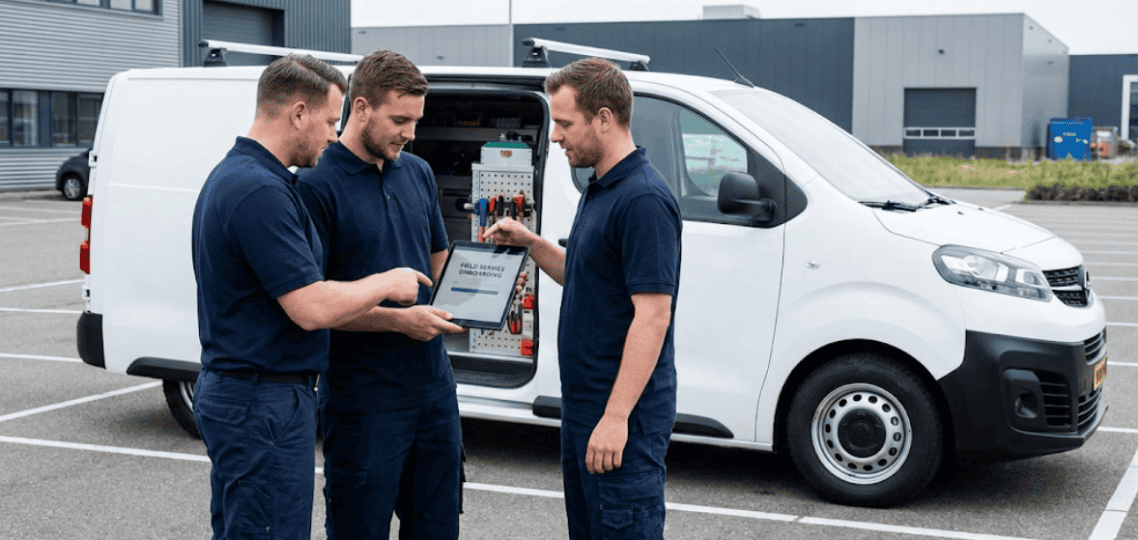
Onboarding New Technicians: Training Tips and Tech Tools for Faster Ramp-Up
Field service technician training is not just about teaching someone how to complete tasks. It is about shaping how a new technician thinks, communicates, and performs in real-world environments where time, safety, and customer trust all matter. When onboarding new technicians, many service businesses focus too heavily on immediate productivity and overlook the long-term impact of a strong onboarding foundation. This often leads to inconsistent service quality, higher error rates, and unnecessary turnover.
Onboarding new technicians should be viewed as an investment rather than an expense. A thoughtful onboarding process helps technicians feel confident in their role, aligned with company expectations, and supported from day one. When training is rushed or unclear, new hires tend to rely on guesswork in the field, which can damage customer relationships and strain internal teams. Effective field service onboarding sets clear expectations early and creates a structured learning path that helps technicians grow into their roles rather than being thrown in.
The most successful service organizations treat onboarding as a blend of structured training, real-world exposure, and ongoing support. This approach not only shortens the ramp-up time but also builds technicians who are safer, more efficient, and more engaged with their work. The key takeaway: a balanced, supportive onboarding process leads to long-term technician effectiveness.
Why Traditional Fails During onboarding new technician
Many onboarding programs fail because they are designed for office roles rather than field-based work. A technician’s job is dynamic, unpredictable, and customer-facing, yet onboarding often relies on static manuals, verbal explanations, or shadowing without structure. This creates gaps in understanding that only surface once the technician is working independently.
Another common issue is information overload. New hires are often given too much information at once, with no clear prioritization. Policies, procedures, safety rules, software tools, and customer service expectations are all introduced in a short period, leaving technicians overwhelmed. Without reinforcement or easy access to information later, much of this knowledge is forgotten.
Traditional onboarding also tends to rely heavily on experienced technicians to train new hires informally. While peer learning is valuable, it can lead to inconsistencies if each trainer explains things differently. This lack of standardization results in uneven service quality and confusion about “the right way” to do things.
To succeed, field service onboarding must be structured, repeatable, and supported by tools that enable technicians to learn at their own pace while still meeting operational standards. The central takeaway is that a systematic approach creates consistency and sets up new hires for success.
Defining Clear Expectations During New Technician Onboarding

One of the most important steps in onboarding new technicians is clearly defining expectations early. New hires should understand not only what tasks they are responsible for, but also how success is measured. This includes expectations around punctuality, communication, safety compliance, documentation, and customer interaction.
Clear expectations reduce anxiety for new technicians. When people know what is expected of them, they are more likely to perform confidently and ask the right questions. This clarity also protects managers from misunderstandings later, as expectations have been documented and reinforced from the beginning.
Expectations should be communicated in multiple formats. Verbal explanations are useful, but they should be supported by written guidelines, visual examples, and real-world scenarios. This ensures that technicians with different learning styles can absorb the information effectively. During field service technician training, expectations should also be revisited regularly, not just during the first week.
When onboarding new technicians, it is helpful to separate “must-know” information from “nice-to-know” details. This allows new hires to focus on core responsibilities first while gradually building deeper knowledge as they gain experience. The main takeaway: focusing on essentials first supports a smoother ramp-up.
Creating a Structured Training Path for Field Technicians
A structured training path is essential for successful field service onboarding. Rather than treating onboarding as a single event, it should be designed as a progression of learning stages. Each stage builds on the previous one, helping technicians develop competence and confidence over time.
Early stages of training should focus on safety, basic procedures, and company standards. This includes how jobs are assigned, how work is documented, and how technicians interact with customers. As technicians become more comfortable, training can expand into advanced troubleshooting, efficiency techniques, and handling complex scenarios.
Structure does not mean rigidity. A good training path offers flexibility based on the technician’s prior experience while ensuring no critical areas are skipped. For example, an experienced hire may master basic technical skills quickly but still need time to learn company-specific workflows and expectations.
Documentation plays a key role here. Organize training materials to mirror the training path. Ensure technicians can easily review the needed information. This reduces dependence on supervisors and encourages independent problem-solving.
Using Digital Training Tools to Accelerate Technician Ramp-Up
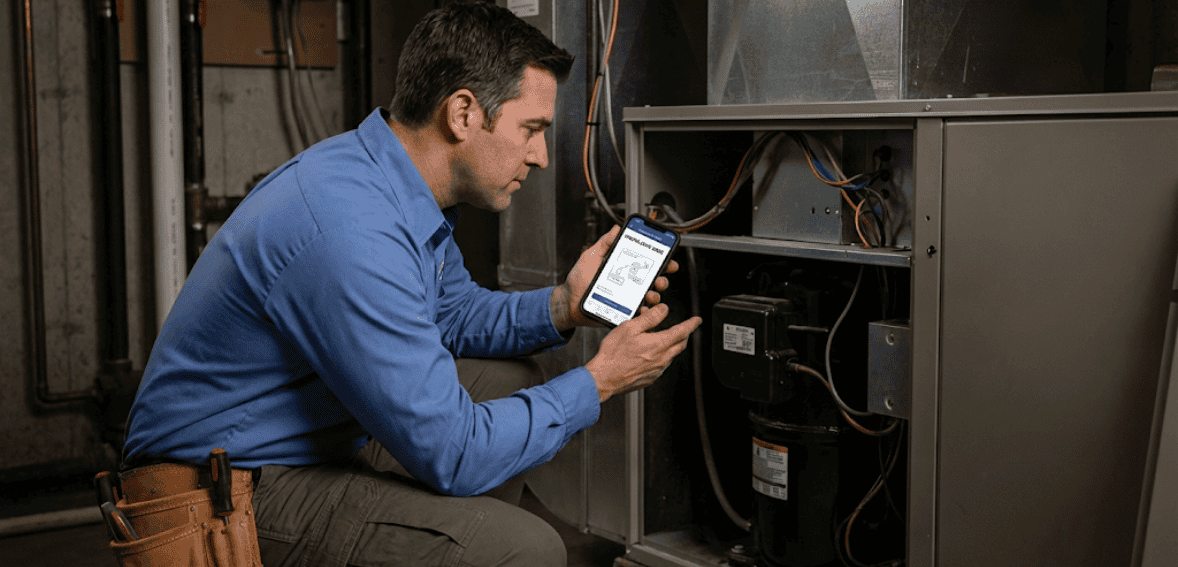
Digital training tools have transformed how onboarding new technicians can be delivered. Instead of relying solely on in-person instruction, service businesses can now provide training through mobile-friendly platforms that technicians can access anytime. This is especially important in field service environments where technicians spend most of their time away from the office.
A mobile app for technicians allows new hires to review procedures, watch short training videos, and access reference materials directly from the field. This just-in-time learning approach helps technicians apply knowledge immediately rather than trying to remember details from previous training sessions.
Digital training tools also improve consistency. Every technician receives the same information, presented in the same way, which reduces variation in how tasks are performed. Updates to procedures or policies can be rolled out instantly, ensuring that all technicians use the most current information.
Another advantage of digital tools is progress tracking. Managers review completion of training modules, flag areas where a technician needs support, and assign targeted resources. This data-driven approach enables proactive onboarding rather than reactive.
Building a Knowledge Base That Supports Ongoing Learning
A well-organized knowledge base is one of the most valuable assets in field service onboarding. While initial training lays the foundation, technicians need ongoing access to information as they encounter new situations. A digital knowledge base serves as a single source of truth for procedures, troubleshooting guides, and best practices.
For onboarding new technicians, the knowledge base should be easy to navigate and searchable. Content should be written in clear, practical language, with visuals where helpful. Long, dense documents are less effective than concise articles focused on specific tasks or problems.
A strong knowledge base empowers technicians to solve issues independently, reducing downtime and minimizing calls to supervisors. It also supports continuous learning, allowing technicians to expand their skills over time without formal retraining sessions.
Importantly, the knowledge base should evolve. Feedback from technicians can highlight gaps or unclear instructions, allowing content to be improved. This creates a learning loop in which onboarding materials improve with each new hire.
The Role of Technology in Standardizing Field Service Onboarding
Technology plays a central role in making field service onboarding consistent and scalable. As service businesses grow, onboarding new technicians manually becomes increasingly difficult. Without standardized processes, quality suffers and training becomes dependent on individual managers or senior technicians.
Digital onboarding platforms help standardize training by combining checklists, training modules, documentation, and communication tools in one place. This ensures that every new hire goes through the same onboarding steps, regardless of location or supervisor.
Technology also supports accountability. Onboarding checklists ensure that no steps are missed, while digital acknowledgments confirm that technicians have reviewed and understood key policies. This is particularly important for safety and compliance requirements.
By integrating onboarding tools with existing field service management systems, businesses can create a seamless experience where training, job assignments, and performance tracking are connected. This integration reduces friction for new technicians and helps them feel part of the organization from the start. The takeaway: integration streamlines onboarding and boosts technician engagement from day one.
Hands-On Mentorship: Bridging Training and Real-World Field Work

No amount of classroom-style field service technician training can fully prepare a new hire for the unpredictability of real jobs. This is where hands-on mentorship becomes critical. Pairing onboarding new technicians with experienced team members helps bridge the gap between theory and real-world application. Mentorship gives new hires a safe space to ask questions, observe decision-making, and understand how experienced technicians handle pressure, customers, and unexpected issues. The takeaway: mentorship links formal training with practical experience.
Effective mentorship should be intentional rather than informal. Instead of simply telling a new technician to “shadow someone,” businesses should define what the mentorship period looks like. This includes which types of jobs the new hire will observe first, when they will begin performing tasks independently, and how feedback will be given. Without structure, mentorship can turn into passive observation rather than active learning.
Mentorship also plays an emotional role in onboarding. Starting a field service job can feel isolating, especially for technicians who spend most of their day working alone. A mentor provides reassurance, helps build confidence, and reinforces company culture in a way no handbook ever could.
Using Mobile Apps to Support Technicians in the Field

A mobile app for technicians is no longer a “nice to have” tool during onboarding; it is a necessity. Once new hires are in the field, they need quick access to schedules, job details, customer information, and training resources. Relying on memory or paper notes creates unnecessary stress and increases the chance of mistakes.
Mobile apps support onboarding new technicians by acting as a real-time guide. A technician can review job instructions before arriving on site, reference procedures while working, and document work immediately after completion. This reduces guesswork and helps new hires feel supported even when working independently.
Mobile tools also reinforce learning. When technicians consistently use the same digital workflows, training concepts become habits. Over time, this leads to faster job completion, better documentation, and improved customer communication. From a management perspective, mobile apps provide visibility into how new technicians are performing, allowing for timely coaching and support.
Measuring Success in Field Service Onboarding

To improve onboarding new technicians, businesses must measure their effectiveness. Too often, onboarding success is assumed once a technician starts working independently. In reality, true success is reflected in performance, confidence, and retention over time.
Key indicators of successful field service onboarding include reduced callback rates, consistent job documentation, adherence to safety procedures, and positive customer feedback. New technicians who are properly onboarded tend to ask fewer urgent questions, make fewer errors, and integrate more smoothly into daily operations.
Feedback is another critical measurement tool. Asking new hires about their onboarding experience can reveal gaps that managers may overlook. Was the training pace appropriate? Were the tools easy to use? Did they feel supported in the field? These insights help refine the onboarding process for future hires.
Measuring onboarding success is not micromanagement. It is about ensuring that training efforts translate into real-world performance and long-term growth.
Common Mistakes That Undermine Technician Onboarding
Even well-intentioned onboarding programs can fall short due to common mistakes. One of the biggest is rushing new technicians into full workloads too quickly. While productivity is important, pushing new hires before they are ready often leads to mistakes that cost more time and money in the long run.
Another mistake is treating onboarding as a one-time event. Field service onboarding should be continuous, with regular check-ins during the first few months. Without follow-up, early issues can turn into long-term habits that are difficult to correct later.
Inconsistent training is another challenge. When onboarding relies too heavily on individual trainers, technicians receive mixed messages about procedures and expectations. This inconsistency creates confusion and frustration for both technicians and managers.
Avoiding these mistakes requires commitment, patience, and the right tools to support a consistent onboarding experience.
How Strong Onboarding Improves Technician Retention

Retention is one of the most overlooked benefits of effective field service technician training. Many technicians leave within their first year, not because they lack skill, but because they feel unsupported or overwhelmed. A strong onboarding process addresses this by setting realistic expectations and providing ongoing support.
When onboarding new technicians is done well, employees feel valued and confident in their role. They understand how their work contributes to the company’s success and know where to turn for help. This sense of belonging is a powerful motivator.
Good onboarding also reduces burnout. Technicians who are properly trained work more efficiently, experience fewer stressful situations, and feel more in control of their day. Over time, this leads to higher job satisfaction and lower turnover.
Preparing Your Business to Scale with Better Onboarding
As a field service business grows, onboarding becomes even more important. Hiring more technicians without improving onboarding processes creates chaos rather than growth. Scalable onboarding relies on documented processes, digital tools, and a culture of continuous learning.
Technology enables this scalability. Digital training tools, mobile apps, and centralized knowledge bases allow businesses to onboard multiple technicians simultaneously without sacrificing quality. This consistency ensures that every technician represents the company with the same level of professionalism.
Preparing for growth means viewing onboarding as part of your long-term strategy. Businesses that invest in onboarding early are better positioned to expand without sacrificing service quality.
Conclusion: Onboarding Is the Foundation of Field Service Success
Onboarding new technicians is one of the most important responsibilities in any field service organization. It shapes how technicians work, how they treat customers, and how long they stay with the company. Strong field service technician training is not about speed; it is about clarity, support, and consistency.
By combining structured training, mentorship, digital tools, and ongoing feedback, businesses can create onboarding experiences that build confident, capable technicians. The result is fewer mistakes, happier customers, and a stronger, more resilient workforce.
In the end, onboarding is not just about training technicians to do a job. It is about setting them up to succeed today, tomorrow, and throughout their career with your company.
FAQs
How long should onboarding new technicians take?
Onboarding typically lasts several weeks, with ongoing support during the first 60–90 days. The goal is gradual independence, not immediate full productivity.
What is the most important part of field service technician training?
Clear expectations and real-world application are critical. Technicians need both structured training and hands-on experience to succeed.
Do small field service businesses need formal onboarding?
Yes. Even small teams benefit from consistent onboarding, as it reduces errors and builds habits that support growth.
Can technology replace in-person training?
Technology enhances training but does not replace human support. The best onboarding combines digital tools with mentorship and feedback.
How does better onboarding affect customer satisfaction?
Well-trained technicians communicate clearly, work efficiently, and make fewer mistakes, leading to better customer experiences.