
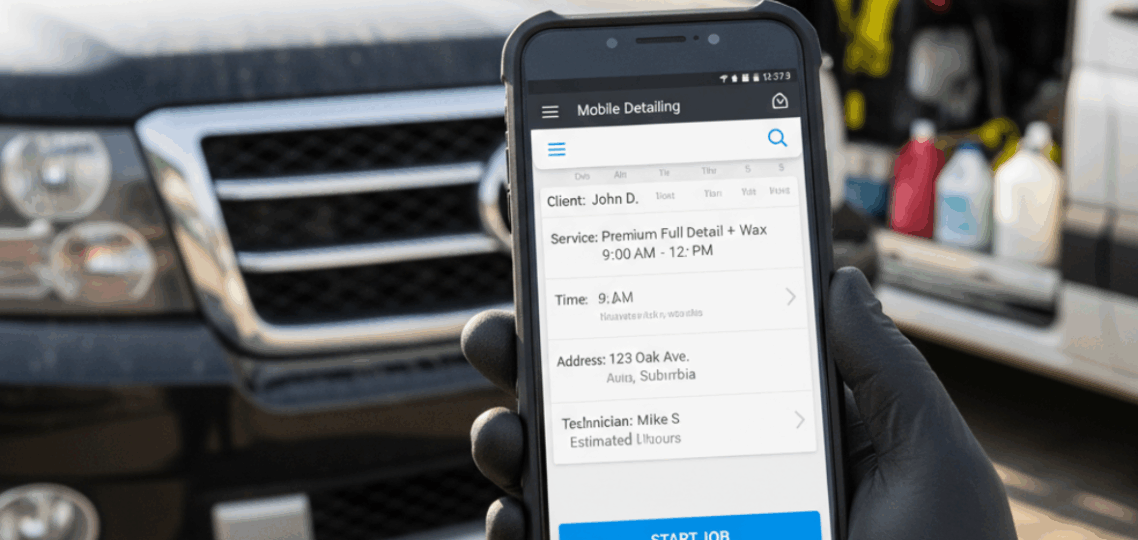
Polish Your Schedule: Route Optimization for Mobile Auto Detailers
Mobile auto detailing has grown rapidly over the past few years, driven by customers who prefer convenience over waiting in a shop lobby. Instead of bringing their vehicle to a physical location, they can have detailing done at home, the office, or anywhere the car is parked. It is a business model rooted in freedom. But that freedom has new challenges.
Detailers are constantly on the road, juggling travel time, weather changes, customer schedules, and unexpected cancellations. Every mile driven and every minute spent planning routes affects not only how many cars can be serviced each day, but also how profitable the business becomes.
Owners who have been in the industry long enough know that the hardest part isn’t cleaning the vehicle, it’s organizing the day so that work is completed on time without spending hours driving unnecessarily. A disorganized schedule quickly leads to long days with minimal payoff.
This is why so many mobile auto detailers are beginning to prioritize smarter scheduling, route optimization, and digital booking tools. Manual scheduling spreadsheets, text messages, notebooks tend to break down when bookings increase. It can create double-bookings, long gaps between jobs, or entire days spent driving from one side of the city to the other.
Good scheduling practices directly translate into more completed appointments, lower expenses, and a better customer experience. When detailers reduce the time they spend in transit, they open more hours to actually work the part that generates income.
This article explains how mobile auto detailers can rebuild their scheduling and routing process to maximize daily efficiency. We’ll look at structured booking, travel-smart route planning, cancellation handling, and real-world workflow strategies that help keep the day full and productive.
Smarter Appointment Booking: The Foundation of Profitable Days
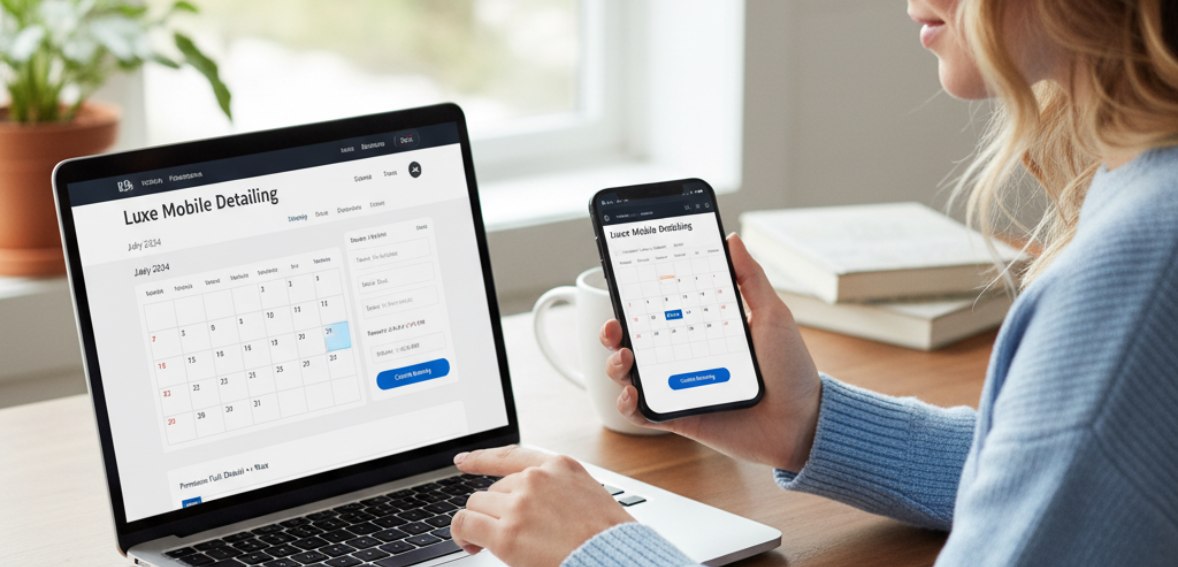
Mobile auto detailing businesses live and die by their booking workflow. If appointment management is loose bookings scattered through emails, texts, and social media it becomes nearly impossible to plan efficiently.
For many small operations, this informal approach feels manageable at first. But as demand increases, overbooking and miscommunication begin to show up. Customers receive different times, appointments overlap, or the detailer finds themselves committing to a job farther away with no time to get there.
The first step toward a more organized schedule is implementing structured booking:
- A fixed system for time slots
- A calendar view of each day
- Clear buffers between appointments
Even without software, simply limiting how customers choose appointment times can make a day dramatically easier to control. For example, instead of letting customers select any hour of the day, a detailer might offer morning and afternoon blocks. This immediately introduces predictability.
However, most mobile auto detailers eventually realize that offering online booking is more efficient. Customers can view availability in real time, select services, provide notes, and confirm instantly without the business owner interrupting work to respond to messages.
The most effective scheduling systems account for travel time automatically. If one job ends at noon in the northern part of town, the system won’t allow the next appointment to be booked at 12:30 across the city. It places that second appointment in an appropriate window that considers distance and drive time.
This alone prevents a surprising number of last-minute delays.
Customers also feel more confident when they receive confirmed time windows, reminders, and job details automatically. It mirrors the professional experience offered by larger service companies but scaled to a single mobile auto detailer or crew.
Ultimately, smart appointment booking protects the day from chaos. When the schedule is structured and predictable, everything else becomes easier routing, communication, planning materials, and estimating income.
To save time and make day profitable, in today’s competitive automotive service industry, a modern payment system is no longer optional – it’s essential. An efficient payment solution keeps your cash flow healthy, speeds up customer checkout, and enhances trust in your shop. For shop owners, technicians, and managers, a well-chosen system can streamline operations from invoicing to final payment.
Route Clustering by Area: Drive Less, Earn More
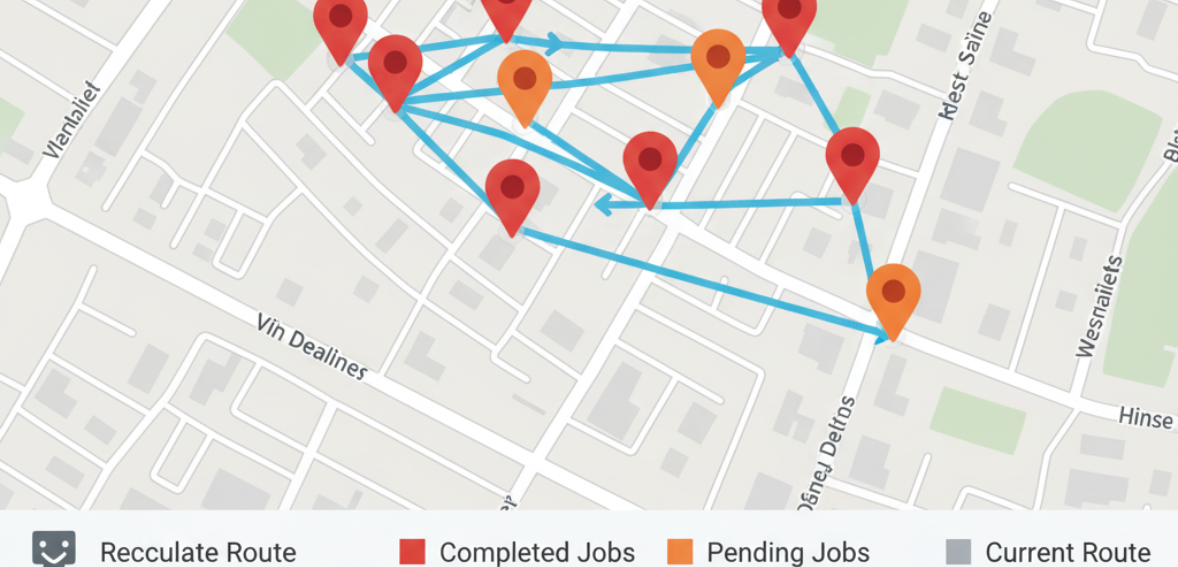
Route efficiency is central to mobile auto detailing profitability. Even the most skilled technician can only complete a limited number of full-service details in a day. The fastest way to increase revenue without raising prices is to decrease drive time between appointments.
One of the simplest methods is route clustering, grouping appointments by location so that all customers in the same general area are serviced on the same day.
This approach does three things:
- Cuts fuel costs
- Reduces time wasted in transit
- Allows detailers to complete more jobs per day
For example, if your morning booking is downtown, then your afternoon jobs should ideally be nearby, not on the other side of the city. It is far more efficient to detail four cars in one neighborhood than to detail two cars and spend the rest of the day driving.
Some detailers assign days of the week to specific areas:
- Monday – east side
- Tuesday – north
- Wednesday – central
- Thursday – west
- Friday – overflow + premium bookings
Customers are encouraged to select time slots associated with the location they live in. If they cannot, they are placed into the nearest available day or offered premium pricing for out-of-zone scheduling.
This small system dramatically simplifies route organization and helps keep fuel use under control.
Even outside of formal zoning, clustering can happen naturally when bookings are managed digitally. Many car detailing business software tools show job locations on a map so the detailer can visually organize each day. By dragging appointments into geographic groups, the business instantly builds an efficient path.
Whether managed manually or through software, route clustering prevents the most common inefficiency: zig-zagging across town. Instead, jobs flow logically, and the technician spends the bulk of the day actually working, not driving.
Handling Cancellations and Reschedules Without Losing the Day
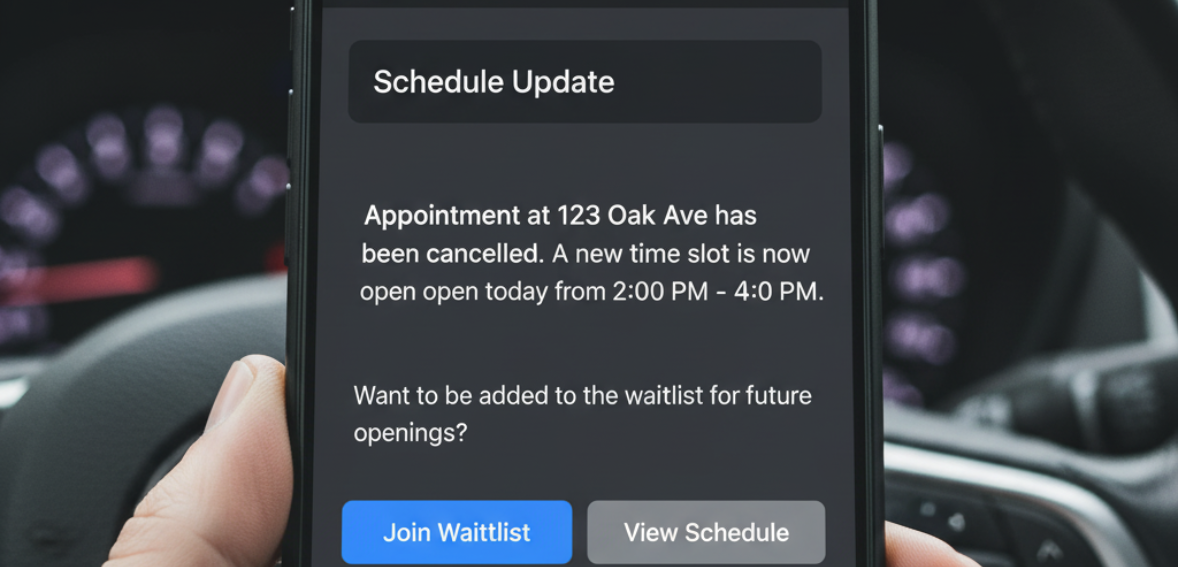
Cancellations are painful for mobile auto detailers because they not only eliminate earnings, they also leave an empty time slot that could have been filled by another customer.
This is especially common on days with unpredictable weather. Light rain might delay outdoor appointments, or a customer may cancel without notice. Without a process to manage these openings, the day can quickly fall apart.
Businesses that continue to schedule manually often struggle to fill these gaps. The detailer must stop what they’re doing, check availability, contact customers one by one, and hope someone can be available on short notice. Most of the time, the slot remains empty.
Scheduling tools make this easier.
Instead of scrambling, the system can:
- Notify customers on a waitlist
- Promote the newly open slot via text
- Re-balance the calendar automatically
Customers who have expressed flexibility can be offered the opening in a single message. If even one person accepts, the detailer recovers that time and revenue.
This approach works especially well when the business proactively encourages customers to join a waitlist. People often want service sooner, and they are happy to take an appointment that becomes unexpectedly free.
Rescheduling becomes easier too. Instead of long message chains, a customer can select a new time from available options, and the system updates the daily plan accordingly. The detailer no longer needs to reorganize the entire day to make one person fit.
This stability has a financial benefit. When cancellations are managed efficiently, revenue remains predictable and customer experience improves because communication stays clear.
Using Software to Keep Days More Predictable
As mobile auto detailing businesses grow, keeping track of bookings, travel time, and service details becomes increasingly difficult without digital support. While early-stage businesses might manage fine with texts and a calendar app, there comes a point when the back-and-forth starts to interfere with actual work.
Software doesn’t replace craftsmanship; it protects the time required to perform it.
Modern car detailing business software brings three major benefits:
1.Scheduling without constant messaging
Customers can view available time blocks based on their location and service needs. Booking becomes self-service, and the detailer doesn’t need to manually confirm every appointment.
2.Automatically calculated travel time
If an appointment is added, the system automatically accounts for the time required to get there. This prevents the day from becoming unrealistic and overfilled.
3. Daily briefing in one place
Notes, location details, service history, and photos are stored centrally. A detailer can quickly review everything needed before heading out.
This frees up hours otherwise lost answering messages, cross-checking addresses, and juggling appointments. Those hours become space for more paid work.
When software helps manage bookings and routing, the business owner gains something rare in the service industry predictability. Days feel smoother. The morning begins with a clear plan. Most problems are resolved before the van moves.
Human skill remains the core of detailing, but scheduling and logistics benefit greatly from technology that keeps the workday organized.
Cloud-based job management software is revolutionizing the way businesses handle auto and field operations, offering a streamlined, efficient approach to managing tasks and teams on the go. This technology provides real-time access to critical data, enabling field workers and managers to stay connected and informed, regardless of their location. By centralizing information and automating routine processes, cloud job management tools help reduce errors, save time, and optimize resource allocation.
Communicating With Customers Before, During, and After Service
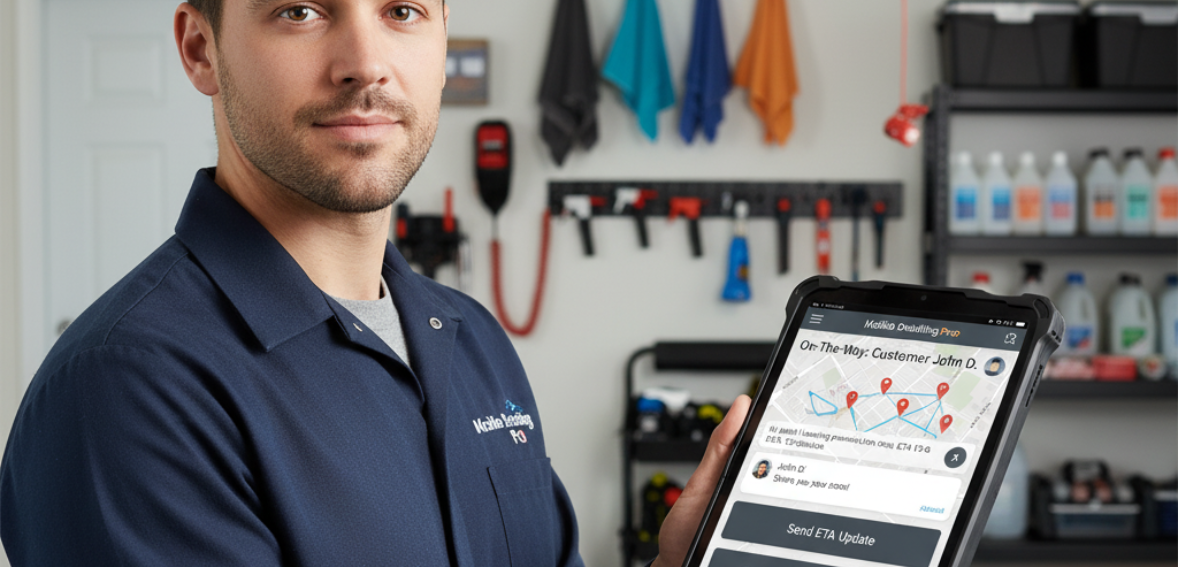
Strong communication is one of the simplest ways to increase customer satisfaction without changing anything about the detailing itself. People like knowing what to expect and when.
But communication also affects route planning. When customers confirm appointments in advance, cancel early, or respond promptly to updates, the day unfolds more reliably.
Digital scheduling tools support this through:
- Appointment reminders
- Automated confirmations
- On-the-way notifications
- Follow-up summaries
A customer who receives a reminder the day before is far less likely to forget their appointment. If they need to cancel, they do so quickly giving the detailer time to backfill the slot.
Once en route, a brief notification (“Your detailer is on the way”) sets expectations. Instead of waiting aimlessly, the customer prepares the driveway or workspace. Jobs start faster, and travel time isn’t wasted waiting for someone to come outside.
This also improves the customer experience. Mobile auto detailing is intimately done in a customer’s driveway or workplace and customers feel more secure when communication is consistent.
After the service is complete, sending a short summary reinforces professionalism and sets the stage for repeat business. It might include:
- Services performed
- Any issues noticed
- Recommended follow-up (e.g., waxing in 3 months)
These quick updates don’t need to be elaborate. Often a two-sentence note is enough. But they help customers feel looked-after, and that kind of care builds long-term loyalty.
Maintaining Service Quality While Moving Quickly
A well-planned workday gives detailers time to focus fully on each vehicle. When routing is chaotic, visits feel rushed. When routing is deliberate, quality increases naturally.
One challenge for growing mobile auto detailing companies is balancing efficiency with care. Driving less does not mean cutting corners, it means protecting time so detailers can work thoroughly without racing across town.
A consistent workflow helps:
- Assess condition
- Document issues
- Deliver a complete service
- Confirm results with customers
Because the job is done on location, there is no supervisor or service manager watching over the process. The detailer must be responsible for maintaining standards.
Some businesses develop simple checklists to ensure consistency interior vacuuming, glass, mats, wheels, upholstery touch-ups, panel inspection. Whether digital or printed, these checklists ensure no step is forgotten, especially during busy days.
Software can also store before-and-after photos. These serve two purposes:
- They provide proof of work.
- They show progress over time, useful for repeat customers.
Even when routing is optimized, protecting job quality requires discipline. But with a predictable workflow and thoughtful scheduling, detailers find they have more energy and attention to give each job.
Better organization always leads to better results.
Tracking Performance to Find Hidden Time

Tracking performance is the difference between running a business on memory and running a business based on reality. Many detailers underestimate how much time is lost transitioning between jobs or how much they spend driving each week.
Looking at patterns helps identify opportunities:
- Which neighborhoods produce the most bookings
- Which time slots are most commonly requested
- How often cancellations occur
- Average time per service type
- Fuel usage trends
A business might learn that mornings are more productive, or that a certain area consistently leads to upsells. That information helps shape future schedules stacking more jobs in high-value areas or offering incentives to customers within a cluster.
These insights often reveal small adjustments that make a meaningful difference. For example, shifting one or two appointments each week to reduce cross-town travel might open enough time to book an additional job.
Even without software, tracking can be done with a simple spreadsheet. What matters is observing reality instead of guessing.
Better routing and scheduling decisions come from paying attention to what actually happens day to day.
Conclusion
Mobile auto detailing is as much a logistics business as it is a service business. The time spent driving between appointments, not the time spent cleaning, often determines whether a day is profitable.
Businesses that take scheduling seriously enjoy calmer days, better fuel efficiency, and the ability to serve more customers without sacrificing quality. Structured booking prevents double-scheduling and sets realistic expectations. Route clustering cuts travel time and protects energy for actual work. Tools that streamline cancellations help preserve revenue when plans change.
Communication reinforces all of this. When reminders, confirmations, and updates flow automatically, customers feel looked-after and are more likely to rebook.
None of these improvements require a large staff. They simply require the decision to treat scheduling and planning as core parts of the business, not afterthoughts.
With intentional systems in place, mobile auto detailers gain invaluable control. They begin each day knowing where they are going, when they will arrive, and how much time they can devote to each vehicle. They make better use of every hour and build a more professional, sustainable business.
Route optimization doesn’t just reduce driving. It creates room for better workmanship, better service, and better growth.
FAQs:
Why do mobile auto detailers need route optimization?
Unlike a fixed shop, mobile detailers spend a lot of time driving to customers. If appointments are scattered inefficiently, you lose time and money on the road. Optimizing routes means scheduling jobs in a sequence that makes geographical sense – you’ll use less gas and fit in more appointments per day because you’re not crisscrossing the city.
How can I prevent no-shows or last-minute cancellations?
One approach is to use automated reminders. Sending customers a text or email a day or two before their detailing appointment can reduce no-shows by up to 30% . Additionally, some booking systems allow you to take a deposit or credit card hold at booking, which also lowers no-show rates. If a cancellation does happen, having a waitlist of interested clients or a quick broadcast to regulars (“slot opened tomorrow at 2PM”) via text can help fill the gap.
Can I let customers book their own appointments online?
Absolutely – and it can save you a lot of administrative time. Modern scheduling software lets you publish your availability (e.g., which days you service which neighborhoods) and customers can pick a time. The system can be set to pad travel time automatically. This means you wake up to a well-planned schedule without dozens of back-and-forth calls. Just ensure you buffer enough time between slots for driving and possible delays.
How do I handle different service lengths (basic wash vs. full detail) in the schedule?
A good scheduling system will allow you to set duration for each service type. For instance, a full interior exterior detail might block 3 hours, whereas a quick wash is 1 hour. The booking tool will then only show slots that can accommodate the selected service length, and your calendar will reflect the correct duration. This prevents overruns and scheduling conflicts.
Is CloudJobManager useful for a mobile detailing business?
Yes, CloudJobManager can be a game-changer for mobile detailers. It enables online booking where clients can request appointments based on your available time windows. It will factor in travel buffers so you don’t get overbooked. Additionally, CloudJobManager’s route optimization will map your jobs each day in the most efficient order. You’ll also benefit from features like automated appointment reminders to customers (“Your detailer is en route”), and you can track customer history (so you know a client’s preferences or past services at a glance). All of this helps run a tighter, more customer-friendly operation on the go.