

AR Measurement on Smartphones: Faster Site Walkthroughs
The use of mobile technology by construction professionals is providing faster performance and improved accuracy. Construction professionals can complete site assessments in less time with AR measurements on their smartphones. Construction delays occur when manual measurements are taken by contractors, architects, and field engineers.
Traditional measurement is often an inefficient, multi-step process. Using smartphones to measure objects via augmented reality, construction professionals can perform a single measurement with their smartphone camera. LiDAR technology employs laser light to determine distance. However, augmented reality and computer vision are used to complete these types of measurements.
Systems for interpreting visual information, through computer-based technology, provide spatial measurement technology available on common devices. This technology allows for quick estimates and reduces the need for traditional measurement tools. Before the use of AR measurement technology, construction professionals relied on traditional means of collecting field data and developing accurate cost estimates.
In this article, AR measurement technology is described, the value to contractors is reviewed, and instructions are provided to employ AR measurement in the field. Additionally, the article reviews how construction and engineering applications have utilized AR measurement technology, and various applications or uses for AR measurement technology.
Understanding AR Measurement on Smartphones and How It Works
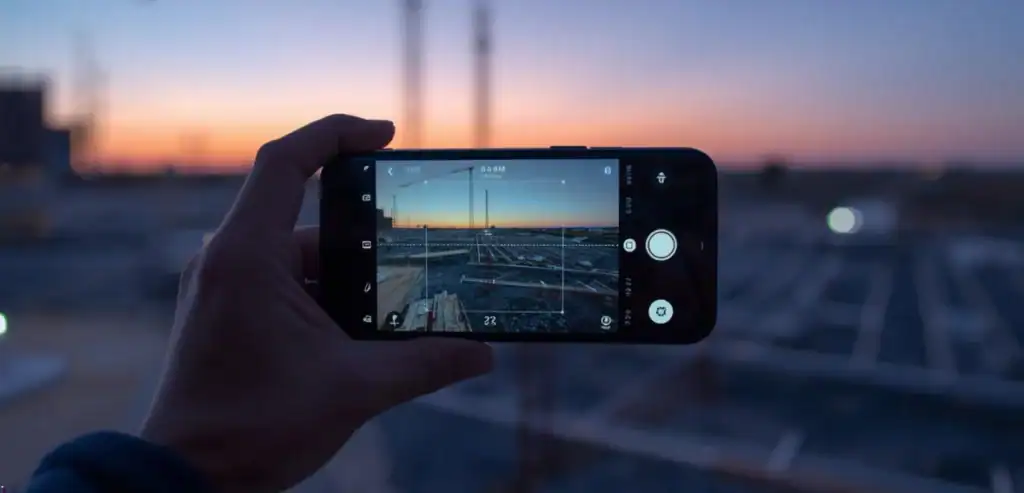
Evaluating the value of AR measurement on smartphones by assessing real-world performances. The system combines augmented reality and spatial sensing technology to calculate distances, areas, and volumes. The device’s camera functions as the measuring instrument. Modern smartphones use two fundamental technologies to conduct the measurements.
- Computer vision algorithms enable object detection and tracking.
- Depth-sensing technologies use LiDAR measurement and stereo cameras to determine distances.
The system operates by designing users to use their smartphones for surface recognition. The system detects vertical structures, which include floors, walls, and ceilings, and it shows measurement instruments on the device screen. Users measure dimensions with this method, which allows them to take measurements without needing to touch objects.
LiDAR-enabled devices improve this process by emitting light pulses. The system processes the returned signals to create a complete depth map, which improves measurement precision in complicated spaces. The AR tools maintain accurate distance measurements throughout different surface textures and lighting conditions.
The combination of these technologies provides users with a high-speed, easy-to-operate measurement system. AR measurement on smartphones transforms into portable surveying instruments for accurate results and reduces the time required for equipment installation.
Why AR Measurement on Smartphones Improves Site Walkthrough Efficiency
The building walkthroughs need to function with maximum efficiency because the allocated time for the project determines its advancement. The AR Measurement system on smartphone devices provides time savings by decreasing the duration needed for manual measurement tasks.
The traditional walkthrough process requires users to work with three instruments, which include measuring tapes, laser distance meters, and notebooks. Users can measure multiple dimensions using AR tools to complete their measurements in seconds.
The following elements assist in achieving better operational performance:
- Users can obtain instant measurements that do not require them to set up equipment.
- Users can view dimension data as it exists in real time.
- The system allows users to take multiple measurements during a single measurement session.
- The system requires fewer site visits for inspections to be completed more quickly.
The AR site survey allows professionals to quickly scan rooms, corridors, and structural elements. Project teams use the system to document site conditions throughout the early development stages. Digital storage of measurements helps users avoid errors in physical data entry.
Accessible AR tools let operators measure unsafe areas they can’t reach without physical contact. This process helps workers maintain safety while continuing their work in dangerous environments.
Time savings yield major benefits for contractors handling many projects. Faster walkthroughs help teams reach decisions and improve scheduling and resource management. AR measurement on smartphone tools helps organizations deliver quick, easy results and integrate with digital systems.
The Role of LiDAR Measurement in Enhancing Accuracy
In construction workflows, accuracy is just as important as speed. One way to improve the AR measurement on smartphones is to use LiDAR. It emits laser pulses to accurately measure distances between points. These pulses travel from the origin, reflect off objects (e.g., concrete), and return to the sensor. This enables it to establish a precise relationship between two objects in three-dimensional space.
Compared to other camera systems, LiDAR technology offers numerous benefits, including:
| Feature | Camera-Based AR | LiDAR-Enabled AR |
| Depth accuracy | Moderate | High |
| Performance in low light | Limited | Strong |
| Surface detection | Variable | Consistent |
| Measurement stability | Moderate | Improved |
The new enhancements improve estimate precision after the street work improvements. The accuracy of LiDAR technology enables measurement of unfinished walls and cluttered construction areas, which helps to decrease drift. The depth information helps improve accuracy and decrease total measurement errors.
The use of this technology does not guarantee absolute measurement precision, as reflective surfaces, obstructions, and device limitations can impact results. LiDAR technology improves AR measurement on smartphones. The system provides enhanced performance and improved reliability, which makes it suitable for professional usage.
AR Measurement for Contractors: Practical Use Cases in the Field
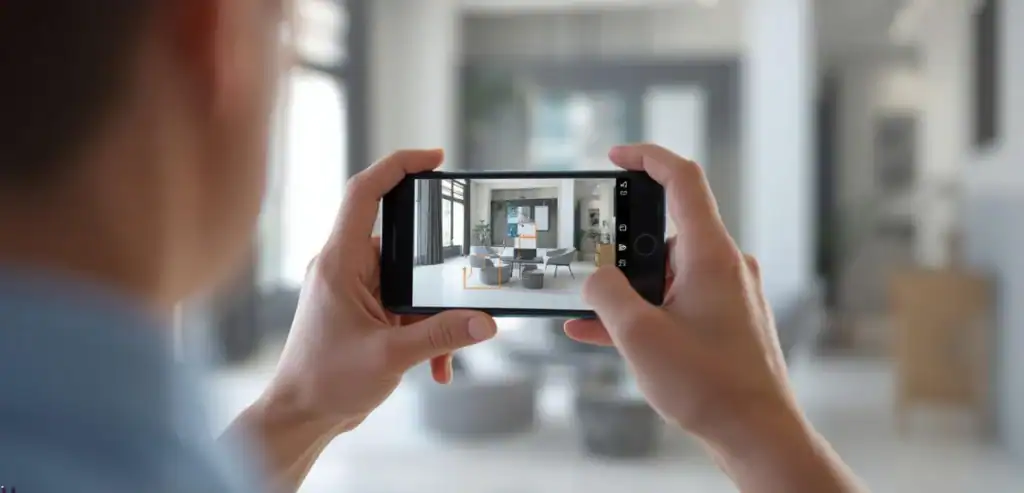
Due to the growth of various contractor activities in the construction industry, AR measurement on smartphones is becoming more widely used by contractors. Utilizing augmented reality measuring tools, contractors can manage their projects in every phase of the project.
Rooms, doors, and parts of the building can be measured easily using this technology. Thus helping contractors provide accurate cost estimates and determine where renovation/repair work should be completed.
The system provides support for these additional applications:
- Measuring wall areas for material estimation.
- Calculating floor space during layout planning.
- Verifying dimensions before installation.
- Capturing measurements for client presentations.
During AR site surveys, contractors record measurements and capture visuals. This strengthens communication with clients, architects, and subcontractors. Instead of using written notes, teams share visual data with embedded dimensions.
AR tools help teams share on-site measurements instantly with off-site colleagues, reducing delays and ensuring everyone receives accurate information.
For small or medium projects, AR measurement on smartphones often replaces traditional tools. High-precision tasks are best served by AR as an additional resource, giving contractors a flexible, efficient way to gather and share site data.
Evaluating Accuracy in AR Measurement on Smartphones
When evaluating accuracy in AR measurement on smartphones, the access must be reliable. Multiple conditions affect the tool’s accuracy, even though it is convenient. Key factors that influence accuracy include:
- Device hardware capabilities, including LiDAR sensors.
- Environmental conditions, such as lighting and surface texture, user technique, and measurement approach.
- User technique and measurement approach
- Software algorithms and calibration
These measurement tools provide sufficient accuracy for both initial project planning and basic estimation. The system shows reduced accuracy as complex environments and obstructions pose challenges.
To enhance the reliability of AR measurement on smartphones, professionals adhere to these best practices:
- Keep a steady hand when taking measurements.
- Whenever feasible, keep your lighting in good condition.
- Use clear reference points for alignment for measurement.
- Cross-check critical dimensions using more traditional tools.
It is important to understand the limitations of AR tools as they do not replace high-precision survey equipment. Rather, they are a fast and efficient alternative for everyday use.
Coupling AR tools with traditional methods, contractors achieve a balance between speed and accuracy, maintaining reliable measurements to operate efficiently.
AR Site Survey Techniques for Reliable Results
Professionals employ the proper AR site survey technique in order to get the most value from using AR measurement on smartphones. The system must operate correctly to provide precise results and effective operation.
The AR Site Survey Process is an established method where a defined series of tasks is carried out consecutively in order to complete the AR Site Survey. The following tasks outline the process:
- Scan your surroundings to establish reference planes.
- Identify key points to measure, such as corners and edges.
- Take multiple measurements at each of the identified points to confirm measurements and ensure consistency.
- Record measurements and label them for easy reference.
- Verify the data before leaving the site.
To achieve accurate measurements, consistent measurement execution must occur. Teams can repeat and assess measurements to find errors early in the process, reducing the chance of any error later in the project’s lifecycle.
The ability to hold AR measurement on smartphones in one location increases the ability to receive accurate and precise tracking. The abnormal movement of the smartphone leads to inaccurate and unreliable measurements that can decrease overall project success.
Limitations and Challenges of AR Measurement on Smartphones
There are numerous limitations associated with AR measurement on smartphones. Being aware of these limitations helps you set realistic expectations and use the AR measurement tools accurately. One of the main limitations is the varied accuracy achievable when using AR tools. These tools perform well when used in controlled settings.
However, their accuracy decreases in complex environments. Device dependency is another limiting factor when using AR tools. This means that not all smartphones are able to take advantage of AR measurement technology, resulting in differences in performance from device to device.
Other limitations to consider when using AR measurement tools include the following:
- The maximum distance that an AR measurement tool can be used for is less than that of a professional-grade surveying tool.
- It can be challenging to take measurements on transparent things like glass or reflective materials like polished metals.
- There can be software inconsistencies between different apps that provide AR measurement capability.
- The longer an app is used for AR measurement, the more battery power is consumed.
The above limitations indicate that AR measurement tools should be used correctly and that they should not be expected to measure items with high precision or accuracy. Instead, they should be used for quick measurements or preliminary evaluations.
As AR technology is changing so rapidly, professionals should also keep up with their software updates. Understanding the limitations of AR measurements enables users to make educated decisions about when and how they will be using AR measurements.
Choosing the Right AR Measurement Apps and Tools
The selection of appropriate tools is a critical factor in determining the success of AR measurement on smartphones. The different applications offer varying features, resulting in different levels of accuracy and user experiences.
The following criteria serve as evaluation standards for assessing AR measurement applications:
| Criteria | Description |
| Accuracy | Measurement precision and consistency |
| Device compatibility | Support for LiDAR and advanced sensors |
| User interface | Ease of use and navigation |
| Data export options | Ability to save and share measurements |
| Integration | Compatibility with project management tools |
Some apps focus on simplicity and quick measurements, while others allow users to create 3D models. The selection of an application must align with both the project’s needs and its users’ abilities.
It is also important to test multiple applications before selecting one. The process enables them to find the tool that delivers optimal performance. Contractors find great value in applications that enable them to share information and work together with others. The features help carry out communication tasks while they boost the efficiency of work processes.
Future Trends in AR Measurement for Construction Workflows
AR measurement on smartphones is projected to provide a bright future as technology continues to advance. Hardware and software advances are expected to provide both improved accuracy and usability.
A major trend in this area is the integration of AR with Building Information Modeling (BIM) systems. This allows on-the-job measurements to be compared in real time to identify the difference more efficiently.
AI is also playing an increasingly popular role in AR measurement on smartphones. AI-enabled algorithms enhance the reliability of AR tools, improving object recognition, detecting surfaces, and improving measurement accuracy.
Some additional trends in AR technology that could further increase the growth of AR in construction/engineering are:
- LiDAR technology is being used in more consumer devices.
- Cloud-based systems improve collaboration and ease of data sharing.
- Advancements in 3D mapping and analysis of spatial data improve the ability to gather and visualize data.
- Integration of AR technology with AR glasses.
As AR technology continues to develop, measurement tools will eventually become part of standard operating equipment for field personnel. Ultimately, the use of AR measurements on smartphones is expected to smooth the transition between digital planning and physical execution.
Conclusion
Professional construction workers today utilize AR measurement on smartphones to aid in measuring a site’s parameters. This new solution is bringing together quick service delivery capabilities, easy-to-use controls, and a complete digital measuring for the construction team. New developments are enhancing communication among team members while reducing their dependence on conventional ways of determining measurements.
Utilization of laser measuring technology is improving the accuracy of measuring instruments. The combination of fieldwork and the use of accurate measurement allows the construction industry to continue to utilize measuring devices.
In today’s construction industry, the use of AR measurement on smartphones is becoming a minimum requirement for contractors. Future measurement technology will continue to benefit from AR and AI technologies, enhancing the capabilities of mobile technology for a digital transformation.
FAQs
Can AR measurement on smartphones be relied on for accuracy?
The accuracy of AR measurement on smartphones depends on the devices used, with LIDAR-supplying devices providing the most accurate results.
Will AR technology completely take over standard measuring equipment?
AR tools can take over the measuring process for rapid measurements and on-site walkthrough. However, for highly accurate measurements, you will use traditional measuring tools.
How do LiDAR technologies support the accuracy of AR measurements?
To determine depth from the surface being measured, LIDAR offers superior accuracy and reliability by allowing the visualization of the object being measured. In addition, the enhanced reliability of AR measurements using LIDAR will be more pronounced in low-textured environments.
Who will utilize AR measurement technologies?
Contracting, architectural design, engineering, and interiors will be the largest users of AR measurement tools. These individuals use AR measurement for site surveys, design concepts, and presenting ideas to clients, and continue to be an important part of their business operations.
What obstacles do AR measuring applications create?
The main challenges of using AR measurement on smartphones are consistency in measurements, quality of the devices, measuring reflective surfaces, limited battery life, and maintaining a high-quality software methodology.