
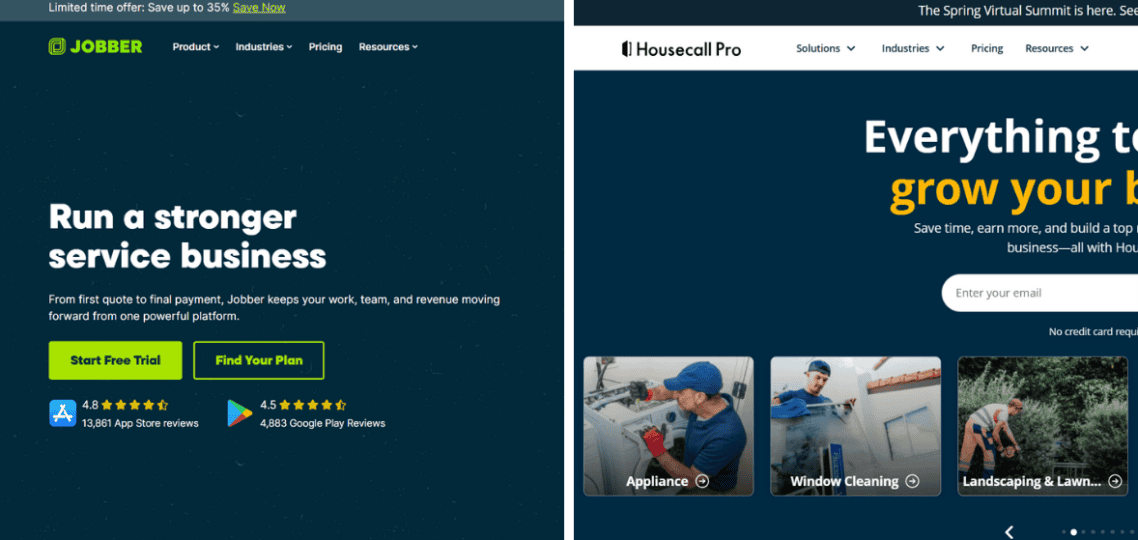
Jobber vs Housecall Pro Total Cost After Payment Processing: 12-Month Contractor Breakdown
You picked a field service management platform, set it up, and started running jobs. Then your accountant pulls the annual numbers — and the software costs more than you ever budgeted. Sound familiar? Most contractors compare the sticker price of Jobber and Housecall Pro and stop there. That’s a costly mistake. The real number that hits your bottom line every month is your subscription fee plus payment processing fees, and those two figures together tell a completely different story than the pricing page ever will. This 12-month total cost breakdown cuts through the noise and shows you the total cost of Jobber vs. Housecall Pro once all fees are factored in.
Why the Subscription Price Is Only Half the Story
Most users compare software tools based on the monthly plan price, but this cost comparison misses the bigger picture. If you are considering field service tools like Jobber or Housecall Pro, you could lose thousands of dollars in a year. These tools take a percentage of every card transaction processed through their system. For contractors with a regular volume of business, this can cause the total cost to exceed the subscription cost. If you look at the unique charges and consider how they bill yearly vs. monthly and per user, the platform that looks less expensive on the surface usually isn’t.
Jobber
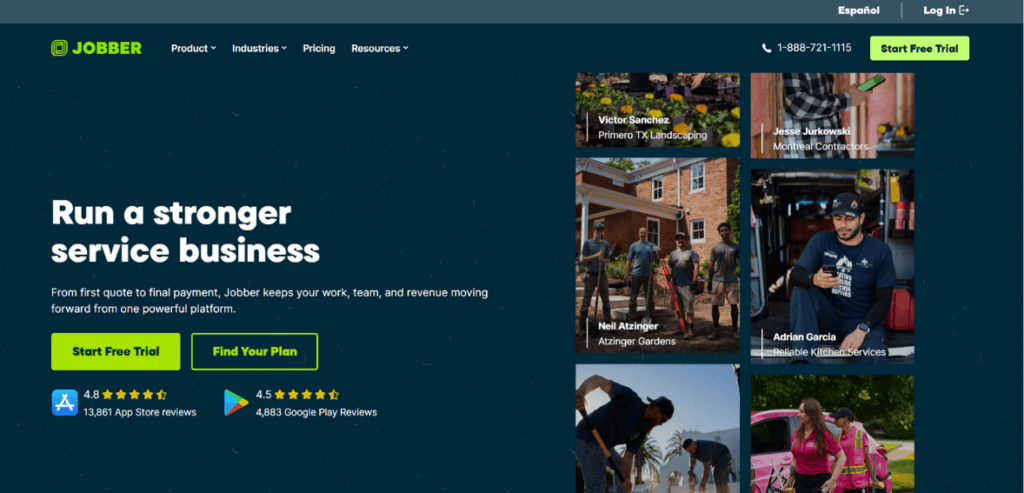
Image Source
Pricing Plans and Structure
Jobber tailors its plans to the needs of solo contractors and teams alike, reflecting its flexibility. The plan for solo contractors starts at $22 a month, and the team plan starts at $97 a month. For teams, the price can reach $344 per month, while for solo contractors, it can reach $119 per month. The billing system is the hardest part of Jobber. You can opt for different payment plans, like an annual plan with a monthly commitment. Plans can be prepaid for the first year and billed monthly, or the pay-as-you-go system with no commitment can be chosen. Each payment structure has a different cost, and the loyal Jobber users will notice the price increase after the first year.
Payment Processing Fees
To use Jobber Payments, Jobber charges a flat fee of 2.9% on each credit card transaction. Because there is no volume discount or tiered pricing, this fee is not affected by the size of the business. For a contractor that bills $20,000 every month with 70% paid by credit card, Jobber Payments charges around $406 in processing fees per month, or $4,872 per year, in addition to the subscription cost. If the monthly revenue hits $50,000, then the processing fees for the year will be around $12,180. This data shows growing contractors that subscription pricing is not the only important factor when evaluating a payment processing platform.
What’s Included Without Extra Charges
Route optimization, client hub, two-way texting, quoting, and invoicing, all with QuickBooks integration, are included in Jobber’s team plans bundle at no additional cost. This is a significant benefit. All QuickBooks Desktop users can see that Jobber is their only option, since Housecall Pro connects only to QuickBooks Online.
Housecall Pro

Image Source
Pricing Plans and Structure
Housecall Pro’s monthly plan pricing is competitive, but annual billing for each plan reveals many hidden costs due to required add-ons. The Basic plan, billed annually, is $59/month; billed monthly, it is $79/month. The Essentials plan is $149/month for 1-5 users, and the MAX plan is $299/month for 8 users. Many features within the app come at an add-on cost. GPS tracking is $20/month per vehicle. The flat-rate price book is $149/month, the price book for sales proposals is $40/month, and the contact form is $40/month. A mid-sized contractor that needs GPS tracking for five vehicles and a flat rate price book could be charged an additional $249/month above the cost of their plan.
Payment Processing Fees
This lower processing rate is particularly beneficial for larger businesses. Housecall Pro charges 2.59% for credit card transactions, which is better than the 2.9% charge taken by Jobber. Although the 0.31% difference may seem minor, it can add up to significant savings when compounded over time. Housecall Pro processes about $10,878 in fees based on 70% of a $50,000 monthly revenue coming from credit card sales. Jobber, on the other hand, does this for $12,180. This results in roughly $1,300 in annual processing fee savings. At a monthly revenue of $100,000, the processing fee difference is over $2,600, enough to cover the software subscription.
Marketing and Growth Tools
Housecall Pro’s upper tiers include additional marketing features, such as workflow automation for postcard campaigns, message automation, and customer review automation. This is more valuable for contractors focused on retention and growth marketing, and it’s not available in Jobber’s comparable tiers.
The 12-Month Total Cost Breakdown: Real Contractor Scenarios

Knowing the total cost of Jobber vs. Housecall Pro requires calculating the actual business size, not the theoretical minimum.
Solo Contractor (~$5,000/Month Revenue)
At this scale, Jobber appears to be the more affordable solution. The Core Solo plan at $22/month (billed annually) and about $101/month in processing (at a 2.9% rate on 70% of sales) comes to about $1,476 annually. Housecall Pro’s Basic plan is $59/month, with about $91/month in processing, making the plan much more expensive, and the processing fee differences do not offset the higher cost.
Small Team, 3–5 Users (~$20,000/Month Revenue)
At this level, Jobber remains highly competitive with Housecall Pro. For $97 per month plus $406 monthly processing, Jobber’s Connect Team plan costs $6,036 per year. Housecall Pro’s Essentials plan at $149 per month, plus $362 monthly processing, comes to $6,132 per year. The costs are almost identical. However, Housecall Pro’s add-on services will widen the price gap in Jobber’s direction if those services are needed.
Growing Business, 5–10 Users (~$50,000/Month Revenue)
At this revenue level, processing rates will yield the greatest savings with Housecall Pro. Jobber pricing is approximately $1,300 more expensive annually than Housecall Pro. HVAC, plumbing, electrical, and similar contracting businesses with annual revenue exceeding $600K will save enough to justify switching to Housecall Pro.
Hidden Costs Both Platforms Share
Both platforms include additional costs that may not be obvious upfront. Both have built-in annual increases to contract renewals, and support during onboarding is an additional charge. In Jobber, the billing system is so complicated that you can unknowingly end up on a more expensive monthly plan after the trial.
In Housecall Pro, to access the full features, you’ll need to pay substantially more than what the page shows for the plan and the base plan combined. To make sure you are getting a plan with real value, get a quote that includes every workflow-related add-on, not just the plan cost, before signing. If you need more information on what field service software costs, the Software Advice management guide is a good start.
Which Platform Actually Costs Less Over 12 Months?
This answer really depends on the revenue amount. For sole traders and very small teams processing under $15,000 monthly, Jobber’s lower base subscription is more affordable, especially if add-ons are not required. For those who bill $40,000 a month, Housecall Pro’s lower processing rate means the higher subscription is a savings of several thousand dollars over the year. The break-even point is between $30,000 and $40,000 of monthly revenue.
For Jobber versus Housecall Pro, the more favorable total cost calculation for Housecall Pro is for monthly card-processed revenue over $40,000. For monthly card-processed revenue under $30,000, Jobber is preferred over Housecall Pro. For a more comprehensive analysis of the impact of field service pricing on small-business cash flow, the cost management materials from the U.S. Small Business Administration are very helpful and a good place to begin.
Conclusion
Deciding between Jobber and Housecall Pro isn’t just about features; it’s a budget decision. With the monthly subscription, that’s just the start. Expect to pay additional fees every month, and any contractor making decent sales will end up costing the most. Smaller operations benefit from Jobber’s lower price and broader feature set with fewer required add-ons. Housecall Pro optimizes for growth: with a lower processing rate and marketing services, bigger sales create more value.
Before subscribing to either system, review your last 12 months of sales, take 70% of that number, apply 2.9% and 2.59% to estimate Jobber’s and Housecall Pro’s processing rates, and then add the annual subscription. You will have a much more realistic estimate of your true cost, rather than relying solely on marketing estimates.
Frequently Asked Questions
What Is the Jobber vs Housecall Pro Total Cost for a Small Contractor Over 12 Months?
For a small contractor billing about $20,000 each month, the annual total for Jobber (Connect Team plan with processing fees) is estimated at $6,036. Coming in at about $6,132, Housecall Pro (Essentials plan with processing fees) is almost on par at this revenue level.
Does Housecall Pro Really Have Lower Payment Processing Fees Than Jobber?
Yes. Jobber has a credit card processing fee of 2.9%, and Housecall Pro charges 2.59% per credit card transaction. For high-volume contractors, that 0.31% difference is over $1,300. This is calculated at $50,000 a month in revenue.
Are There Hidden Fees in Jobber or Housecall Pro?
There are additional subscription costs associated with both platforms. Housecall Pro charges an additional subscription fee for GPS tracking and flat-rate pricing books, along with proposal and recurring service plan tools. Jobber has a complicated billing practice involving annual, committed-monthly, and month-to-month plans, with price increases after the first year.
At What Revenue Level Does Housecall Pro Become Cheaper Than Jobber?
The estimated break-even point is between $30,000 and $40,000 in monthly credit card processing revenue. Above that, Housecall Pro’s processing rate of 2.59% is lower than Jobber’s, so it offers more value in its subscription plan than Jobber’s does.