

Top 5 Scheduling Mistakes Field Service Businesses Make (and How to Avoid Them)
Field service scheduling is central to every successful service operation. Whether a business handles HVAC, electrical work, plumbing, cleaning, landscaping, or pest control, scheduling sets technician efficiency, customer satisfaction, and profitability. Yet scheduling is also a common failure point for service businesses.
Many companies see scheduling as just filling a calendar. In reality, it’s a complex coordination of people, locations, skills, time windows, and customer needs. When scheduling fails, ripple effects follow missed appointments, technician burnout, extra fuel costs, and frustrated customers who may not return.
This article reviews the top five scheduling mistakes field service businesses make, why they are so damaging, and how modern practices prevent them. The goal is to create a system for growth, efficiency, and lasting customer trust, not just to avoid errors.
1. Treating Scheduling as a Static Calendar Instead of a Living System

A common mistake is treating the schedule as fixed. Teams build daily or weekly calendars and expect them to hold until emergencies, delays, or cancellations hit.
In reality, field service schedules are never static. Traffic changes, jobs run long, customers cancel, and emergencies arise. Without flexibility, each disruption causes chaos.
This rigid approach leads to cascading problems. A single delayed appointment pushes every job afterward off schedule. Technicians rush through work to “catch up,” increasing the risk of errors. Dispatchers scramble to manually rearrange jobs, often making rushed decisions that worsen the situation.
Avoiding this mistake requires a mindset shift. Scheduling should be treated as a dynamic system, not a fixed plan. The schedule must adapt throughout the day while maintaining visibility and control. Flexible scheduling buffers, real-time updates, and clear communication channels allow businesses to absorb disruptions without losing efficiency.
When service teams use responsive scheduling, they can calmly manage unexpected events. This reduces reactive responses and improves overall team effectiveness.
2. Double Booking Technicians and Overloading the Schedule

Double-booking is one of the most damaging appointment scheduling errors in field service management. It often happens when dispatchers rely on memory, paper calendars, spreadsheets, or disconnected tools. During busy periods, overlapping appointments can be unintentionally booked, especially when multiple people handle scheduling.
The consequences of double-booking go far beyond simple inconvenience. Technicians arrive late or miss appointments entirely. Customers feel disrespected and frustrated. Office staff spend valuable time apologizing, rescheduling, and managing complaints. Over time, the company’s reputation suffers.
Even when done to ‘maximize productivity,’ double-booking often backfires. Overloaded schedules leave no room for delays or emergencies, pushing technicians beyond reasonable workloads and leading to burnout, mistakes, and higher turnover.
The solution is not just better attention, it’s better systems. Effective field service scheduling requires centralized calendar management that automatically prevents conflicts. Schedules should reflect real-world capacity, including travel time, job complexity, and technician availability.
By eliminating double-booking and respecting realistic workloads, businesses can simultaneously improve reliability, technician morale, and customer satisfaction.
3. Ignoring Travel Time and Route Efficiency

Another major scheduling mistake is failing to account for travel time between jobs. Many service businesses focus on filling time slots without considering geography, traffic patterns, or route efficiency. This oversight quietly drains productivity and profits.
When travel time is underestimated, technicians spend excessive hours on the road instead of completing jobs. Fuel costs rise. Fewer appointments are completed per day. Delays become routine, and customers grow accustomed to late arrivals, which erodes trust.
Poor route planning also increases technician fatigue. Long, inefficient drives reduce focus and energy, making it harder to deliver high-quality service. Over time, this contributes to higher turnover and lower job satisfaction.
Avoiding this mistake means viewing scheduling and routing as inseparable. Jobs should be assigned not only based on availability, but also on proximity and logical travel sequences. Smart scheduling considers both time and distance, ensuring technicians move efficiently throughout the day.
Key takeaway: Always factor in travel time and route efficiency when scheduling. This simple change allows your business to handle more jobs, lower costs, and satisfy both staff and customers.
4. Failing to Match the Right Technician to the Right Job

One of the most underestimated scheduling mistakes in field service businesses is assigning work without properly considering technician skill sets, certifications, and experience levels. On the surface, a technician may appear “available,” but availability alone does not guarantee suitability for a specific job.
When scheduling decisions are rushed or made without full visibility, jobs are often assigned to whoever is available rather than to the best-qualified candidate. This creates a hidden efficiency drain that compounds over time. A technician might arrive on time but struggle with the task’s complexity, leading to longer job durations, incomplete work, or the need for follow-up visits.
This mistake directly affects first-time fix rates, a critical performance indicator for any service business. Each return visit increases labor costs, fuel expenses, and customer frustration. From the customer’s perspective, the issue is not that a technician came, but that the problem was not solved. Repeated visits signal disorganization and incompetence, even if the real issue is poor scheduling logic.
Skill mismatches also affect technicians themselves. Being sent to jobs outside their expertise creates stress, lowers confidence, and increases the likelihood of mistakes. Over time, this contributes to burnout and disengagement, particularly for skilled technicians who feel their strengths are being ignored.
Avoiding this mistake requires treating scheduling as a talent-allocation process, not just a time-allocation exercise. Each job has technical requirements, and each technician has a unique skill set, certifications, and experience. Effective scheduling deliberately aligns these two elements.
Key takeaway: Assign each job to the technician best matched by skills and experience, not just availability. This boosts first-time fix rates and reinforces technician engagement and customer trust.
5. Poor Communication and Confirmation Failures

Another major scheduling mistake that plagues field service businesses is inadequate communication, both internally and with customers. Even the most carefully built schedule can collapse if communication is unclear, delayed, or inconsistent.
Internally, scheduling failures often occur when technicians are not properly notified of job changes or special instructions. Dispatchers may assume information was shared verbally or through fragmented channels, such as text messages, phone calls, or handwritten notes. As a result, technicians arrive without the full context, missing critical details such as access instructions, equipment requirements, and customer expectations.
Externally, customer communication failures are even more damaging. Missed confirmations, vague arrival windows, or a lack of reminders increase no-shows and cancellations. Customers who are unsure whether a technician is coming or when are more likely to reschedule, forget, or lose trust in the business altogether.
This mistake creates a vicious cycle. Missed appointments waste technician time, increase operational costs, and disrupt the entire schedule. Office staff then scramble to rebook jobs, often squeezing them into already crowded calendars, which leads to more mistakes downstream.
Preventing this issue requires making communication a core part of the scheduling process rather than an afterthought. Customers should receive clear appointment confirmations, reminders, and real-time updates. Internally, technicians and dispatchers should work from a shared source of truth where job details are consistently updated and visible.
Key takeaway: Make proactive, clear communication an integral part of your scheduling. Keeping teams and customers aligned strengthens schedules and builds reliable relationships.
How Scheduling Mistakes Compound and Damage the Business Over Time

Each scheduling mistake alone is costly. But the real danger lies in how these mistakes compound. A rigid schedule combined with double-booking leads to delays. Delays, combined with poor routing, increase fuel costs. Skill mismatches result in repeat visits. Communication failures turn delays into cancellations.
Key takeaway: Left unaddressed, scheduling mistakes accumulate into wider business failures. Proactively fixing these issues creates control, relieves stress, and restores customer confidence.
Financially, the damage is significant. Missed or inefficient appointments reduce daily job capacity. Repeat visits increase labor expenses without increasing revenue. High turnover forces the business to spend more on hiring and training. Marketing costs rise as dissatisfied customers stop referring others.
Perhaps most importantly, trust erodes internally and externally. When teams lose trust in the schedule, they stop relying on it. When customers lose trust in appointment commitments, they stop booking.
Breaking this cycle requires addressing scheduling not as an administrative task, but as a strategic function that underpins every part of the service operation.
Building a Scheduling System That Prevents These Mistakes
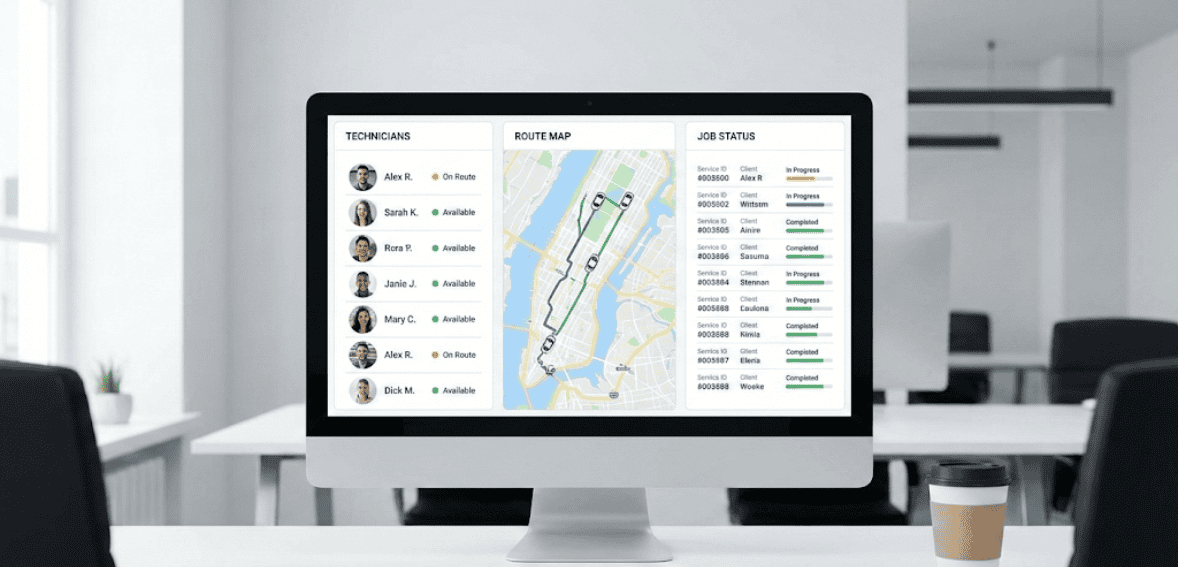
Effective field service scheduling is built on three core principles: visibility, flexibility, and accountability.
Visibility ensures that everyone, from dispatchers to technicians to managers, can see the same accurate, up-to-date schedule. This eliminates confusion and reduces reliance on memory or side conversations.
Flexibility allows the schedule to adapt throughout the day without collapsing. Buffer times, dynamic adjustments, and real-time updates enable teams to handle emergencies and delays gracefully.
Accountability ensures planning decisions are deliberate and informed. Jobs are assigned based on skills and location. Changes are logged and communicated. Performance patterns are reviewed and improved over time.
When these principles are applied consistently, scheduling becomes a competitive advantage rather than a daily headache.
Why Modern Field Service Businesses Treat Scheduling as a Growth Lever
Leading field service companies do not see scheduling as a back-office task. They see it as a lever for growth, profitability, and customer loyalty.
When scheduling is optimized, businesses can complete more jobs per day without increasing staff. Technicians spend more time working and less time driving. Customers experience reliable, predictable service. Office teams regain control of operations.
This efficiency creates space for growth. Instead of constantly firefighting scheduling issues, leaders can focus on expanding service offerings, improving training, and strengthening customer relationships.
In competitive markets, reliability becomes a differentiator. Customers remember businesses that show up on time, communicate clearly, and solve problems in one visit. Scheduling excellence makes this consistency possible.
Conclusion: Scheduling Is Not a Detail, It’s the Backbone
Field service scheduling mistakes are rarely caused by laziness or incompetence. They are usually the result of outdated processes, fragmented communication, and tools that were never designed to handle the complexity of modern service operations.
By understanding and correcting the top five scheduling mistakes, rigid planning, double-booking, poor routing, skill mismatches, and weak communication, businesses can unlock significant improvements in efficiency, morale, and customer satisfaction.
Scheduling is not just about filling time slots. It is about coordinating people, skills, locations, and expectations to create value for everyone involved. When done right, it becomes the backbone of a scalable, resilient, and profitable field service business.
FAQs
Why is scheduling such a critical issue for field service businesses?
Scheduling impacts productivity, customer satisfaction, technician workload, and profitability. Small mistakes quickly multiply into missed appointments and lost revenue.
Can better scheduling really reduce technician burnout?
Yes. Realistic workloads, optimized routes, and skill-based assignments reduce stress and make daily work more manageable for technicians.
How does poor scheduling affect customer retention?
Late arrivals, missed appointments, and repeat visits erode trust. Customers are far less likely to return when scheduling feels unreliable.
Is double-booking a good strategy?
In most cases, no. It increases chaos and customer dissatisfaction. A better approach is to build buffer time and flexible capacity.
What’s the biggest mindset shift businesses need to make about scheduling?
Stop treating scheduling as a static calendar and start treating it as a dynamic, strategic system that evolves throughout the day.