

Augmented Reality and Wearables: The Next Tools in Your Toolbox
Technology is constantly changing how work is done, and field operations are evolving faster than ever. Various operations previously required complete reliance on skills, handbooks, and repeated site visits. However, there is a smarter and better-connected set of technologies that provides information directly to workers. Among the most influential new ging technologies are augmented reality and wearable tech. Though they have been traditionally associated with experimental applications or used in specific industries only, they now have a very pragmatic, everyday role across construction, maintenance, field service, and property operations, facilitating workers with complex tasks, responding to problems with a faster pace, and executing their operations with a level of precision that might not otherwise have been practically feasible.
For the country’s working professionals, the growing need to improve efficiency, minimize downtime, and ensure high safety standards has become a major driver of the implementation of these technologies. For instance, augmented reality enables workers to access instructions, diagrams, and information in a live environment within their line of sight, helping them reduce guesswork and ensure maximum accuracy. Wearable technology offers various benefits, including the ability for workers to be constantly connected, communicate, and receive safety alerts, making the overall working experience highly impactful.
As organizations continue to look for more innovative solutions to enhance performance without compromising safety and quality, AR and wearable technology are becoming important parts of the modern organizational toolkit. Understanding how these technologies work and where they are most widely used is important for organizations seeking the best solutions, preparing them for a more connected, efficient, and futuristic way of working.
Understanding Augmented Reality in Practical Terms

Augmented reality is a technology that adds digital information to the real world, enhancing it rather than replacing or changing it. Reality is not replaced but is enhanced by adding guidance, instructions, and information. The worker can look directly at instructions, diagrams, or data in front of them, such as step-by-step instructions.
In fieldwork, augmented reality is sometimes delivered via smart glasses, mobile devices, or head-mounted displays. This allows users to access information hands-free, an advantage when performing technical or safety-critical tasks.
The Role of Wearable Technology
A wearable device is a technology designed to support work activities. It relies on data, communication, and/or monitoring. Some wearable devices include smart helmets, connected safety vests, smartwatches, and health-monitoring bands.
These gadgets monitor movement, location, environmental parameters, and physical strain. Real-time alerts can notify workers about potential hazards. Wearables enhance safety while improving organizational performance and efficiency.
Improvement of Training and Skill Development
In many professional fields, particularly technical fields, training has typically involved hands-on practice, often under close, continuous supervision to ensure precision and safety. With augmented reality, this form of training is significantly transformed through interactive, real-time guidance to assist people as they train. With step-by-step visual aids and task-related assistance, people are empowered to increase their confidence and competence with minimal error.
The novice technicians can follow instructions at a visual level, which guides them through the tasks. There is a reduced error rate, higher learning efficiency, and increased confidence levels. Rather than classroom training, people acquire hands-on, real-world learning with the support of technology.
Enhancing Field Accuracy and Efficiency
A mistake in field activities can lead to delays and increased costs. A slight mistake, for instance, in the measurements and instructions provided might easily cause delays and a decrease in productivity. One advantage of augmented reality technology is that it reduces the risk of errors. This implies that the employees are encouraged and enabled to view accurate measurements and instructions directly in line of sight, ensuring the work is done correctly the first time.
Wearable technology also contributes to greater efficiency by reducing reporting and enhancing communication. There is no need for team members involved in the home bathroom renovation to stop and write reports. Instead, there is enhanced communication and efficiency, brought about by the use of technology. The use of augmented reality and wearable technology results in an improved workflow.
Strengthening Workplace Safety
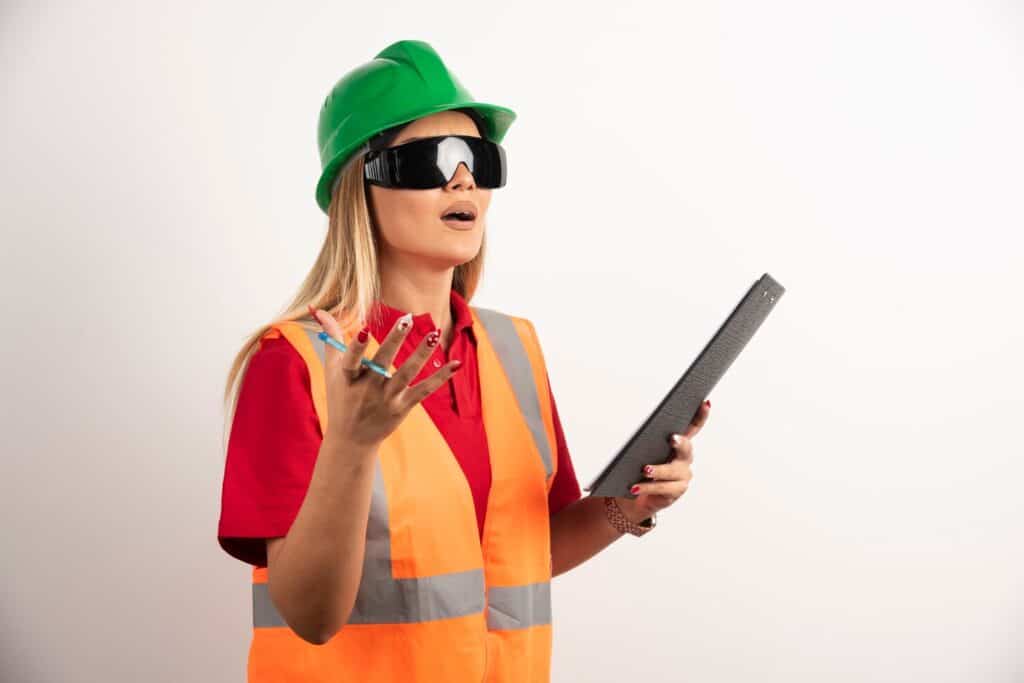
Safety is a very important concern in all construction, maintenance, and field service operations, where the circumstances are generally dynamic and may be unsafe for the workers. Wearable technology enhances protection by continuously monitoring factors such as body strain, temperature exposure, and movement patterns, and sending immediate alerts for unsafe situations. Workers and supervisors can thereby intervene quickly to take necessary control before the onset of risk.
AR adds a level of safety by visually marking danger zones, guiding workers through proper safety procedures, and reinforcing compliance with operational standards. These technologies will improve situational awareness and reduce workplace incidents by combining real-time monitoring with clear visual guidance, thereby fostering a safer, more controlled environment for groups in challenging field conditions.
Supporting Remote Collaboration
Field teams often require expert support that is not physically present. Augmented reality enables this remote specialist to view what a technician sees and provides real-time guidance.
This minimizes the need for further site visits, accelerates problem resolution, and ensures that jobs are done right. Remote collaboration enhances productivity by reducing travel time and operational costs.
Improving Maintenance and Inspection Processes
For routine inspections and maintenance, accuracy and proper documentation are a must. Augmented reality enables a technician to consult equipment histories, checklists, and repair instructions during an inspection.
This helps to streamline record-keeping and minimize the possibility of human error, ensuring timely and efficient compliance with operational standards.
Boosting Productivity and Workforce Performance
This means that whenever workers are able to get instant information and support in real time, their productivity is enhanced without any deliberate effort. This means they will get things done faster and reduce errors.
Wearables can provide valuable insights into workflow patterns, and managers can become more efficient by planning based on these data-driven insights.
Overcoming Adoption Challenges
Though there are many advantages to using augmented reality and wearables, these devices do require proper planning before adoption.
Implementing pilot programs is a good way for teams to adjust gradually and identify the best use cases. Communication about the benefits, combined with proper training, can facilitate smooth integration and increase employee acceptance.
Future Outlook of Augmented Reality and Wearables
These tools will further improve as technology advances. Devices are becoming lighter, more durable, and better integrated with operational systems.
For example, augmented reality and wearable devices will likely play an important role in the future. These systems will likely improve decision-making, safety, and efficiency. Firms that adopt these systems first will benefit from valuable experience.
Conclusion
Augmented reality technology and wearable devices are gradually changing the way field operations are undertaken in contemporary contexts, from optional innovations to essential tools. These tools are increasingly integrated into daily operations, improving precision, awareness, and confidence. Real-time exposure of information right before people, and access to it without using hands, facilitates decision-making without ambiguity and makes field operations faster, more effective, and more informed. Wearable technology also enhances safety by continually monitoring potential risks.
Besides the enhanced efficiency and safety, these technologies also improve learning and teamwork. Learning methods become more interesting, making training more practical. Remote support, for its part, allows experts to communicate with people at the field level instantly without requiring travel. Over time, this results in better skill development, a smoother workflow, and, hence, enhanced performance. For organizations, properly employing augmented reality and wearables often means, besides performance improvements, enhanced workflow consistency and clarity.
While implementing a new technology always involves a period of adjustment, the rewards at the end make the initial effort worthwhile. As technology becomes more user-friendly and easier to incorporate into everyday operations, its role will expand. Augmented reality and wearable technology are not replacing the human brain. They are augmenting it, and professionals will be able to do their jobs more smartly, safer, and efficiently in an increasingly demanding, rapidly changing world.
FAQs
- What is augmented reality in field operations?
Augmented reality overlays digital information onto real-world environments, helping workers perform tasks with guided instructions and real-time data.
- How do wearable devices improve workplace safety?
Wearables monitor conditions, track physical strain, and provide alerts about hazards, helping reduce accidents and improve safety compliance.
- Are augmented reality tools difficult to use
Modern devices are designed to be user-friendly, and proper training helps workers adapt quickly and use them effectively.
- Can these technologies improve productivity?
Yes, real-time information, guided instructions, and better communication help reduce errors and speed up task completion.
- How can organizations start using augmented reality and wearables?
Begin with pilot programs, provide training, and integrate the technology gradually into existing workflows for smoother adoption.