

Spring and Fall HVAC Tune Up Campaigns: Filling Shoulder Seasons With Customers You Already Have
Every HVAC company knows the rhythm. The first heatwave arrives and the phone does not stop ringing. The first hard frost does the same in reverse. In between sit the shoulder seasons, those stretches in spring and autumn when the weather is pleasant, nobody is thinking about their furnace or air conditioner, and the schedule suddenly has gaps that were unthinkable six weeks earlier. Technicians get sent home early, cash flow tightens, and owners start worrying about holding on to good people through the quiet weeks.
A well run hvac tune up campaign solves that problem using customers you already have. It fills the calendar during the slow months, catches small faults before they turn into emergency calls, produces replacement leads while there is time to plan them properly, and gives your team steady work instead of short days.
The Real Cost of a Quiet April
Costs stay flat while revenue swings, and that is the whole problem in one sentence. Rent, vehicle payments, insurance, software, and salaried wages cost the same in April as in July, but the work does not arrive at the same rate. Companies that ride the peaks without planning for the troughs end up funding the quiet months out of peak-season profit, which leaves no margin when something goes wrong. Staffing is the second cost, and often the larger one.
Skilled technicians are hard to find and expensive to replace, and sending them home at two in the afternoon for six weeks running is a reliable way to lose them to a competitor offering forty hours. There is a sales cost too. A homeowner whose air conditioning died in a heatwave wants it running today and has no patience for a conversation about replacing a sixteen-year-old system. Shoulder season is when that conversation can actually happen properly, with time to compare options and arrange financing.
What Does a Tune-Up Actually Include?
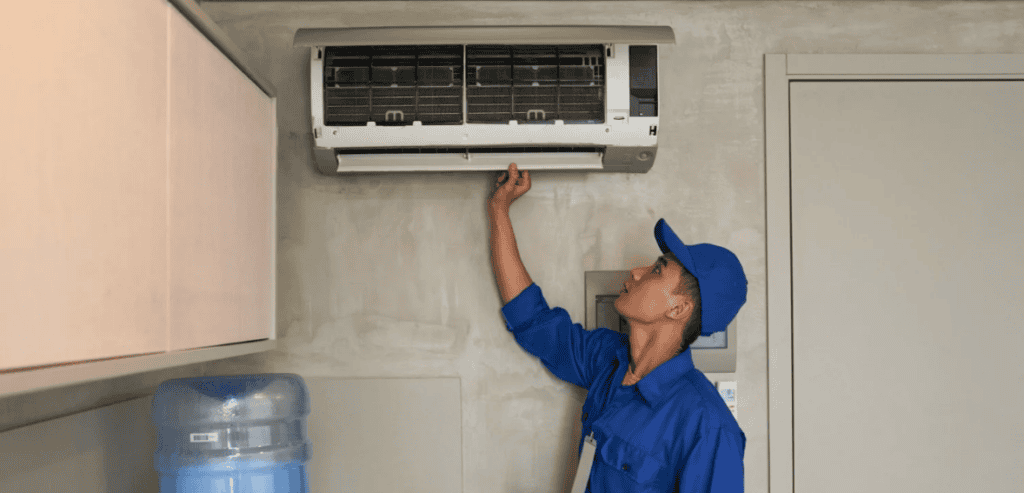
A tune-up is a scheduled inspection and service of a heating or cooling system ahead of the season when it will work hardest. Spring campaigns target cooling before summer, autumn campaigns target heating before winter. The content varies by system and by company, but a credible visit generally covers cleaning, testing, measuring, and reporting rather than a quick look and a sticker.
For cooling systems, technicians typically clean condenser coils, check refrigerant charge and pressures, test capacitors and contactors, clear condensate drains, measure temperature split across the coil, inspect electrical connections, and check airflow and filters. For heating, the list usually includes inspecting the heat exchanger, testing ignition and flame sensing, checking gas pressure and combustion, testing safety controls and limit switches, verifying venting, and confirming carbon monoxide readings are within safe limits. Manufacturers commonly recommend annual professional maintenance, and many warranties expect it, which gives the visit a purpose beyond your own schedule.
Why Homeowners Say Yes to Maintenance
The mistake most campaigns make is selling the service instead of the outcome. Homeowners do not want a capacitor tested. They want to avoid a breakdown during a heatwave, keep their energy bills from creeping up, and not void the warranty on a system they paid thousands for. Lead with those. Reliability is the strongest message, because everyone remembers a summer week without air conditioning or a January morning with no heat. Efficiency comes second, since dirty coils, low charge, and restricted airflow all make a system work harder for the same result.
Warranty protection matters to anyone with a newer system, as many manufacturer warranties require documented annual maintenance. Safety carries real weight for heating, particularly around combustion and carbon monoxide. Finally, some homeowners simply like the certainty of a plan, which is why maintenance agreements convert well when offered during a tune-up rather than cold.
Timing the Campaign Around the Weather
Book the work before the season turns, not once it has. The practical window for a spring campaign is usually late winter into early spring, roughly February through April depending on your climate, so systems are checked before the first genuinely hot week. Autumn campaigns run late summer into autumn, often August through October, ahead of the first sustained cold snap.
Start marketing three to four weeks before you want the visits to happen, because homeowners book maintenance further ahead than they book repairs. Watch your own historical call volume rather than the calendar, since local weather patterns matter more than a generic schedule. The table below shows how a year typically divides for a company serving both heating and cooling.
| Period | Demand Pattern | Campaign Focus |
| Late winter | Heating demand fading | Book spring cooling tune-ups |
| Spring | Shoulder season, quiet | Deliver cooling tune-ups, sell agreements |
| Early summer | Cooling emergencies begin | Convert deferred repairs and replacements |
| Peak summer | Emergency-driven, fully booked | Minimal campaign activity |
| Late summer | Cooling demand easing | Book autumn heating tune-ups |
| Autumn | Shoulder season, quiet | Deliver heating tune-ups, sell agreements |
| Peak winter | Heating emergencies | Minimal campaign activity |
Reaching Customers You Already Have
Existing customers are cheaper to reach and far more likely to book than strangers, which is why a tune-up campaign should start with your own database rather than an advertising budget. The practical work is segmentation. Pull the customers who have bought from you before, note what equipment they have and when it was last serviced, and prioritise accordingly. A sensible campaign sequence looks like this:
- Maintenance agreement holders first, since their visits are already owed and scheduling them protects the renewal.
- Past tune-up customers, contacted around twelve months after their last visit.
- Recent repair customers, who have just been reminded that systems fail.
- Equipment you installed, where you know the age, model, and warranty position.
- Older systems in your database, where a tune-up doubles as a replacement conversation.
- Lapsed customers, who have not been seen in two or three years and may need a stronger offer.
Contact each group differently. A tailored message referencing the furnace you installed in 2019 lands completely differently from a generic seasonal blast.
Which Channels Actually Book Appointments
Email costs almost nothing and works well for customers who already know you, particularly when the subject line names the season and the system rather than the word maintenance. Text messages get read faster and suit short reminders with a booking link, provided you have proper consent to send them. Outbound calling still outperforms everything else for older customers and for maintenance agreement holders who simply need a date in the diary, and a quiet morning is a good time to have office staff work a call list.
Direct mail retains real value in HVAC, especially postcards to neighbourhoods where you have recently done work. Technicians themselves are an underrated channel, since a homeowner who has just watched a technician fix something is unusually receptive to booking the next visit before the van leaves. Layer these rather than choosing one. Most campaigns convert on the second or third touch, not the first.
Pricing the Tune-Up Without Losing Money
Decide up front whether the tune-up is a profit centre or a lead generator, because the two lead to very different prices. Charged as a standalone service, a tune-up typically needs to cover the technician’s time, travel, and a fair margin, which usually puts it somewhere in the range of a short service call. Offered as a loss leader at a low price, it buys access to the home and the chance to identify repairs, sell an agreement, or start a replacement conversation, and the economics only work if your conversion rates are genuinely good.
Many companies use a middle path, pricing tune-ups modestly while bundling them into maintenance agreements that produce recurring revenue. Whatever you choose, avoid discounting so deeply that customers learn to wait for the offer. A clear seasonal price, with agreement holders receiving the visit as part of their plan, is easier to explain and easier to defend than a rotating set of promotions.
Turning Maintenance Visits Into Agreements and Replacements
The tune-up is the opportunity, not the outcome. A technician in the home has information nobody else has, including the age of the equipment, its condition, its efficiency, and any safety concerns. Give them a simple, honest structure for that conversation. Document findings with photos and readings so the homeowner can see what the technician saw, rather than being asked to take a verdict on trust.
Present repairs in priority order, separating what is urgent from what can wait, so the customer feels informed rather than pressured. Where a system is old, inefficient, or repeatedly failing, that is the moment to raise replacement, ideally as an option to consider rather than a decision to make on the spot. Maintenance agreements sell best at the end of a good visit, when the value has just been demonstrated. Track conversion rates by technician, because the gap between the best and worst performers is usually large and entirely coachable.
Measuring Whether the Campaign Paid Off
Booked appointments alone tell you very little. Track the full picture across the season, starting with how many contacts produced how many bookings, then how many bookings were completed rather than cancelled. From there, measure average revenue per visit including any repairs sold, the number of maintenance agreements signed, the number of replacement leads generated, and how many of those leads closed.
Compare technician utilisation during the campaign period against the same weeks last year, since filling otherwise idle hours is the whole point. Watch cancellation and no-show rates too, because a campaign that books heavily and delivers poorly is mostly wasted effort. Reviewing these numbers after each season tells you which customer segments respond, which channels work in your market, and which technicians need support with the in-home conversation. Two or three seasons of that data turns a hopeful campaign into a predictable part of the year.
Making Shoulder Season Part of the Plan | HVAC Tune up Campaigns
Companies that struggle in spring and autumn usually treat those months as something that happens to them. The ones that do well treat them as bookable work that simply needs scheduling in advance. Build your customer list properly, segment it by equipment and service history, start marketing three to four weeks ahead of the season, and use email, text, calls, mail, and your own technicians together rather than relying on one channel.
Price the visit deliberately, give technicians a clear and honest process for what they find, and push maintenance agreements hard during the visit rather than afterwards. Then measure the whole funnel so next spring starts from evidence instead of hope. A consistent hvac tune up campaign will not remove seasonality from the business, but it flattens the curve enough that quiet months stop being something you brace for.