
Van Wraps and Vehicle Branding: Cost, Design, and Whether They Actually Generate Calls
Every contractor has heard the pitch. Your van sits in traffic and parks outside jobs all day, so turning it into a moving billboard is the cheapest advertising you will ever buy. The industry quotes impression numbers in the tens of thousands per day and a cost per thousand impressions that makes digital advertising look expensive. Those figures are not invented, but they measure exposure rather than enquiries, and exposure is not what pays wages. Working out whether a van wrap cost contractor budgets can absorb will actually produce calls means separating the branding effect, which is real but slow, from the direct response effect, which depends almost entirely on design decisions most wraps get wrong.
A van also has one advantage that many other advertising formats do not: it moves around the exact area where a contractor works. The same homeowners can potentially see the vehicle on the road, outside a neighbour’s house, at a supplier, or parked outside a current job. That repeated local exposure is useful, but only when people can understand the message quickly. A vehicle that is technically branded but impossible to read from a distance is still not doing much commercially.
What Do Vehicle Graphics Actually Cost?
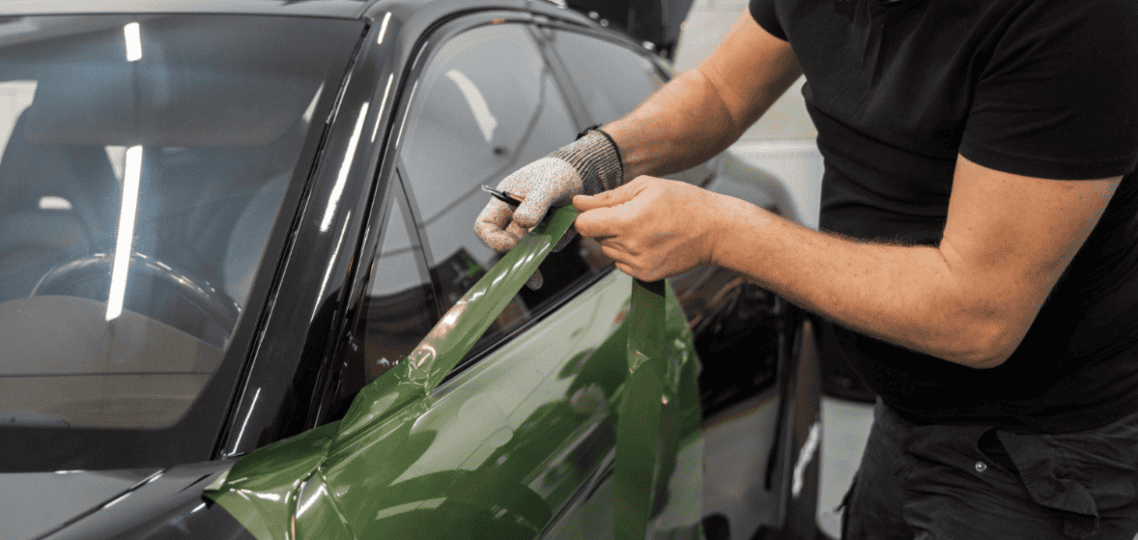
The price range is wide because the product varies enormously, from a few vinyl letters to a printed film covering every panel. Full wraps on a standard cargo van commonly fall somewhere in the low to mid thousands of dollars, with larger vehicles, complex curves, and premium films pushing higher. Partial wraps covering the rear doors, lower panels, and a portion of the sides typically cost a fraction of that. Simple cut vinyl lettering with a logo and phone number is the cheapest option by a wide margin and remains the choice of plenty of established contractors.
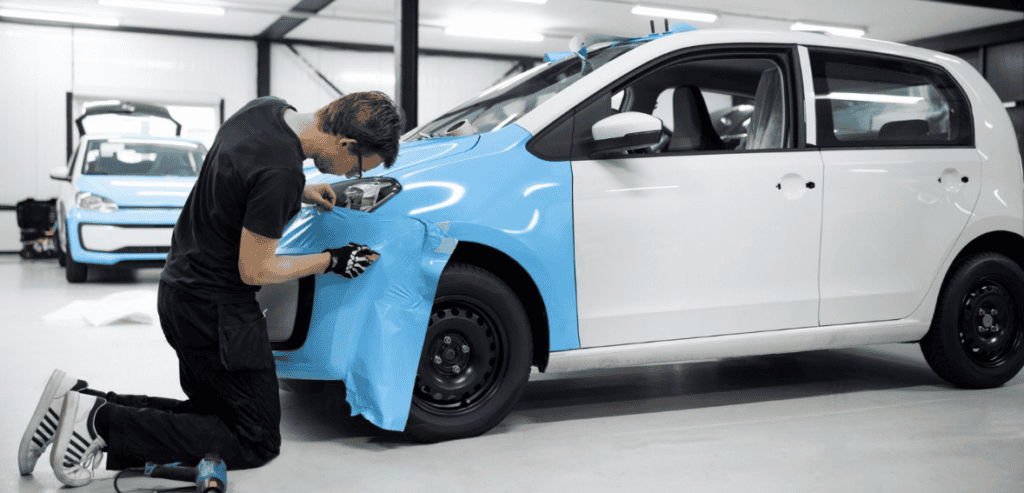
The variables that move the price are the vehicle size and shape, the coverage area, the film quality, the complexity of the design, whether the vehicle needs preparation or paint correction first, and the installer’s labour rate. Design is usually a separate cost, and a professionally designed wrap costs more than a template but performs considerably better, which is the one place it is worth not economising.
Before comparing quotes, it helps to ask exactly what is included. Two installers can quote very different amounts while technically offering the same type of wrap. One may include design, surface preparation, installation, and removal of old graphics, while another may charge separately for each.
Things worth checking in the quote include:
- The type and expected lifespan of the vinyl film.
- Whether design and revisions are included.
- Surface preparation and minor paint correction.
- Installation and finishing around edges, handles, and door seams.
- Removal of existing graphics, if applicable.
- Warranty coverage for both the material and installation.
- Whether future removal is likely to be an additional cost.
The cheapest quote is therefore not necessarily the cheapest option over the vehicle’s working life. At the same time, there is little reason for a small contractor to pay for a premium full wrap if a well-designed partial wrap would provide the visibility they actually need.
Wrap, Partial Wrap, or Lettering?
The right answer depends on your trade, your market, and how much of your work comes from local visibility rather than from referrals and search. The table below sets out the trade-offs.
| Option | Relative Cost | Best Suited To |
| Cut vinyl lettering | Lowest | Established businesses with strong referral flow |
| Partial wrap | Moderate | Most contractors wanting visibility without full cost |
| Full wrap | Highest | New businesses building recognition, fleets |
| Magnetic signs | Very low | Personal vehicles used occasionally for work |
| Window perforated film | Add-on | Extra surface area without blocking visibility |
Magnetic signs deserve a caution, since they can damage paint if left on permanently or applied over dirt, and they look temporary in a way that undermines the professional impression you are paying for. Where a contractor uses a personal vehicle for work, removable lettering or a partial wrap on a dedicated work vehicle is usually a better long-term answer than magnets that announce their own impermanence.
For many small contractors, a partial wrap can also be a useful middle ground. It can give the vehicle a strong visual identity without requiring every panel to be covered. The rear doors can carry the main contact information, while the side panels establish the business name and trade. That can be enough to make the vehicle recognisable without turning the branding into a major capital expense.
Why Do Most Wraps Fail to Generate Calls?
Because they are designed to look impressive rather than to be read in two seconds by someone driving past at forty miles an hour. That is the single most common and most expensive mistake in vehicle branding. A wrap crammed with a full service list, three certification logos, social media icons, a tagline, a website, a phone number, and a background image gives a passing driver nothing to retain, because the eye has no idea where to start.
The second failure is poor contrast, where a sophisticated colour palette produces text that disappears at distance. The third is a phone number in small type at the bottom of a door, which nobody can read and nobody will photograph. The fourth is a design that works beautifully on a flat proof and falls apart on the vehicle, with key text crossing a body line, sitting behind a wheel arch, or being cut in half by a door handle. Each of these turns an expensive asset into decoration.
There is also a difference between being noticed and being remembered. A bright van might attract attention for a few seconds, but that does not automatically mean the viewer knows what the company does or how to contact it later.
A useful test is to show the proposed design to someone for two seconds and then take it away. Ask them:
- What business was that?
- What trade did they offer?
- What number or website did they see?
- Could they remember any part of the message?
If the answers are vague, the design probably contains too much information.
What Should Actually Be on the Vehicle?
Three things, prominently, and then almost nothing else. The business name needs to be large enough to read at distance and memorable enough to search for later. The trade needs to be instantly clear, because a name like Hampton Services tells a passing homeowner nothing, while adding plumbing and heating tells them everything. The contact method needs to be enormous, whether that is a phone number or a short, memorable domain, and it should be the single largest piece of text after the business name.
Everything else is optional and most of it should be left off. A short list of two or three core services helps if there is room. A licence number may be legally required in your jurisdiction and should be included accordingly. Certification or manufacturer logos add credibility if kept to one or two. Social media handles rarely earn their space on a vehicle. Resist filling empty areas, because white space is what makes the essential elements readable.
A simple hierarchy usually makes the vehicle easier to understand:
- Business name: Make it prominent and easy to remember.
- Trade: State clearly what the company actually does.
- Contact: Give the phone number or short website enough space to be read quickly.
- Supporting details: Add only the information that genuinely helps with trust or identification.
The temptation is always to add one more service or another badge because there is an empty section of the van. Resist it. Empty space is not wasted space when it helps the important information stand out.
Where Does the Design Need to Work Hardest?
The rear of the vehicle, by a considerable margin, because that is the surface people look at longest. A driver sitting behind your van at traffic lights has thirty seconds of forced attention, which is more than any other advertising placement you will buy, and it is the one moment someone might actually enter a phone number or search a business name. Put the most important information there, large and high enough to be visible over the car in front.
The sides are seen at speed and in profile, so they need the biggest, simplest treatment, typically the business name, trade, and number with nothing competing. The front is mostly seen in mirrors and is a poor place for detail. Keep text away from body lines, handles, hinges, wheel arches, and the areas that get dirty fastest, which on most vans are the lower rear panels. Ask the installer for a vehicle-specific template rather than approving a flat design, because that is where the mismatch between proof and reality gets caught.
It is also worth looking at the vehicle from different distances before the final installation. A design can look perfect when viewed on a laptop but become unreadable when the van is 30 or 40 feet away.
Check the design:
- From directly behind the van.
- From the side at a reasonable road distance.
- While standing across a typical residential street.
- In daylight and, where relevant, in lower-light conditions.
- With doors open and closed.
- With the vehicle partially dirty, rather than perfectly clean.
That last point sounds minor, but contractors do not drive around with freshly detailed vans every day. Branding needs to remain recognisable during normal working conditions.
How Do You Know Whether the Wrap Is Working?
Measure it, which almost nobody does, and which is why the industry debate about effectiveness never resolves. The simplest method is a dedicated phone number used only on the vehicles, routed to your main line, so every call to it is attributable with certainty. A dedicated short URL or landing page does the same job for web enquiries. Beyond tracking numbers, ask every caller how they heard about you and record the answer in your job management system consistently, since inconsistent capture produces data nobody trusts.
Expect the effect to build slowly rather than arrive, because vehicle branding works largely through repeated exposure in a local area, and a homeowner may see your van a dozen times over a year before the day their boiler fails. That lag is why some contractors conclude wraps do not work after two months. Review attribution over a year, not a quarter, and compare it against the amortised cost rather than the upfront one.
There are a few simple numbers worth tracking:
- Calls to the dedicated vehicle number.
- Website visits or enquiries through the dedicated URL.
- New leads that mention seeing the van.
- Jobs generated from those leads.
- Revenue from attributable enquiries.
- The total annual cost of the vehicle branding.
This will not capture every benefit. Someone might remember the business name but later search for it through Google rather than type the website from the van. Another homeowner might recognise the vehicle when a neighbour recommends the contractor months later. Still, tracking gives you something better than a vague feeling that the wrap is “getting attention.”
What Does Vehicle Branding Do Beyond Generating Calls?
Several things that matter commercially even when they produce no directly attributable enquiry. A branded vehicle parked outside a job signals to the whole street that a professional business is working there, which is why some contractors report neighbours approaching them on site. It supports credibility at the point of arrival, since a homeowner who booked online and then sees an unmarked car pull up experiences a small moment of doubt that a branded van removes entirely. It contributes to perceived scale, because three branded vans look like a larger operation than three plain ones.
It deters certain types of dispute, since a vehicle with a visible business name and licence number is accountable in a way an anonymous one is not. It also helps recruitment in trades where technicians notice which local companies look established. None of these appear in a call tracking report, which is precisely why the decision should not rest on attribution alone.
There is another practical benefit for businesses with multiple vehicles. Consistent branding means customers can recognise the company regardless of which technician arrives. That can be particularly useful as a contractor moves from being a one-van operation to having several employees or subcontractors on the road.
The branding can also become part of the company’s wider identity. If the same name, typography, contact details, and general visual style appear across the van, website, invoices, uniforms, and signage, customers encounter the same business repeatedly rather than seeing disconnected pieces of marketing.
What Are the Practical and Legal Details to Check?
Several items catch contractors out after the money is spent. Check whether your state or local licensing rules require a licence number, registration number, or specific wording displayed on commercial vehicles, since some trades and jurisdictions do and the requirement is occasionally specific about size and placement. Confirm with your insurer that a wrap is disclosed, since modifications can affect cover and some policies require notification. Check your lease agreement if the vehicle is leased or financed, because some agreements restrict wraps or require removal before return at the lessee’s cost.
Understand the warranty position, since reputable films carry manufacturer warranties and quality installation protects the paint beneath, while cheap film or poor application can damage it. Ask about expected lifespan, which for quality wraps on a well-maintained vehicle is commonly several years before fading becomes noticeable, and about removal cost at the end. Finally, confirm maintenance requirements, since pressure washing at close range and certain cleaning products will shorten a wrap’s life considerably.
It is worth keeping a record of these details before installation rather than trying to sort them out afterwards. In particular, contractors should confirm:
- Local requirements for business, licence, or registration information.
- Insurance notification requirements.
- Lease or finance restrictions.
- Film and installation warranties.
- Expected removal costs.
- Recommended washing and maintenance methods.
These are not the exciting parts of vehicle branding, but they are the things that can turn a seemingly straightforward marketing purchase into an unnecessary headache.
Is a Van Wrap Worth It for a Small Contractor?
It depends mainly on where your work currently comes from. A contractor whose enquiries arrive almost entirely through referrals and search, operating in a wide geography with little repeat exposure in any one neighbourhood, will see modest return from a full wrap and might reasonably choose lettering instead. A contractor working a concentrated local area, parked visibly outside jobs several times a week in the same neighbourhoods, is in exactly the situation where vehicle branding compounds, and the investment usually justifies itself over the life of the vehicle.
A new business with no referral base benefits most, because recognition has to start somewhere. In all three cases the decision hinges less on the van wrap cost contractor quotes and more on the design, since a cheap wrap that is instantly readable will outperform an expensive one nobody can decipher at a junction. Spend on the design, keep the message to three elements, make the rear doors count, and put a tracked number on it so that in twelve months you are deciding from your own data rather than from someone else’s impression statistics.
For a contractor trying to keep the initial spend sensible, there is no requirement to jump straight into a full wrap. Good lettering or a well-planned partial wrap can establish the basic identity first. If the vehicle is replaced regularly, the same core design can also be adapted to the next van rather than starting from scratch every time.
The important part is to treat the van as a working advertising asset, not simply something that needs to look good in photographs. If people can identify the business, understand the trade, and remember how to contact it, the branding has done its basic job. Whether it generates enough calls to justify the investment is something that should then be measured against the actual cost and the vehicle’s working life.