

Tree Service Software: The Best Options for Estimates, Crew Scheduling, and Jobsite Photos
Stop Losing Jobs to Paper Quotes and Missed Appointments
If you run a tree service company, you already know the chaos. A foreman arrived late, a quote never reached the customer’s inbox, and someone forgot to document the stump removal before leaving the site. These aren’t small inconveniences — they cost you money, reputation, and repeat business.
The good news is that purpose-built tree service software has matured significantly over the past few years. Today’s platforms go far beyond basic invoicing. They handle everything from digital estimates and crew scheduling to GPS tracking and jobsite photo documentation. Whether you’re a solo arborist or managing a crew of twenty, the right software can transform how your business runs.
This guide breaks down the best options available, what to look for, and how to choose the platform that actually fits how your team works.
Why Tree Service Businesses Need Dedicated Software
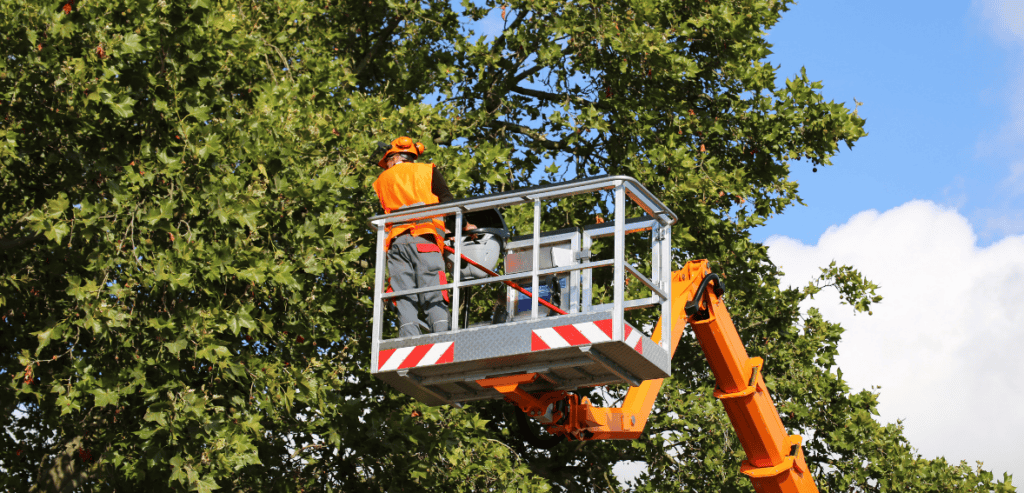
Generic business tools like spreadsheets or basic CRMs weren’t built with tree work in mind. They don’t account for seasonal demand spikes, equipment logistics, hazard documentation, or the fact that your crews are always on the move — never at a desk.
Arborist software focuses on the specifics of the tree service business. It understands that an estimate involves specialized data on section canopy size, risk, and equipment. For scheduling, it can factor in crew certification and the truck’s availability. It even tracks site-specific travel time. There’s software that provides the kind of detail that differentiates a purpose-built tool from a workaround.
Businesses that abandon their generic estimate software for tree service estimate software see benefits such as improved productivity, reduced scheduling conflicts, and, when services are prepaid, more predictable cash flow and accounts receivable. Many said their services are invoiced the same day instead of being held in a service truck for a week.
What to Look for in Tree Service Software

Estimate and quoting tools are the starting point for any job. Look for software that lets you build professional, itemized quotes quickly — ideally from a mobile device while you’re still on the customer’s property. Templates that include common tree services (pruning, removal, stump grinding, cabling) save significant time. The ability to send quotes digitally and collect e-signatures is no longer optional; customers expect it.
One of the main sources of inefficiency for most tree businesses is crew scheduling. The most efficient tree service scheduling software has a dispatch board you can manage with drag-and-drop, provides a real-time view of crew availability, and sends notifications about job assignments and changes. Some services integrate with GPS technology, so you can see your crews without calling.
Keeping records of job site photos is a must for both defending against liability claims and substantiating bills. Photo evidence with time and location for disputes over whether a stump was ground down to grade is an unbeatable defense. This is also an excellent way to document hazards when seeking additional work.
Automated appointment reminders and follow-up emails help reduce no-shows, and online payment portals lead to quicker payment. Customers who receive an invoice and can pay immediately from their cell phone tend to pay much faster.
How Tree Service Estimate Software Speeds up Quoting
A tree job is often won or lost at the estimate. Good tree service estimate software lets you build an itemized quote on your phone while you’re still on the customer’s property, not at the office that night. Templates for common work like pruning, removal, stump grinding and cabling cut the typing, and fields for canopy size, risk and equipment keep each price tied to what the job actually takes. Send the quote digitally and collect an e-signature so the customer can approve it the same day. Most modern platforms also work offline and sync once you’re back in signal, which matters on rural properties. Pair the quote with before photos, and you have a record to point to if the crew finds extra work and needs a change order.
Arborist Scheduling Software for Crews and Equipment
Crew scheduling is where most tree businesses lose time. Arborist scheduling software gives you a drag-and-drop dispatch board with a real-time view of which crews are free, and it sends notifications when an assignment is added or changed. The better tools go further: they factor in crew certifications and truck availability, so a job doesn’t land on a crew that lacks the people or equipment it needs, and they account for travel time between sites. Some connect to GPS, so you can see where crews are without calling the foreman. On the customer side, automated reminders and en-route notices mean fewer trips to a property where nobody is home. During seasonal demand spikes, that visibility is what keeps a full calendar from turning into missed appointments.
The Best Tree Service Software Platforms

Arborgold
Arborgold is one of the most established names in arborist-specific software. It was built from the ground up for tree care companies and shows in the depth of its feature set. The platform handles the full business cycle — from initial lead capture and estimating through crew scheduling, job tracking, and invoicing.
Arborgold’s estimating module is quite powerful. It has a plant health care (PHC) tracking feature, which is helpful for companies that provide treatment programs in addition to regular tree care. The scheduling board displays crew assignments, while the mobile app lets field techs log notes and photos and update job statuses in real time. For arbor businesses looking to step up their comprehensive toolset, Arborgold is a great option.
Jobber
Jobber is among the most popular apps in the field service software space. With their clean software and mobile experience, it has been rapidly adopted among tree service companies. It is not tree service-focused, but it does cover the fundamental needs of tree service companies.
Jobber’s estimate-to-invoice process is very fast. You can create a quote, send the quote to the client, get the client to approve the quote, schedule the job, do the job, and send the invoice, all done without a single step on a desktop; all of this can be done in the Jobber mobile app. The client can, at all steps of this process, communicate, approve the quote, and pay the invoice, all through the client referral, which does a great job of covering client communication. Also, Jobber integrates with QuickBooks, which most companies use for some level of accounting and want to maintain a specific accounting structure. Jobber can serve three companies with a simple customer service focus.
Service Autopilot
Service Autopilot’s platform is designed for large and complex tree and lawn care service businesses. Service Autopilot helps companies perform many operational functions, which Jobber simplifies. Service Autopilot automates many functions, such as scheduling follow-up emails and appointments, and crew scheduling, to reduce crew shutdown time.
The platform offers a comprehensive suite of business services, including CRM, estimate builder, job costing, scheduling, and marketing. The platform has a steep learning curve to reach full usage; however, service businesses that embrace learning the platform and utilize it to its full potential do realize huge leaps in operational efficiency. Service Autopilot is great for tree care businesses that want to expand service offerings without increasing administrative overhead.
SingleOps
SingleOps is purpose-built for tree care, lawn care, and landscape businesses. It sits in a similar category to Arborgold in terms of industry focus, but has a more modern interface and strong reporting capabilities that appeal to data-driven owners.
Users can generate detailed professional proposals that include notes on crew and equipment, aligned with platform estimates. Coupled with the scheduling and job costing modules, this lets you track in real time whether a job is in budget, out of budget, or over budget. SingleOps offers a great client portal and photo documentation capabilities without friction, so your customers can review and electronically sign proposals in real time. SingleOps is a great option for companies looking to adopt vertical-industry tools with analytical capabilities. The enhancements that SingleOps implements on its platform with the highest priority are driven by the requests that tree care professionals submit.
Housecall Pro
Housecall Pro is another field service platform used broadly across trades, including by many smaller tree service companies. It’s especially strong for businesses that are just starting to move away from paper processes. The setup is fast, the interface is intuitive, and the core features — estimates, scheduling, invoicing, and payment processing — work reliably.
It won’t offer the same arborist-specific depth as Arborgold or SingleOps, but for a solo operator or small crew that needs a dependable, affordable platform to get organized, Housecall Pro delivers strong value. The customer booking and payment experience is polished, and the automated review request feature helps build your online reputation with minimal effort.
How Jobsite Photo Tracking Protects and Grows Your Business
Tree companies often don’t use photo documentation as much as they should, which is why we have chosen to give it its own section. All of the platforms mentioned should include before-and-after photo documentation in their mobile apps. If used consistently, this has three main benefits.
Let’s start by creating a liability record. If a client complains that tree removal caused damage, before-and-after documentation can prove your business is in the right. The second is billing. If your work crew encounters dead wood or a pest infestation after you have already billed for the removal, you can document the additional work with photos to justify a change order. The third benefit is self-promotion. Using photo documentation to show the true before-and-after of a job is much better than the false stock photos people use in their business.
Choosing the Right Tree Service Software for Your Business
The right choice depends on where your business is right now and where you want it to go. If you’re a solo arborist or a small crew looking to get organized quickly without a long setup process, Jobber or Housecall Pro is the fastest path to operational clarity. If you’re running a mid-size operation and want software that understands tree care specifically, Arborgold or SingleOps offer the depth you need. If you’re scaling aggressively and want automation to carry more of the administrative load, Service Autopilot is worth the investment in setup time.
Whatever you choose, prioritize mobile performance. Your team works in the field, not in an office. If the app is clunky or unreliable on a phone, adoption will suffer regardless of how many features the desktop version has.
Cloud Job Manager for Tree Service Companies
Cloud Job Manager is a free, cloud-based job management platform for contractors and field service teams, and it covers the same ground as the tools above. You can create professional estimates and turn an approved estimate into an invoice with one click. A visual job calendar and dispatch board lets you assign crews, avoid overlapping appointments, prioritize emergency calls, and track every job’s status in real time. In the field, crews use the iOS and Android apps to check schedules, customer details and job notes, add photos, send invoices, and collect payment on-site. Payments run through Host Merchant Services, so customers can pay by credit or debit card, ACH bank transfer or digital wallet, at the job or through a pay link sent by text or email. The software is 100% free, with no per-user fees and no feature paywalls. If you want estimates, crew scheduling and payments in one app, Cloud Job Manager is worth comparing with the platforms above.
Conclusion
Running a professional tree service business in today’s market means competing on responsiveness, professionalism, and reliability — and the right tree service software is how you deliver all three without burning out your team. From fast digital estimates that win jobs on the spot to scheduling tools that keep crews organized to photo tracking that protects you from disputes, these platforms exist to handle the administrative burden so you can focus on the work itself.
The best time to implement a system was before the busy season started. The second-best time is right now.
Frequently Asked Questions
What Is the Best Arborist Software for Small Tree Service Companies?
Jobber and Housecall Pro are generally the best fit for small tree service companies. Both are easy to set up, affordable, and cover the core needs of estimating, scheduling, and invoicing without requiring weeks of onboarding.
Can Tree Service Estimate Software Work Offline in the Field?
Most modern platforms, including Jobber and SingleOps, offer offline functionality in their mobile apps. Data syncs automatically once a connection is restored. This matters for crews working in rural or low-signal areas.
How Does Tree Service Scheduling Software Reduce No-Shows and Missed Jobs?
Most platforms send automated appointment reminders to customers via text or email before a scheduled job. Some also notify customers when a crew is en route. These simple automations significantly reduce the number of customers who aren’t home or prepared when your crew arrives.
Is It Worth Paying for Industry-Specific Arborist Software Over a General Field Service Tool?
It depends on your complexity. If you run plant health care programs, detailed equipment-based estimating, or manage large crews with specialized certifications, industry-specific software like Arborgold or SingleOps will pay for itself quickly. If your work is more straightforward, a general platform like Jobber may offer everything you need at a lower cost.